

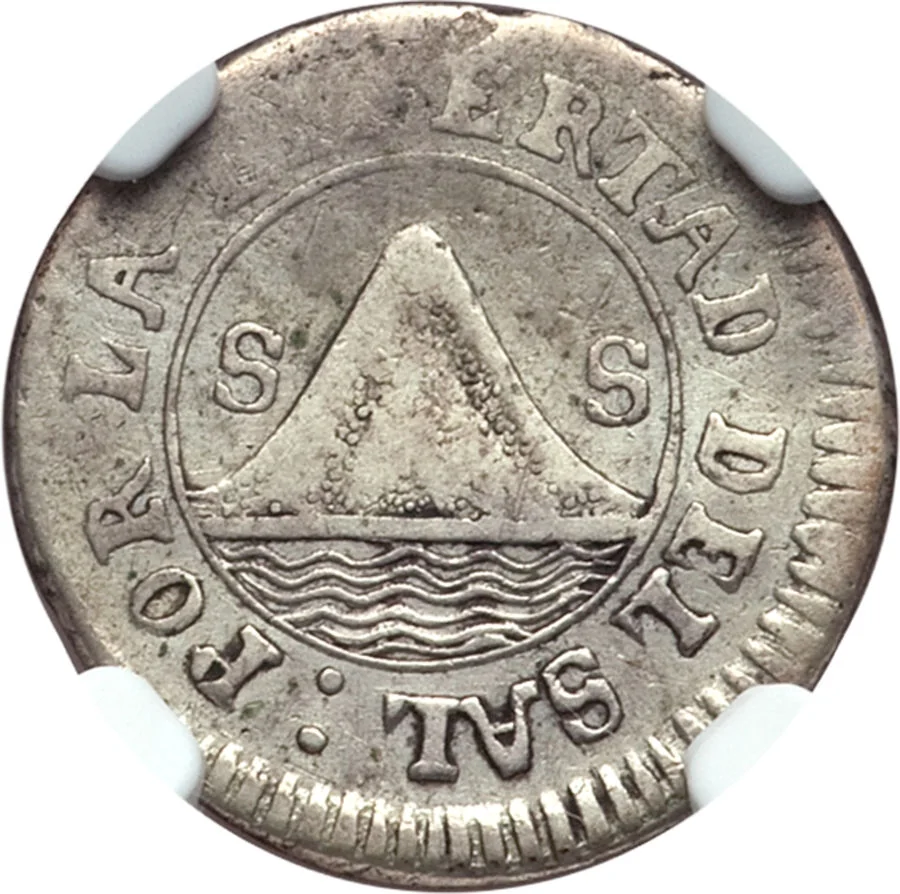
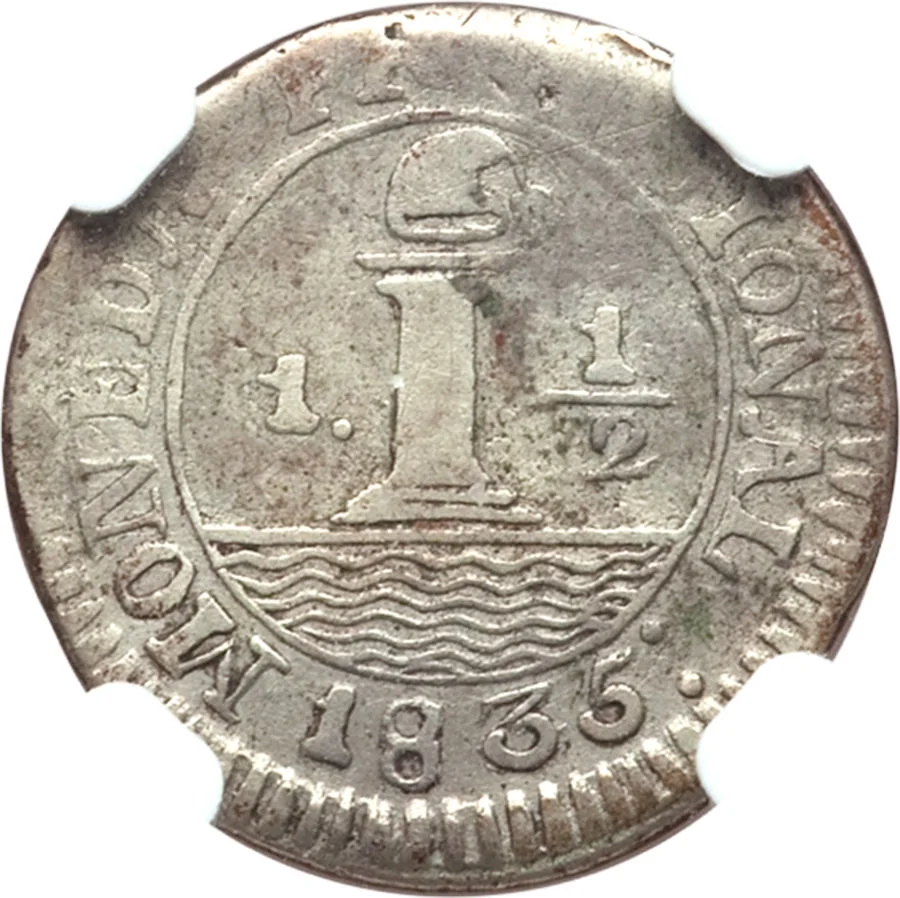
½ real – El Salvador
Add to wishlist
El Salvador
Context
Year: 1835
Issuer: El Salvador
Period:
(1823—1841)
Currency:
(1828—1889)
Demonetization: 14 February 1835
Material
References
KM: #
Numista: #75376
Value
Bullion value: $2.14
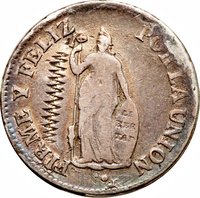
Obverse
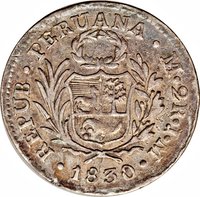
Reverse
Edge
Mintings
| Year | Mint Mark | Mintage | Quality | Collection |
|---|---|---|---|---|
| 1835 | — | — |
Historical background
In 1835, El Salvador found itself navigating a complex and fragmented currency landscape, a direct legacy of its colonial past and the turbulent early years of Central American independence. As a member of the Federal Republic of Central America, the nation was officially bound to a federal monetary system that had introduced silver reales and gold escudos. However, the federal government's weakness meant its coinage was scarce and failed to meet the economic needs of the individual states. Consequently, the Salvadoran economy operated with a confusing multiplicity of currencies, primarily relying on worn and clipped Spanish colonial coins, alongside various coins from other Spanish American nations that circulated at fluctuating values.
This monetary disorder created significant challenges for commerce and public finance. The lack of a standardized, trustworthy medium of exchange hindered domestic trade and complicated tax collection, as the state struggled to assign reliable values to the mixed specie in its coffers. Furthermore, the prevalence of debased and foreign coins made the economy vulnerable to fraud and speculative practices. The situation was exacerbated by a chronic shortage of small-denomination coins, which stifled everyday market transactions and created practical difficulties for the majority of the population.
Recognizing these impediments to economic stability and sovereignty, Salvadoran authorities in the mid-1830s began to actively pursue solutions. The year 1835 falls within a period of growing impetus for monetary reform, which would culminate in decisive action later in the decade. While not yet implementing its own coinage in 1835, the state was likely engaged in the planning and political efforts that led to the eventual establishment of the first Salvadoran mint in 1842. Thus, the currency situation in 1835 was one of entrenched disorder, but also a pivotal point on the path toward asserting national monetary control.
This monetary disorder created significant challenges for commerce and public finance. The lack of a standardized, trustworthy medium of exchange hindered domestic trade and complicated tax collection, as the state struggled to assign reliable values to the mixed specie in its coffers. Furthermore, the prevalence of debased and foreign coins made the economy vulnerable to fraud and speculative practices. The situation was exacerbated by a chronic shortage of small-denomination coins, which stifled everyday market transactions and created practical difficulties for the majority of the population.
Recognizing these impediments to economic stability and sovereignty, Salvadoran authorities in the mid-1830s began to actively pursue solutions. The year 1835 falls within a period of growing impetus for monetary reform, which would culminate in decisive action later in the decade. While not yet implementing its own coinage in 1835, the state was likely engaged in the planning and political efforts that led to the eventual establishment of the first Salvadoran mint in 1842. Thus, the currency situation in 1835 was one of entrenched disorder, but also a pivotal point on the path toward asserting national monetary control.

✨ Legendary