

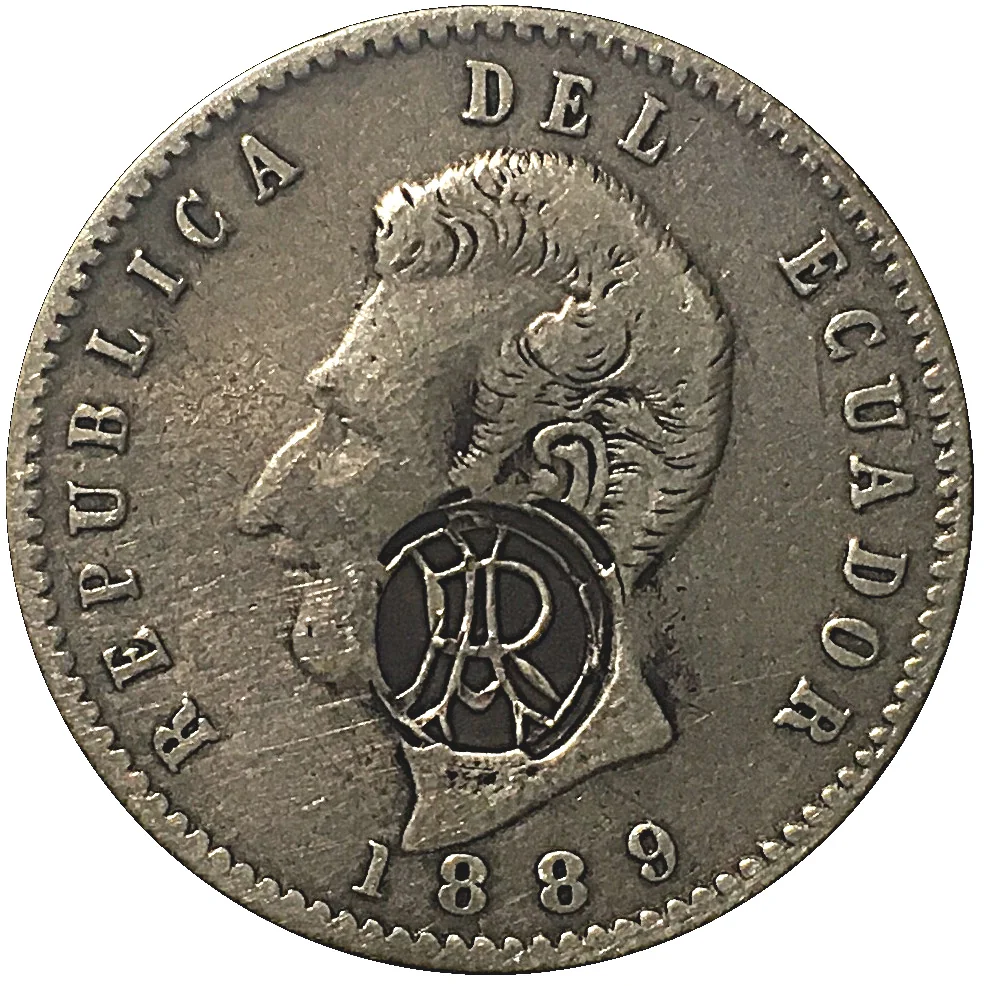
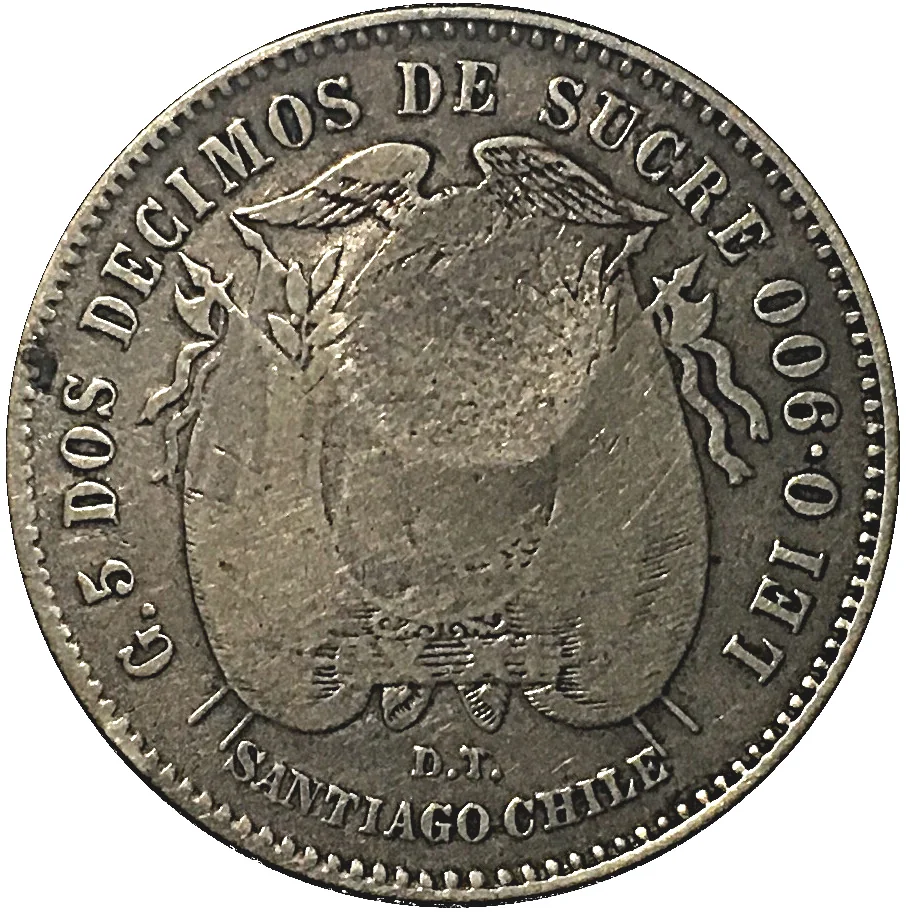
2 décimos – Ecuador
Add to wishlist
Ecuador
Context
Material
Diameter: 23.2 mm
Weight: 5 g
Silver Weight:: 4.50 g
Thickness: 1.5 mm
Shape: Round
Composition: 90% Silver
Magnetic: No
Techniques: Milled, Counterstamped
Alignment: Coin alignment
flip
References
Numista: #147540
Value
Bullion value: $10.92
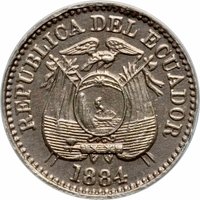
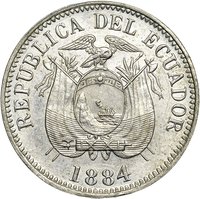
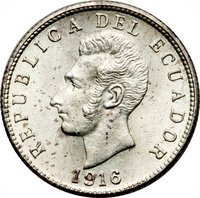
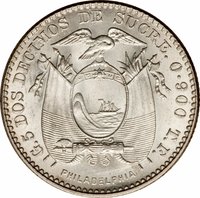
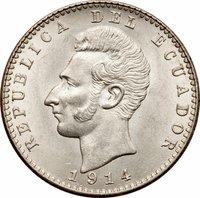
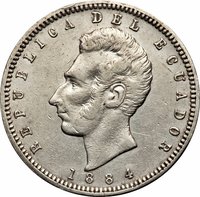
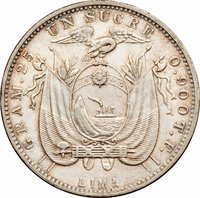
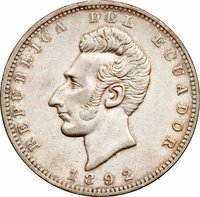
Obverse
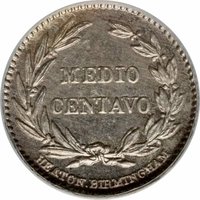
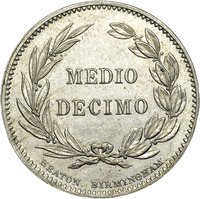
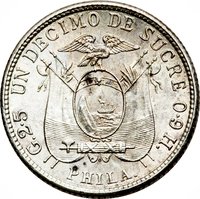
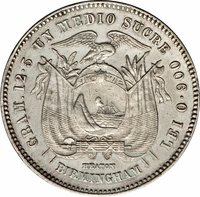
Reverse
Edge
Reeded
Categories
| Symbols> Coat of Arms |
| Person> Military leader |
Mints
| Name | Mark |
|---|---|
| Casa de Moneda de Chile | — |
Mintings
| Year | Mint Mark | Mintage | Quality | Collection |
|---|---|---|---|---|
| — | SANTIAGO | — | BU |
Historical background
In 1884, Ecuador found itself in a profound monetary crisis, a direct consequence of the chaotic financial policies of President Ignacio de Veintemilla's regime (1876-1883). His government, facing fiscal insolvency, had resorted to the unchecked issuance of billetes fiscales (government paper notes) to cover public expenses. This led to rampant inflation and a severe loss of public confidence, as the paper currency became nearly worthless. By the time Veintemilla was overthrown in 1883, the national currency was in disarray, with multiple forms of devalued paper circulating and the country effectively operating without a stable, standardized monetary system.
The provisional government that followed faced the urgent task of restoration. A significant step was the Monetary Law of February 12, 1884, which sought to reintroduce a metallic standard and formally adopt the sucre as Ecuador's official currency unit, named after Antonio José de Sucre. The law aimed to retire the discredited paper money and re-establish a currency tied to silver, defining the sucre at a rate of 22.5 grams of fine silver. However, this was largely an aspirational framework, as the government lacked the precious metal reserves to fully back the currency, making the transition difficult and incomplete.
Thus, the currency situation in 1884 was one of fragile transition from chaos to a tenuous order. While the legal foundation for a stable, silver-based sucre was laid, the practical reality was a struggling economy still burdened by the legacy of hyperinflation and a lack of hard currency. The new monetary law set a crucial direction, but true stabilization would require years of fiscal discipline and economic recovery in the decades that followed, as Ecuador continued to grapple with the deep-seated challenges of establishing a trustworthy and unified monetary system.
The provisional government that followed faced the urgent task of restoration. A significant step was the Monetary Law of February 12, 1884, which sought to reintroduce a metallic standard and formally adopt the sucre as Ecuador's official currency unit, named after Antonio José de Sucre. The law aimed to retire the discredited paper money and re-establish a currency tied to silver, defining the sucre at a rate of 22.5 grams of fine silver. However, this was largely an aspirational framework, as the government lacked the precious metal reserves to fully back the currency, making the transition difficult and incomplete.
Thus, the currency situation in 1884 was one of fragile transition from chaos to a tenuous order. While the legal foundation for a stable, silver-based sucre was laid, the practical reality was a struggling economy still burdened by the legacy of hyperinflation and a lack of hard currency. The new monetary law set a crucial direction, but true stabilization would require years of fiscal discipline and economic recovery in the decades that followed, as Ecuador continued to grapple with the deep-seated challenges of establishing a trustworthy and unified monetary system.
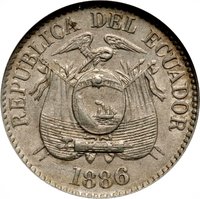
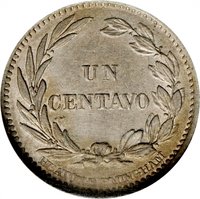
Series: 1884 Ecuador circulation coins
✨ Legendary