

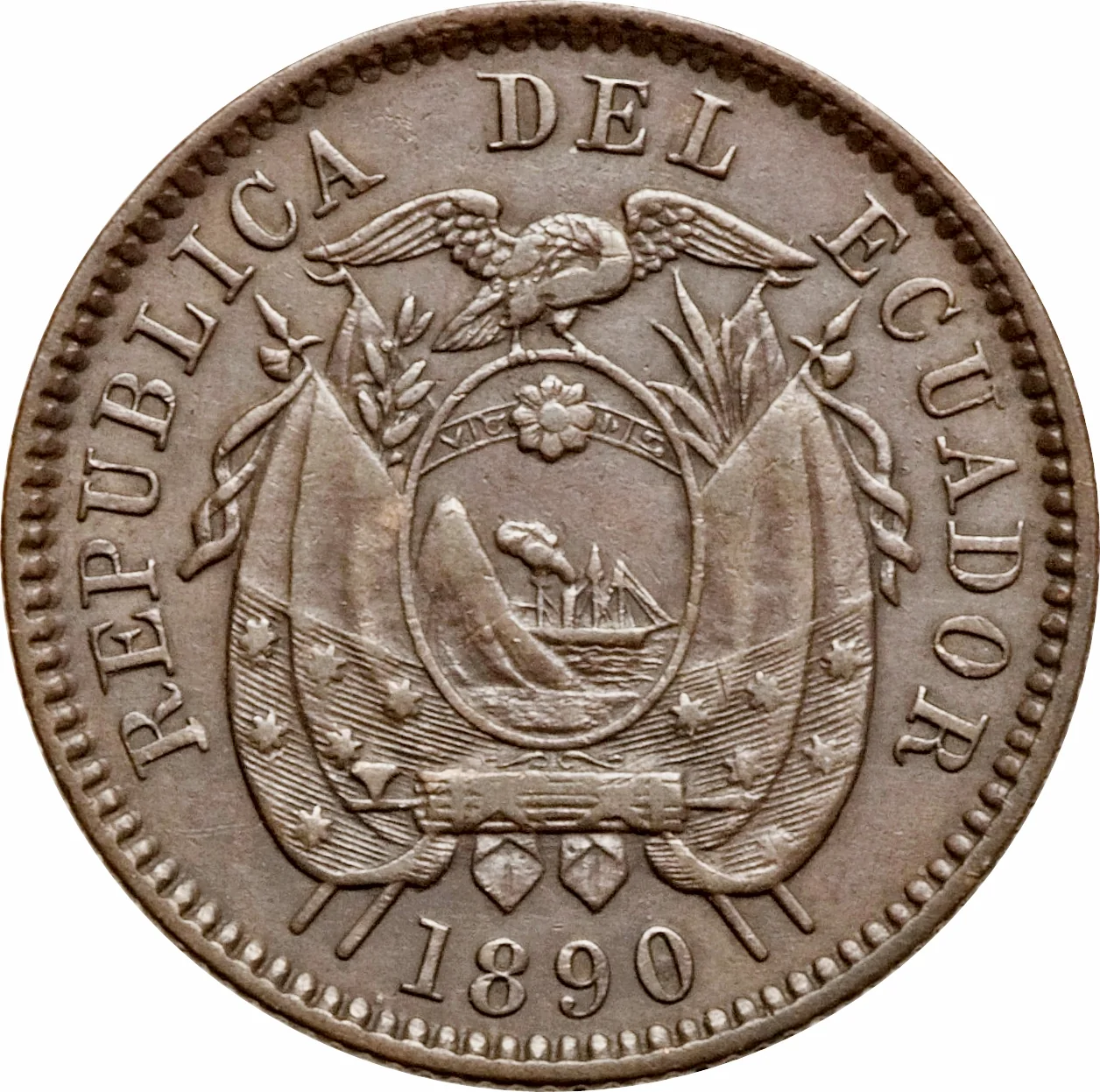
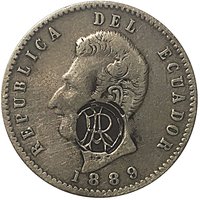
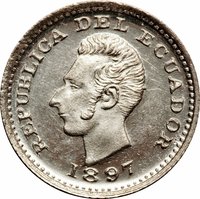
Obverse
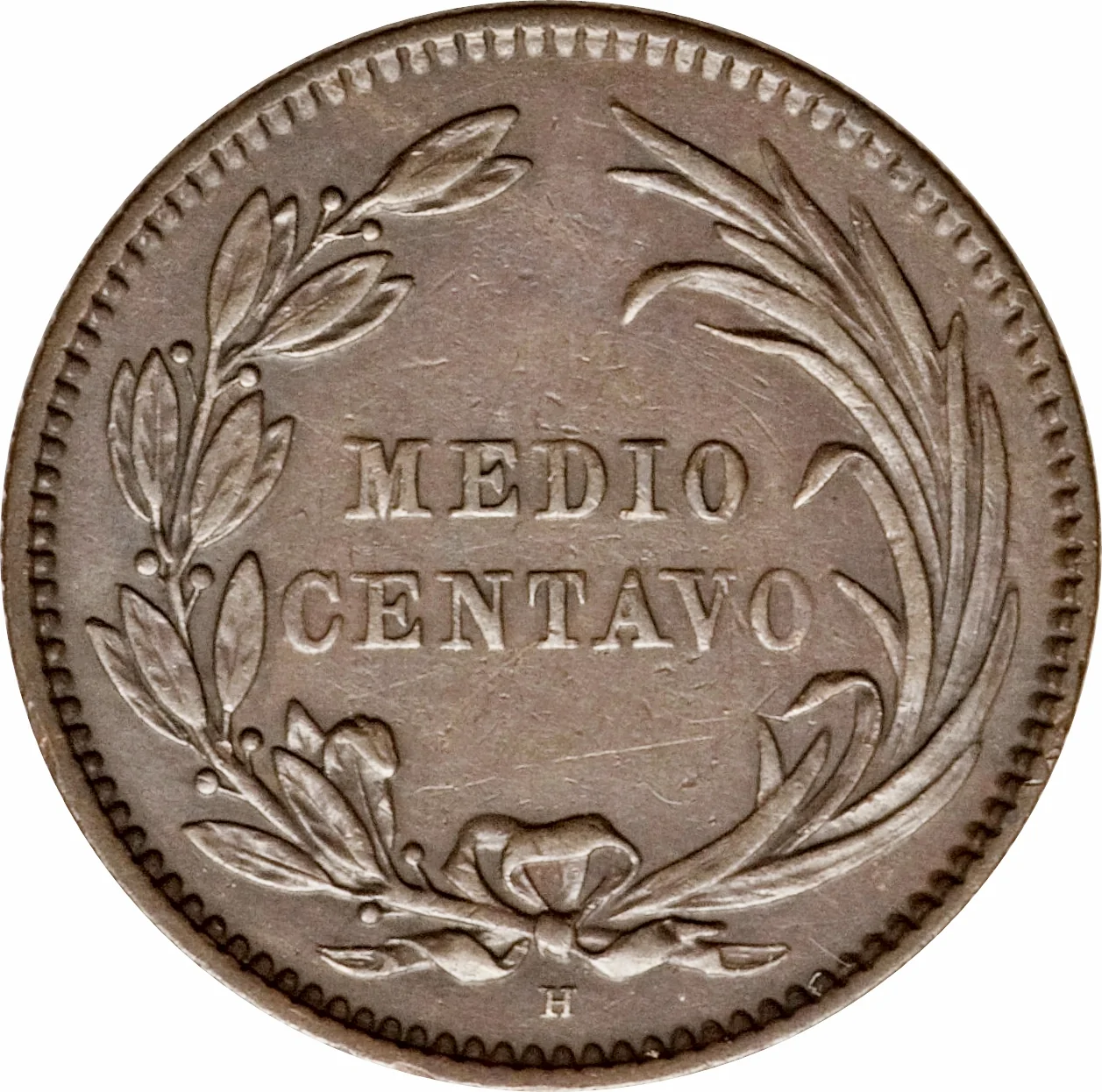
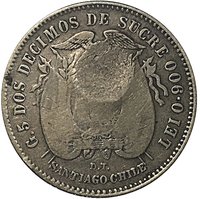
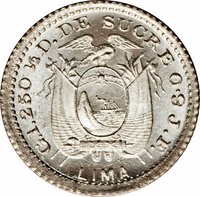
Reverse
Edge
Reeded
Mints
| Name | Mark |
|---|---|
| Heaton and Sons / The Mint Birmingham | H |
Historical background
In 1890, Ecuador's currency situation was characterized by profound instability and fragmentation, a direct legacy of its turbulent 19th-century history marked by political instability and regionalism. The country lacked a unified national currency. Instead, a chaotic mix of foreign and domestic coins circulated, primarily the silver Sucre (introduced in 1884 as the official unit of account) and its fractional coins, alongside older, debased domestic coinage. Crucially, a large volume of Peruvian silver pesos and Colombian gold coins were also in widespread use, their value fluctuating based on weight and metallic content, which complicated all commercial transactions.
This monetary disorder was exacerbated by a global phenomenon: the dramatic depreciation of silver against gold. As Ecuador was on a de facto silver standard, the international fall in silver's value caused severe exchange rate volatility and a draining of gold from the economy. This made servicing foreign debts—denominated in gold-standard currencies like the British pound—exponentially more expensive, pushing the state toward fiscal crisis. The government's attempts to manage the situation, including the minting of new national coinage at the Quito mint, were undermined by a lack of public trust and the continued physical scarcity of sound money, especially in remote regions.
Consequently, the economy of 1890 Ecuador suffered from high transaction costs, commercial uncertainty, and inflationary pressures. The chaotic currency system acted as a significant brake on economic development and integration, both internally and with international markets. This untenable situation would culminate in major monetary reforms later in the 1890s, most notably the establishment of the "Caja de Amortización" in 1893 to stabilize the Sucre and the eventual move toward a gold exchange standard in 1898, in a desperate bid to impose order and restore fiscal credibility.
This monetary disorder was exacerbated by a global phenomenon: the dramatic depreciation of silver against gold. As Ecuador was on a de facto silver standard, the international fall in silver's value caused severe exchange rate volatility and a draining of gold from the economy. This made servicing foreign debts—denominated in gold-standard currencies like the British pound—exponentially more expensive, pushing the state toward fiscal crisis. The government's attempts to manage the situation, including the minting of new national coinage at the Quito mint, were undermined by a lack of public trust and the continued physical scarcity of sound money, especially in remote regions.
Consequently, the economy of 1890 Ecuador suffered from high transaction costs, commercial uncertainty, and inflationary pressures. The chaotic currency system acted as a significant brake on economic development and integration, both internally and with international markets. This untenable situation would culminate in major monetary reforms later in the 1890s, most notably the establishment of the "Caja de Amortización" in 1893 to stabilize the Sucre and the eventual move toward a gold exchange standard in 1898, in a desperate bid to impose order and restore fiscal credibility.
⭐ Rare