

Obverse
Description:
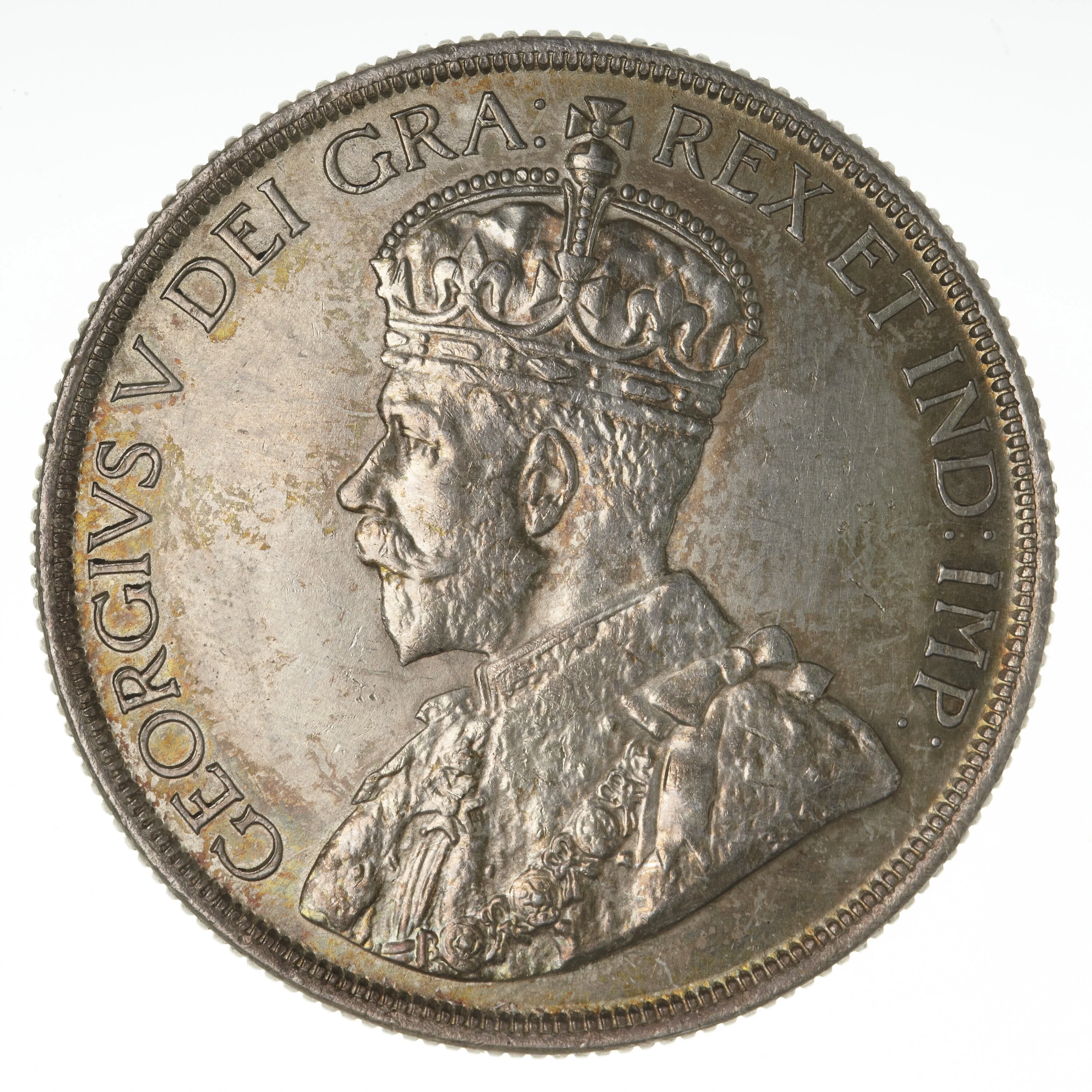
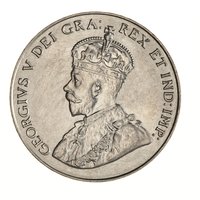
King George V crowned, left-facing bust.
Inscription:
GEORGIVS V DEI GRA: REX ET IND:IMP:
Translation:
George V by the Grace of God King and Emperor of India
Script: Latin
Language: Latin
Engraver: Edgar Bertram MacKennal
Reverse
Description:
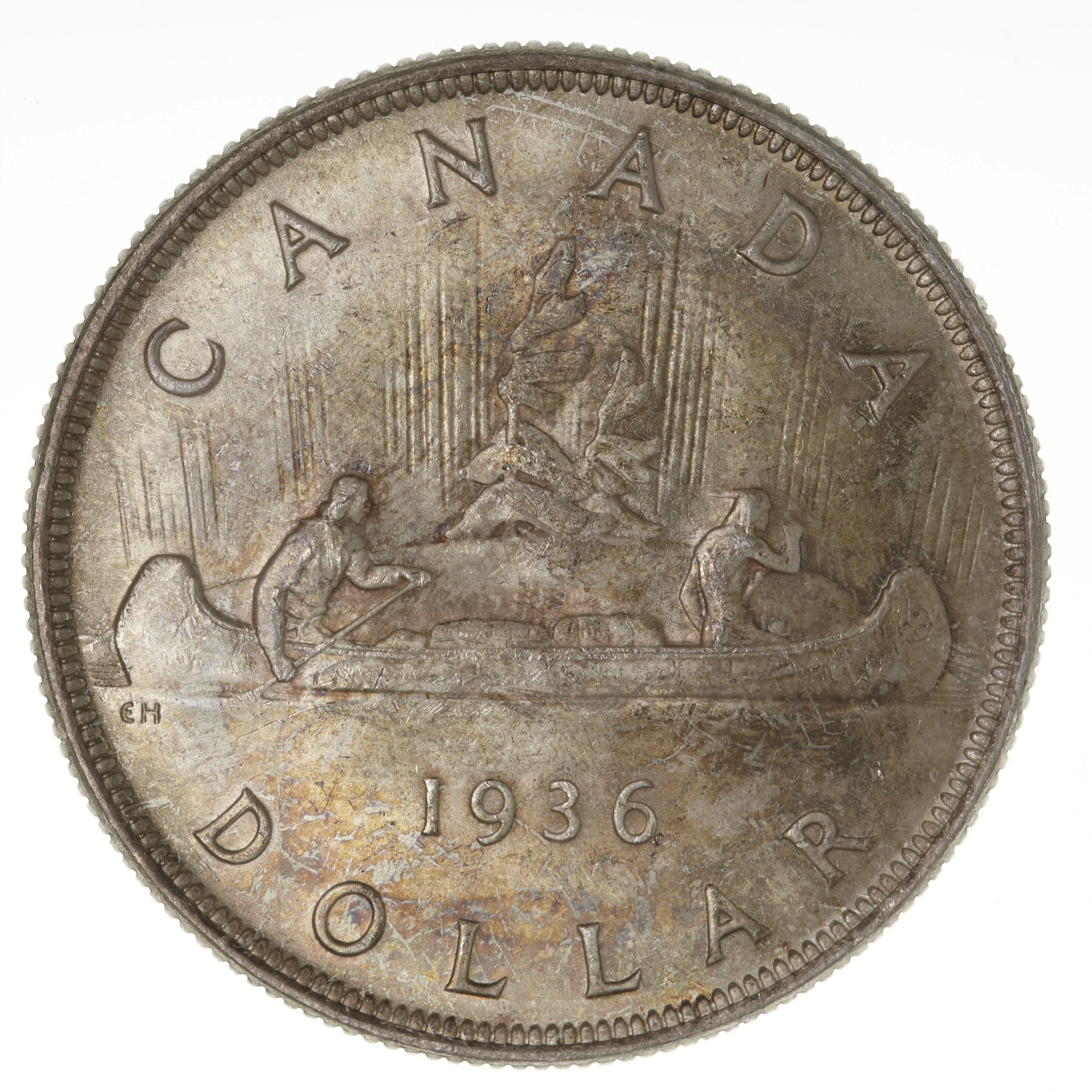
A voyageur and Indigenous companion paddle a canoe with Hudson’s Bay "H.B." bundles, surrounded by the face value and "CANADA."
Inscription:
CANADA
1936
DOLLAR
1936
DOLLAR
Script: Latin
Engraver: Emanuel Otto Hahn
Edge
Milled
Categories
| Transportation> Watercraft |
Mints
| Name | Mark |
|---|---|
| Royal Canadian Mint of Ottawa | — |
Mintings
| Year | Mint Mark | Mintage | Quality | Collection |
|---|---|---|---|---|
| 1936 | — | 306,100 |
Historical background
In 1936, Canada's currency situation remained deeply constrained by its adherence to the gold standard, a system it had maintained throughout the Great Depression while many other nations, including the United Kingdom and the United States, had abandoned it. This commitment, managed by the Bank of Canada (newly established in 1935), aimed to ensure stability and international credibility by fixing the Canadian dollar's value to gold and, by extension, to the U.S. dollar. However, this policy came at a significant domestic cost: it required maintaining high interest rates to protect gold reserves, which stifled economic recovery by limiting the money supply and discouraging investment and borrowing.
The system created a persistent tension. Canada's economy was closely tied to the United States, which had devalued its dollar in 1933-34. The fixed exchange rate made Canadian exports, particularly vital agricultural and resource products, more expensive and less competitive in the crucial U.S. market. This exacerbated the trade deficit and led to a steady outflow of gold reserves to settle accounts. Consequently, the economy was caught in a bind—the very mechanism designed to ensure monetary stability was actively hindering recovery by perpetuating deflationary pressures and unemployment.
The situation reached a turning point later in the decade. The pressures that built up in 1936 ultimately proved unsustainable, leading Canada to effectively abandon the gold standard in 1939. This move, aligning with global trends, finally allowed for a more flexible monetary policy and a devaluation of the Canadian dollar. This devaluation provided a critical boost to exporters and marked the beginning of a shift toward a managed currency system focused on domestic economic objectives rather than strict external gold convertibility.
The system created a persistent tension. Canada's economy was closely tied to the United States, which had devalued its dollar in 1933-34. The fixed exchange rate made Canadian exports, particularly vital agricultural and resource products, more expensive and less competitive in the crucial U.S. market. This exacerbated the trade deficit and led to a steady outflow of gold reserves to settle accounts. Consequently, the economy was caught in a bind—the very mechanism designed to ensure monetary stability was actively hindering recovery by perpetuating deflationary pressures and unemployment.
The situation reached a turning point later in the decade. The pressures that built up in 1936 ultimately proved unsustainable, leading Canada to effectively abandon the gold standard in 1939. This move, aligning with global trends, finally allowed for a more flexible monetary policy and a devaluation of the Canadian dollar. This devaluation provided a critical boost to exporters and marked the beginning of a shift toward a managed currency system focused on domestic economic objectives rather than strict external gold convertibility.
🌱 Common