

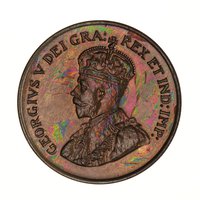
Obverse
Description:
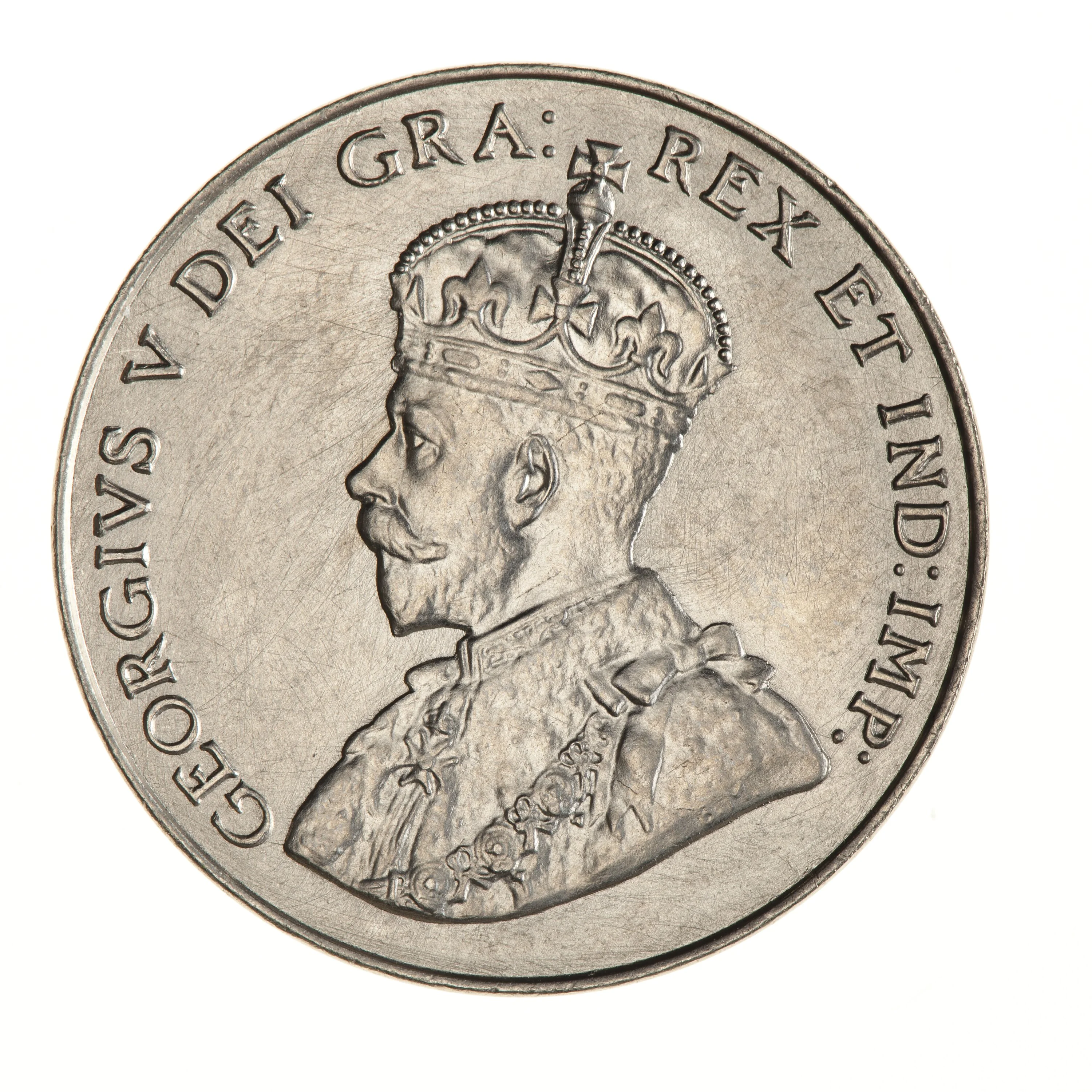
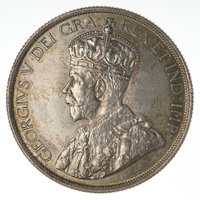
King George V crowned, left-facing bust.
Inscription:
GEORGIVS V DEI GRA: REX ET IND:IMP:
Translation:
George V by the Grace of God King and Emperor of India
Script: Latin
Language: Latin
Designer: Edgar Bertram MacKennal
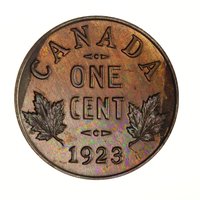
Reverse
Description:
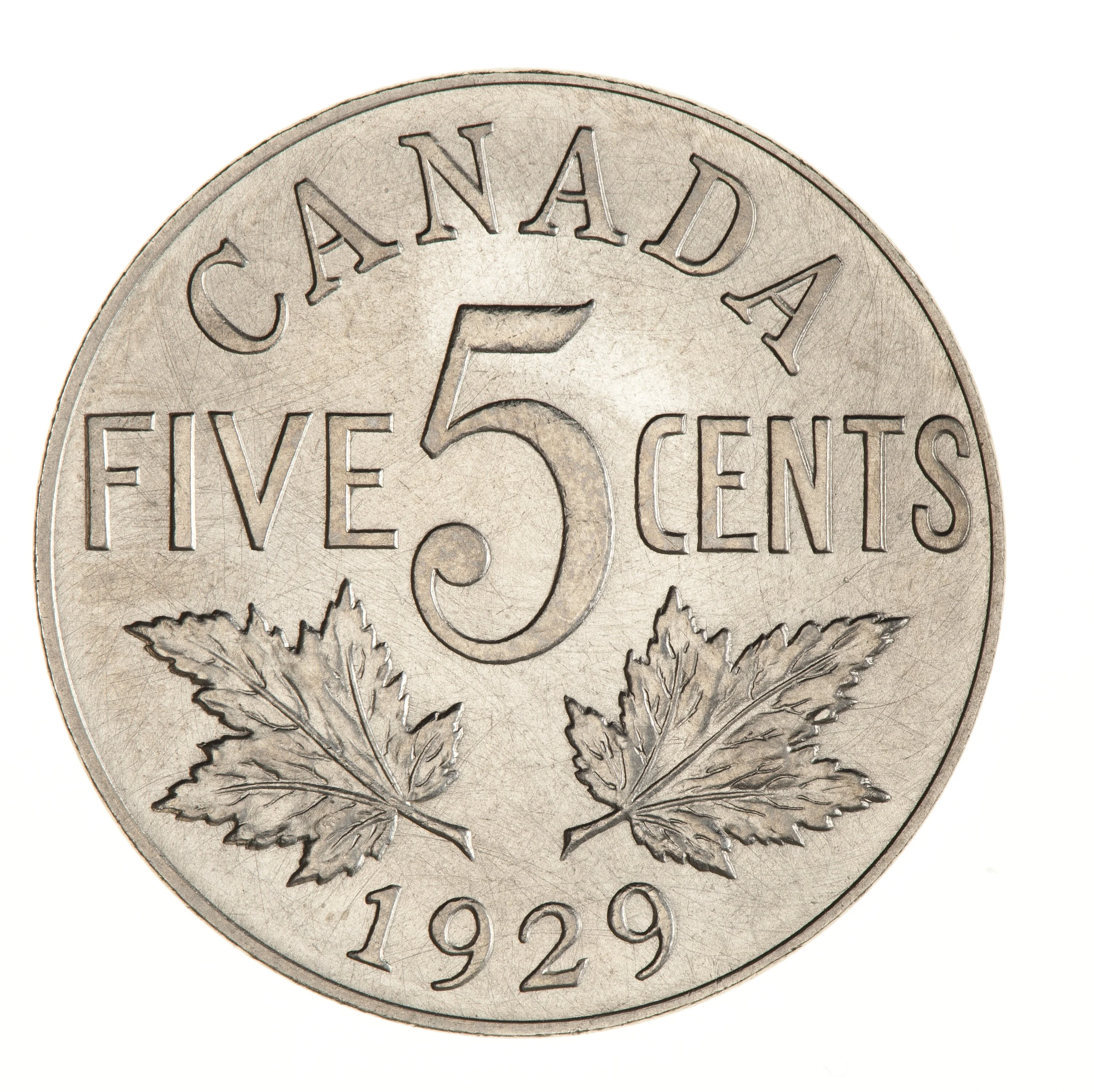
Face value flanked by "CANADA" and maple leaves.
Inscription:
CANADA
FIVE 5 CENTS
1928
FIVE 5 CENTS
1928
Script: Latin
Designer: William Henry James Blakemore
Edge
Plain
Mints
| Name | Mark |
|---|---|
| Royal Canadian Mint of Ottawa | — |
Mintings
| Year | Mint Mark | Mintage | Quality | Collection |
|---|---|---|---|---|
| 1922 | — | — | ||
| 1923 | — | 2,475,201 | ||
| 1924 | — | 3,066,658 | ||
| 1925 | — | 200,050 | ||
| 1926 | — | 933,577 | ||
| 1927 | — | 5,285,627 | ||
| 1928 | — | 4,588,725 | ||
| 1929 | — | — | ||
| 1930 | — | 3,685,991 | ||
| 1931 | — | 5,100,830 | ||
| 1932 | — | — | ||
| 1933 | — | 2,597,867 | ||
| 1934 | — | — | ||
| 1935 | — | 3,900,000 | ||
| 1936 | — | — |
Historical background
In 1922, Canada's currency situation was characterized by a transitional and somewhat fragmented system, still deeply influenced by the First World War. The country was officially on the gold standard, but it operated under a "gold exchange standard" where the Canadian dollar's value was fixed not directly to gold, but to both the British pound sterling and the U.S. dollar, which themselves were on gold standards. This created a stable but dependent monetary policy, with the Finance Act of 1914 having granted the government and chartered banks expansive powers to issue notes backed by government securities rather than gold, a wartime measure that remained in effect.
Practically, this meant a mix of currencies circulated. The federal government issued "Dominion notes," while private chartered banks still issued their own banknotes, a system unique among major nations. These banknotes were theoretically convertible into gold on demand, but in practice, convertibility had been suspended during the war and was not fully restored, leading to a managed paper currency. The value of the Canadian dollar was therefore largely maintained by the government's foreign exchange operations, using its substantial gold and foreign currency reserves in London and New York to peg the dollar within a narrow band against its U.S. counterpart.
The post-war period brought economic uncertainty, including a sharp but brief recession in 1920-21. While recovery was underway by 1922, debates about monetary reform were simmering. Critics pointed to the lack of a central bank and the perceived instability of a system reliant on multiple private note issuers. These discussions, fueled by the need for a more unified and nationally controlled monetary policy, would eventually lead to the Great Depression-era creation of the Bank of Canada in 1934. Thus, 1922 represents a point of relative stability within a system acknowledged as increasingly anachronistic and in need of modernization.
Practically, this meant a mix of currencies circulated. The federal government issued "Dominion notes," while private chartered banks still issued their own banknotes, a system unique among major nations. These banknotes were theoretically convertible into gold on demand, but in practice, convertibility had been suspended during the war and was not fully restored, leading to a managed paper currency. The value of the Canadian dollar was therefore largely maintained by the government's foreign exchange operations, using its substantial gold and foreign currency reserves in London and New York to peg the dollar within a narrow band against its U.S. counterpart.
The post-war period brought economic uncertainty, including a sharp but brief recession in 1920-21. While recovery was underway by 1922, debates about monetary reform were simmering. Critics pointed to the lack of a central bank and the perceived instability of a system reliant on multiple private note issuers. These discussions, fueled by the need for a more unified and nationally controlled monetary policy, would eventually lead to the Great Depression-era creation of the Bank of Canada in 1934. Thus, 1922 represents a point of relative stability within a system acknowledged as increasingly anachronistic and in need of modernization.
🌱 Very Common