

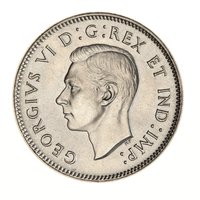
Obverse
Description:
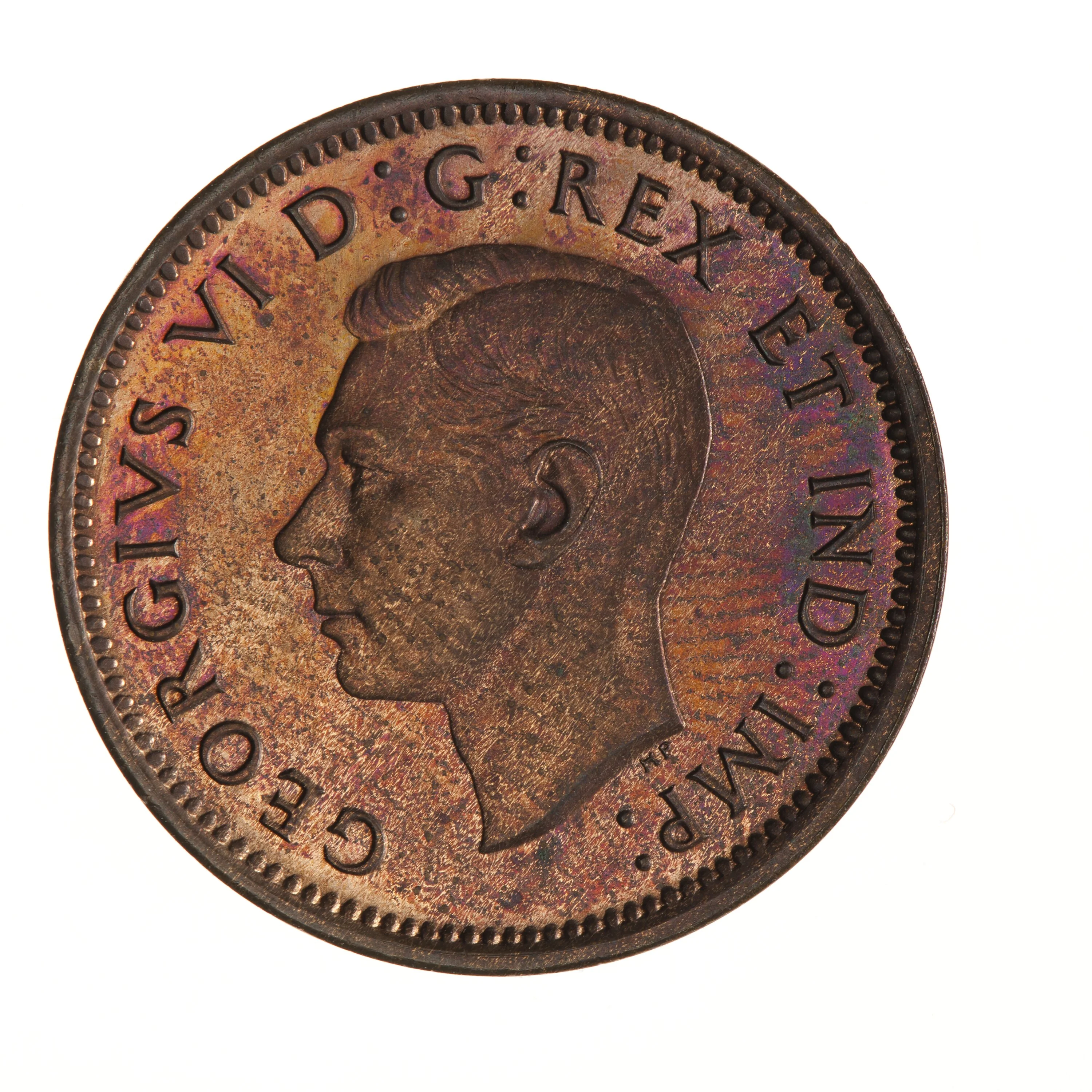
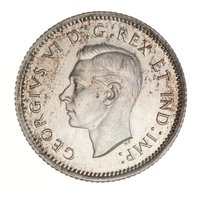
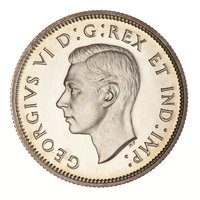
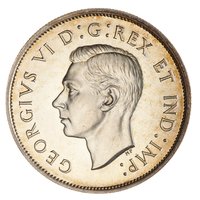
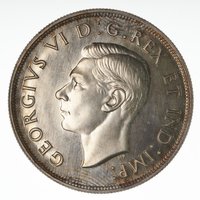
King George VI left-facing portrait.
Inscription:
GEORGIVS VI D:G:REX ET IND:IMP:
Translation:
George VI by the Grace of God King and Emperor of India
Script: Latin
Language: Latin
Engraver: Thomas Humphrey Paget
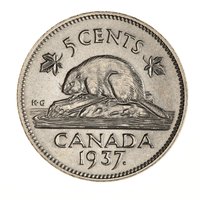
Reverse
Description:
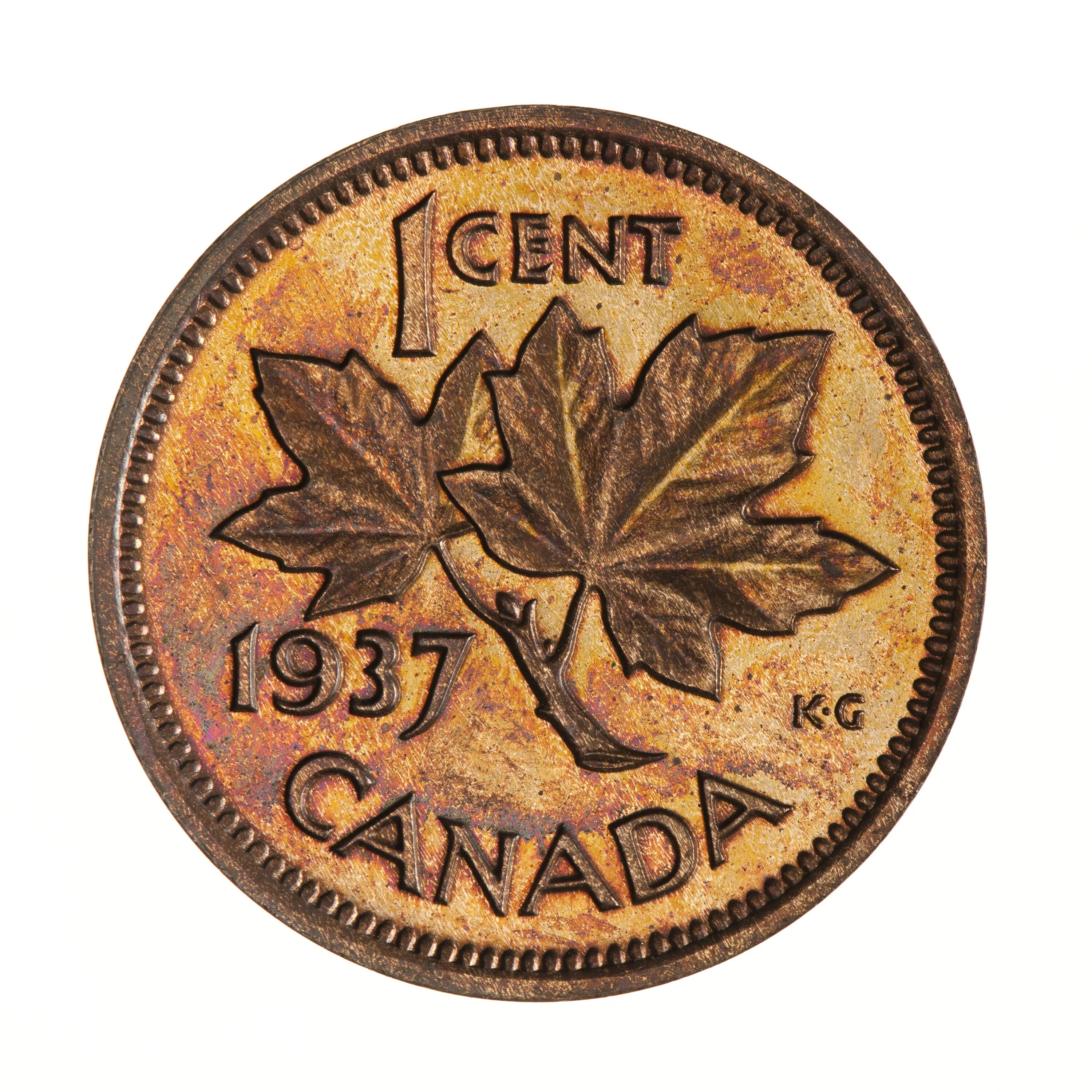
A maple twig encircled by the face value and "CANADA".
Inscription:
1 CENT
1937
CANADA
K·G
1937
CANADA
K·G
Script: Latin
Engraver: George Kruger Gray
Edge
Plain
Mints
| Name | Mark |
|---|---|
| Royal Canadian Mint of Ottawa | — |
Mintings
| Year | Mint Mark | Mintage | Quality | Collection |
|---|---|---|---|---|
| 1937 | — | 10,040,231 | ||
| 1938 | — | 18,365,608 | ||
| 1939 | — | 21,600,319 | ||
| 1940 | — | 85,740,532 | ||
| 1941 | — | 56,336,011 | ||
| 1942 | — | 76,113,708 | ||
| 1943 | — | 89,111,969 | ||
| 1944 | — | 44,131,216 | ||
| 1945 | — | 77,268,591 | ||
| 1946 | — | 56,662,071 | ||
| 1947 | — | 47,855,448 |
Historical background
In 1937, Canada’s currency system operated under the gold standard, but in a suspended and modified form. The country had officially abandoned the gold standard in 1929, and by 1937 it was part of a "gold exchange standard." This meant the Canadian dollar's value was not directly redeemable in gold for the public, but was managed by the government and the Bank of Canada (established in 1935) through its foreign exchange reserves, primarily held in sterling and U.S. dollars. The dollar's external value was thus loosely pegged to both the British pound and the U.S. dollar, with a stronger practical link to the latter, trading within a range of about $1.10 Canadian to $1.00 U.S.
Domestically, the currency landscape was complex, featuring both federal and private bank notes. Although the Bank of Canada had been granted a monopoly on note issuance, it was still in the process of phasing out the older, privately issued chartered bank notes. Consequently, in 1937, both types of notes circulated simultaneously. This period also saw the introduction of the first series of Bank of Canada notes, which began to establish a unified, national currency. The economy was slowly recovering from the worst of the Great Depression, but monetary policy remained cautious, focused on maintaining exchange rate stability and building reserves rather than aggressive domestic stimulus.
Internationally, Canada's currency policy was shaped by its position between its two major trading partners: the United Kingdom and the United States. The 1932 Ottawa Agreements had cemented trade ties with the British Empire, but the growing economic dominance of the U.S. was increasingly influential. In 1937, the Canadian government actively managed the dollar to balance these relationships, preventing excessive appreciation that could hurt exports while avoiding devaluation that might trigger inflation. This careful management reflected a broader shift toward a managed currency, setting the stage for the more flexible exchange rate regime that would follow after the Bretton Woods system was established post-World War II.
Domestically, the currency landscape was complex, featuring both federal and private bank notes. Although the Bank of Canada had been granted a monopoly on note issuance, it was still in the process of phasing out the older, privately issued chartered bank notes. Consequently, in 1937, both types of notes circulated simultaneously. This period also saw the introduction of the first series of Bank of Canada notes, which began to establish a unified, national currency. The economy was slowly recovering from the worst of the Great Depression, but monetary policy remained cautious, focused on maintaining exchange rate stability and building reserves rather than aggressive domestic stimulus.
Internationally, Canada's currency policy was shaped by its position between its two major trading partners: the United Kingdom and the United States. The 1932 Ottawa Agreements had cemented trade ties with the British Empire, but the growing economic dominance of the U.S. was increasingly influential. In 1937, the Canadian government actively managed the dollar to balance these relationships, preventing excessive appreciation that could hurt exports while avoiding devaluation that might trigger inflation. This careful management reflected a broader shift toward a managed currency, setting the stage for the more flexible exchange rate regime that would follow after the Bretton Woods system was established post-World War II.
Series: 1937 Canada circulation coins
🌱 Very Common