

Obverse
Description:
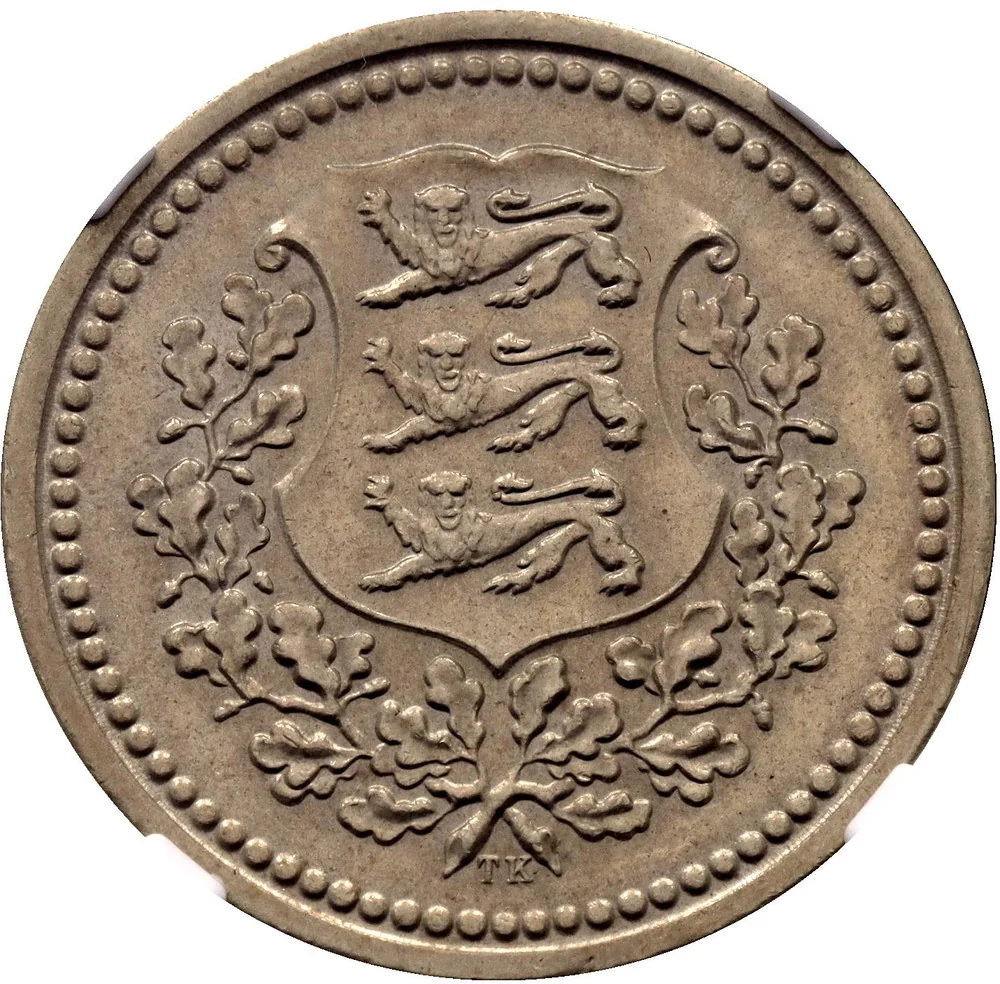
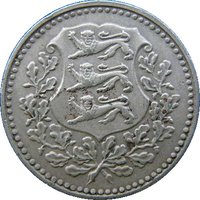
Three lions on a left-facing shield, encircled by a wreath.
Inscription:
TK
Script: Latin
Engraver: Georg Vestenberg
Reverse
Description:
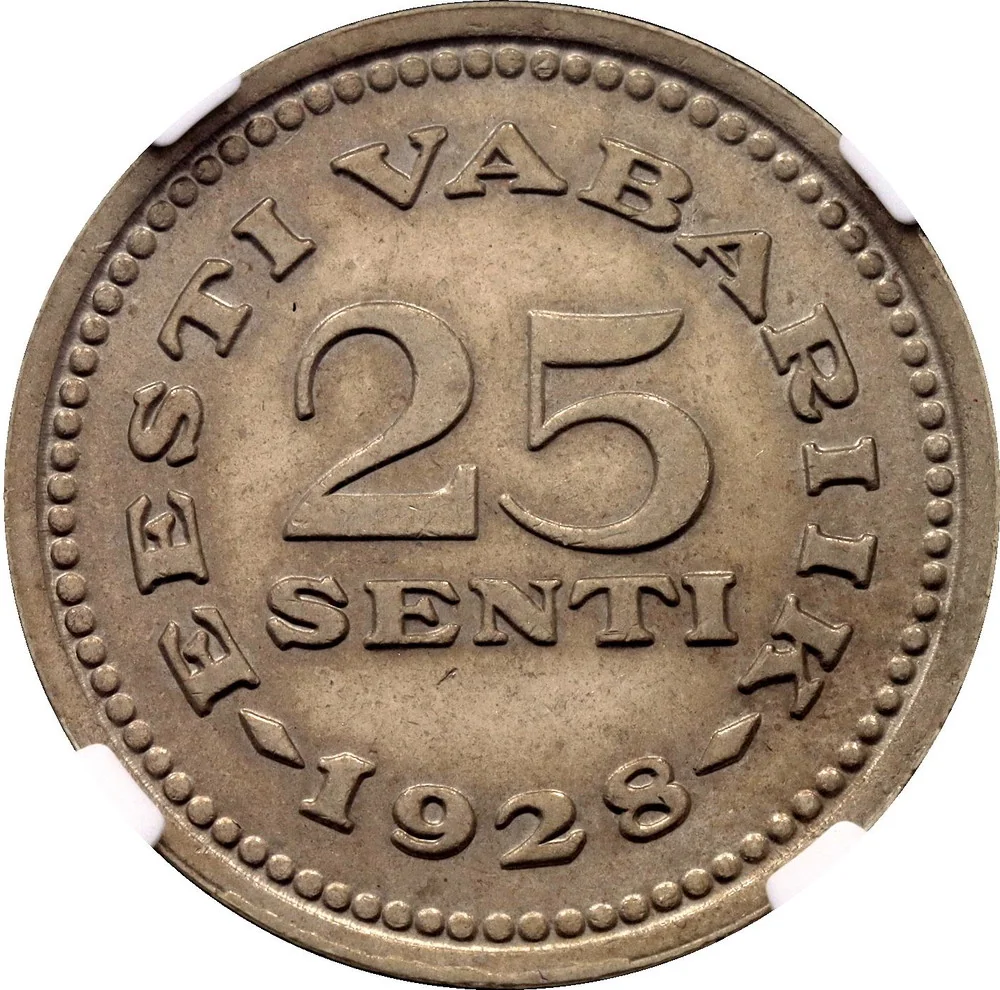
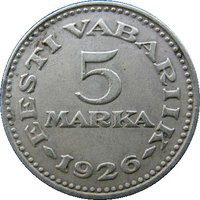
Country name encircling denomination above date.
Inscription:
EESTI VABARIIK
25 SENTI
-1928-
25 SENTI
-1928-
Translation:
REPUBLIC OF ESTONIA
25 SENTI
-1928-
25 SENTI
-1928-
Script: Latin
Language: Estonian
Engraver: Georg Vestenberg
Edge
Reeded.
Mintings
| Year | Mint Mark | Mintage | Quality | Collection |
|---|---|---|---|---|
| 1928 | — | 4,000,100 |
Historical background
By 1928, Estonia's currency, the kroon, was a symbol of the young republic's remarkable economic stabilization. Introduced in 1928 to replace the deeply devalued mark, the kroon was established with a gold standard peg, firmly fixed at 1 kroon = 100 Swedish öre or 0.403226 grams of pure gold. This decisive move, championed by Finance Minister Otto Strandman, was not merely a technical change but a foundational act of state-building, designed to instill domestic confidence and attract foreign investment after the hyperinflation and monetary chaos of the early 1920s.
The stability of the kroon was underpinned by strict fiscal discipline and a substantial gold and foreign currency reserve held by the newly established central bank, the Bank of Estonia (Eesti Pank). The state's finances were carefully managed, with balanced budgets becoming the norm. This conservative monetary policy successfully anchored prices and facilitated a period of economic growth and integration into international trade. The kroon's credibility was such that it maintained its gold parity until the global economic system itself collapsed in the early 1930s.
Consequently, the currency situation in 1928 reflected a nation that had successfully consolidated its independence through sound financial management. The stable kroon facilitated a period of relative prosperity known as the "Era of Silence," enabling investments in industry, agriculture, and public infrastructure. It stood in stark contrast to the monetary turmoil of Estonia's immediate post-war years and represented a hard-won achievement of national sovereignty and economic rationality.
The stability of the kroon was underpinned by strict fiscal discipline and a substantial gold and foreign currency reserve held by the newly established central bank, the Bank of Estonia (Eesti Pank). The state's finances were carefully managed, with balanced budgets becoming the norm. This conservative monetary policy successfully anchored prices and facilitated a period of economic growth and integration into international trade. The kroon's credibility was such that it maintained its gold parity until the global economic system itself collapsed in the early 1930s.
Consequently, the currency situation in 1928 reflected a nation that had successfully consolidated its independence through sound financial management. The stable kroon facilitated a period of relative prosperity known as the "Era of Silence," enabling investments in industry, agriculture, and public infrastructure. It stood in stark contrast to the monetary turmoil of Estonia's immediate post-war years and represented a hard-won achievement of national sovereignty and economic rationality.
🌱 Fairly Common