

Obverse
Description:
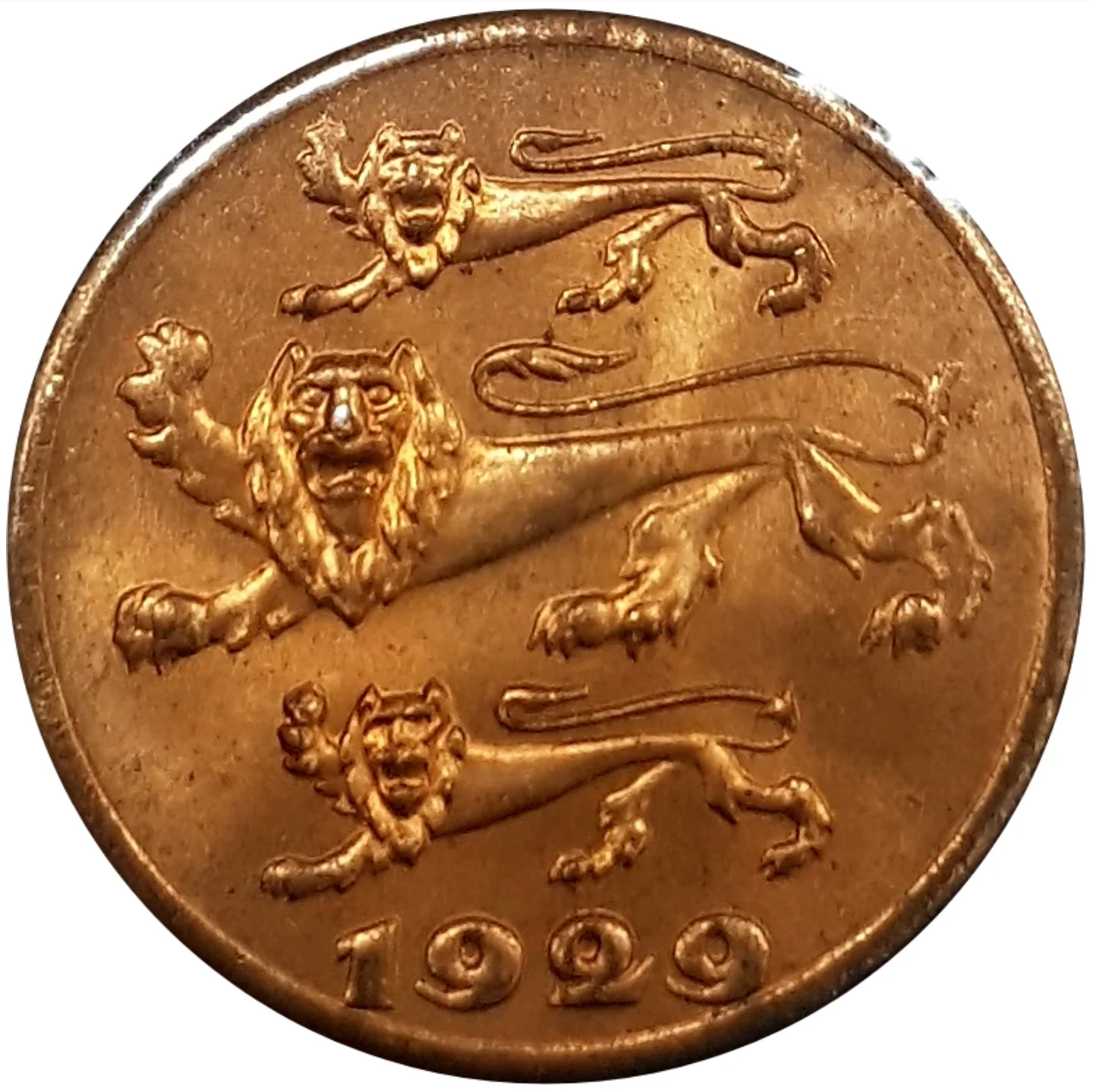
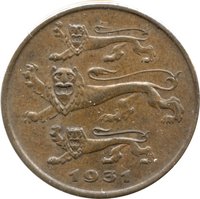
Three lions left, date below.
Inscription:
1929
Script: Latin
Engraver: Günther Reindorff
Reverse
Description:
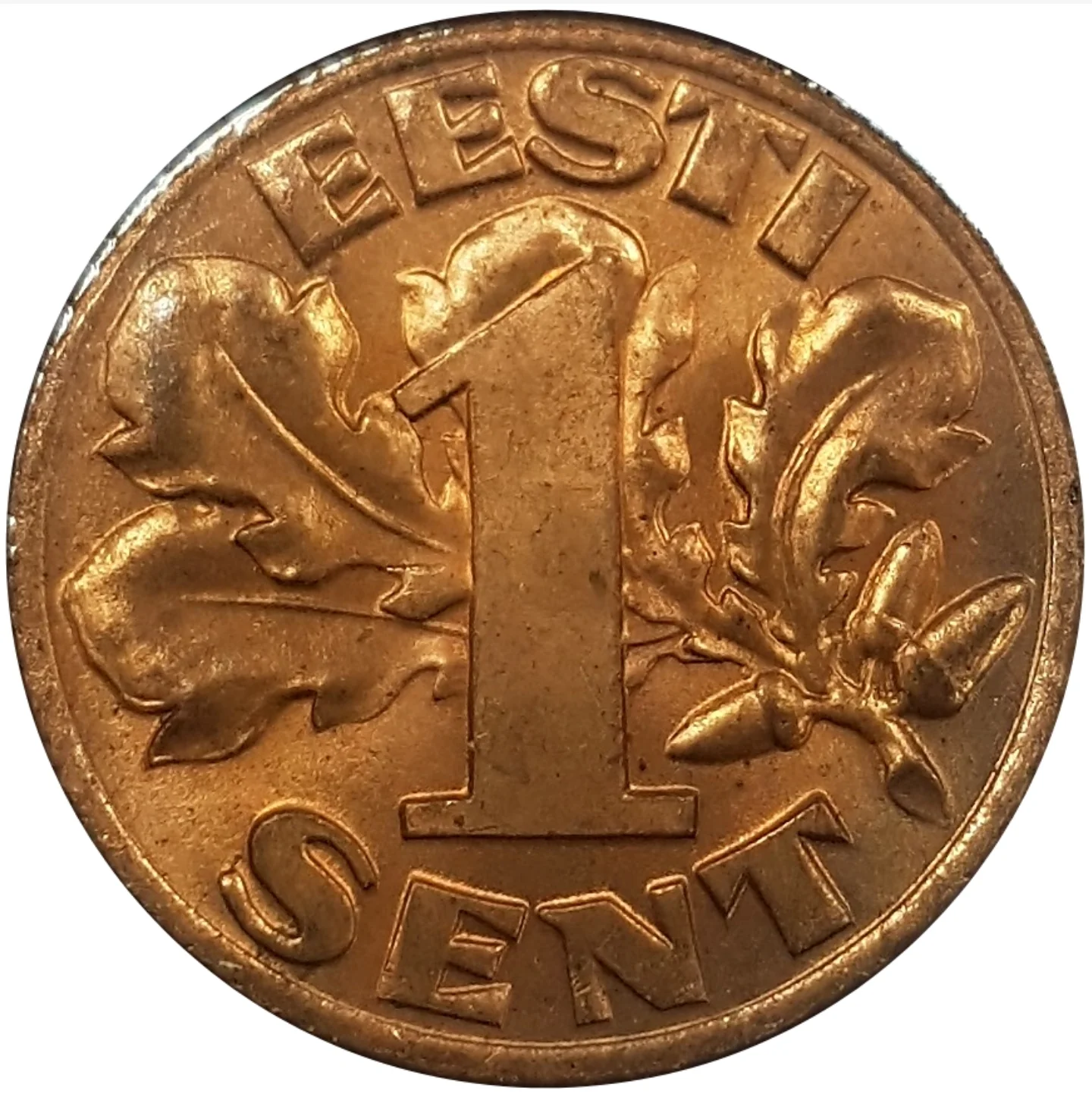
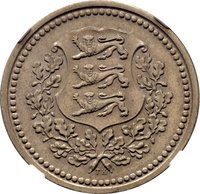
Oak leaves behind denomination.
Inscription:
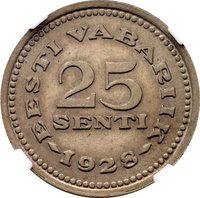
EESTI
1
SENT
1
SENT
Translation:
ESTONIA
1
CENT
1
CENT
Script: Latin
Language: Estonian
Engraver: Günther Reindorff
Edge
Plain
Mintings
| Year | Mint Mark | Mintage | Quality | Collection |
|---|---|---|---|---|
| 1929 | — | 19,292,300 |
Historical background
In 1929, Estonia’s currency, the kroon, was in a period of notable stability, a direct result of the comprehensive monetary reform enacted in 1928. This reform, masterminded by Finance Minister Otto Strandman and the Bank of Estonia, replaced the deeply unstable mark, which had suffered hyperinflation in the early 1920s. The new kroon was introduced at a fixed rate of 1 kroon to 100 marks and, crucially, was placed on the gold standard, pegged to the Swedish krona, which itself was linked to gold. This move immediately restored confidence, ended inflation, and integrated Estonia into the international financial system.
The primary driver for this reform was the need to attract foreign investment and facilitate trade. The pre-reform mark’s volatility had been a major obstacle to economic growth and credibility. By adopting a gold-backed currency, Estonia signaled its commitment to fiscal discipline and monetary orthodoxy, which was highly regarded globally. The kroon’s stability in 1929 fostered a favorable environment for business and helped consolidate the state’s finances after the turbulent first decade of independence.
However, this stability existed within a fragile context. The Estonian economy was heavily agricultural and export-dependent, making it vulnerable to shifts in global commodity prices. While the gold standard provided stability, it also limited the government’s ability to conduct independent monetary policy in the face of economic shocks. Within just a few years, the Great Depression would severely test the fixed system, leading to a dramatic fall in exports and ultimately forcing Estonia to abandon the gold standard in 1933, highlighting the inherent tensions of maintaining such a rigid currency regime in a small, open economy.
The primary driver for this reform was the need to attract foreign investment and facilitate trade. The pre-reform mark’s volatility had been a major obstacle to economic growth and credibility. By adopting a gold-backed currency, Estonia signaled its commitment to fiscal discipline and monetary orthodoxy, which was highly regarded globally. The kroon’s stability in 1929 fostered a favorable environment for business and helped consolidate the state’s finances after the turbulent first decade of independence.
However, this stability existed within a fragile context. The Estonian economy was heavily agricultural and export-dependent, making it vulnerable to shifts in global commodity prices. While the gold standard provided stability, it also limited the government’s ability to conduct independent monetary policy in the face of economic shocks. Within just a few years, the Great Depression would severely test the fixed system, leading to a dramatic fall in exports and ultimately forcing Estonia to abandon the gold standard in 1933, highlighting the inherent tensions of maintaining such a rigid currency regime in a small, open economy.
🌱 Common