

5 marka – Estonia
Add to wishlist
Estonia
Context
Material
Diameter: 23 mm
Weight: 4.85 g
Shape: Round
Composition: Nickel brass
Magnetic: No
Technique: Milled
Alignment: Medal alignment
flip
References
KM: #
Numista: #17471
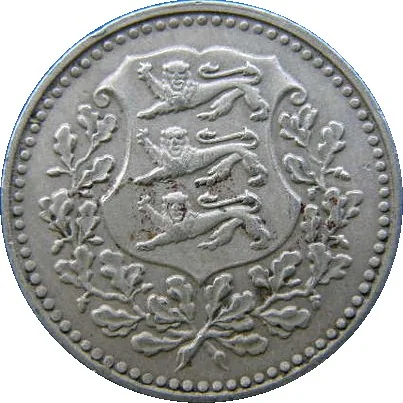
Obverse
Description:
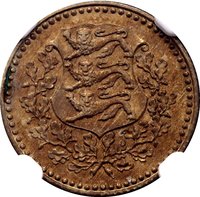
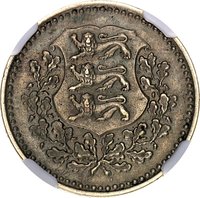
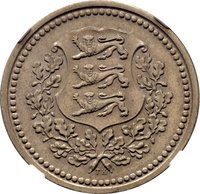
Three lions left on a shield in a wreath.
Engraver: Georg Vestenberg
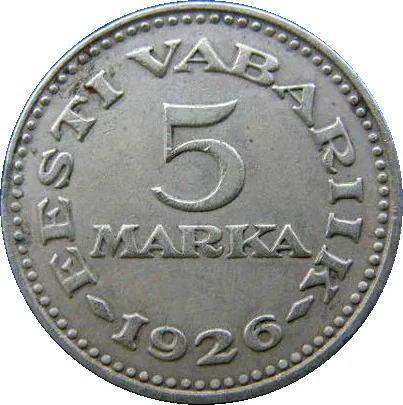
Reverse
Description:
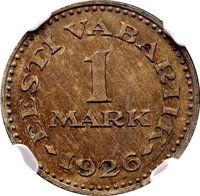
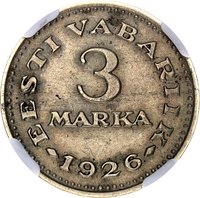
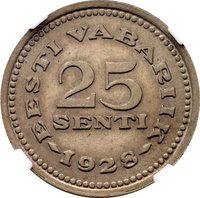
Denomination over date.
Inscription:
EESTI VABARIIK
5
MARKA
1926
5
MARKA
1926
Translation:
REPUBLIC OF ESTONIA
5
MARK
1926
5
MARK
1926
Script: Latin
Language: Estonian
Engraver: Georg Vestenberg
Edge
Reeded.
Mintings
| Year | Mint Mark | Mintage | Quality | Collection |
|---|---|---|---|---|
| 1926 | — | 1,038,030 |
Historical background
In 1926, Estonia was operating under the Estonian mark, a currency introduced in 1919 following independence. However, this period was one of transition and stabilization after a tumultuous decade. The mark had been subject to significant inflation during the early 1920s, particularly during the economic disruption of the Estonian War of Independence. By 1926, the currency was relatively stable compared to its peak inflationary period, but it remained fundamentally weak and lacked international confidence, which hindered foreign trade and investment.
The key economic focus of the mid-1920s was the preparation for a major monetary reform to replace the mark with a stronger, gold-backed currency. This work, led by the Bank of Estonia (Eesti Pank), founded in 1919, was actively underway in 1926. The goal was to establish a new monetary unit, the kroon, which would be pegged to the Swedish krona and indirectly to the gold standard. This reform was deemed essential to solidify Estonia's economic sovereignty, curb lingering inflation expectations, and integrate the nation more securely into the global financial system.
Consequently, 1926 represents a calm before a decisive change. The mark remained in circulation, but its days were numbered as the technical and legislative groundwork for the kroon was finalized. The reform would ultimately come to fruition in 1928, when the kroon was introduced at a rate of 100 marks to 1 kroon. Therefore, the currency situation in 1926 was characterized by a managed but fragile stability under the old system, with all official efforts directed toward launching a new and more robust monetary regime.
The key economic focus of the mid-1920s was the preparation for a major monetary reform to replace the mark with a stronger, gold-backed currency. This work, led by the Bank of Estonia (Eesti Pank), founded in 1919, was actively underway in 1926. The goal was to establish a new monetary unit, the kroon, which would be pegged to the Swedish krona and indirectly to the gold standard. This reform was deemed essential to solidify Estonia's economic sovereignty, curb lingering inflation expectations, and integrate the nation more securely into the global financial system.
Consequently, 1926 represents a calm before a decisive change. The mark remained in circulation, but its days were numbered as the technical and legislative groundwork for the kroon was finalized. The reform would ultimately come to fruition in 1928, when the kroon was introduced at a rate of 100 marks to 1 kroon. Therefore, the currency situation in 1926 was characterized by a managed but fragile stability under the old system, with all official efforts directed toward launching a new and more robust monetary regime.
⭐ Rare