

1 cent – Ceylon
Add to wishlist
Sri Lanka
Context
Years: 1904–1910
Country: Sri Lanka
Issuer: Ceylon
Ruler: Edward VII
Currency:
(1871—1972)
Demonetized: Yes
Total mintage: 16,525,000
Material
References
KM: #
Numista: #14672
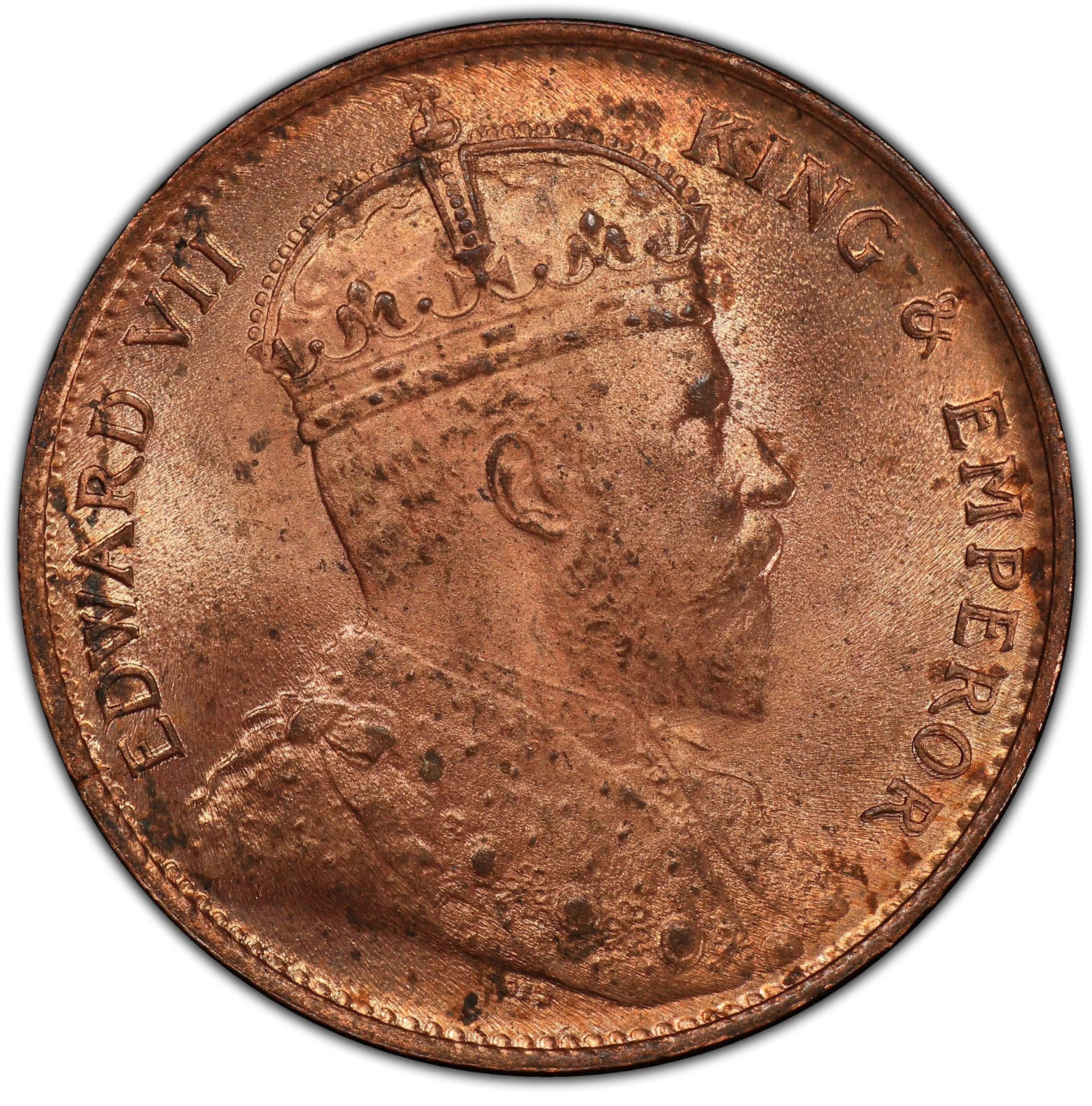
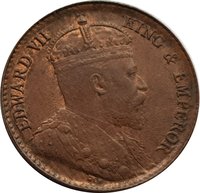
Obverse
Description:
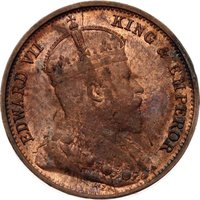
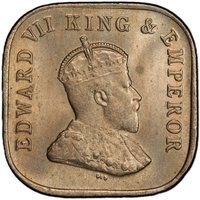
Right-facing crowned bust.
Inscription:
EDWARD VII KING & EMPEROR
Translation:
EDWARD VII KING & EMPEROR
Engraver: George William de Saulles
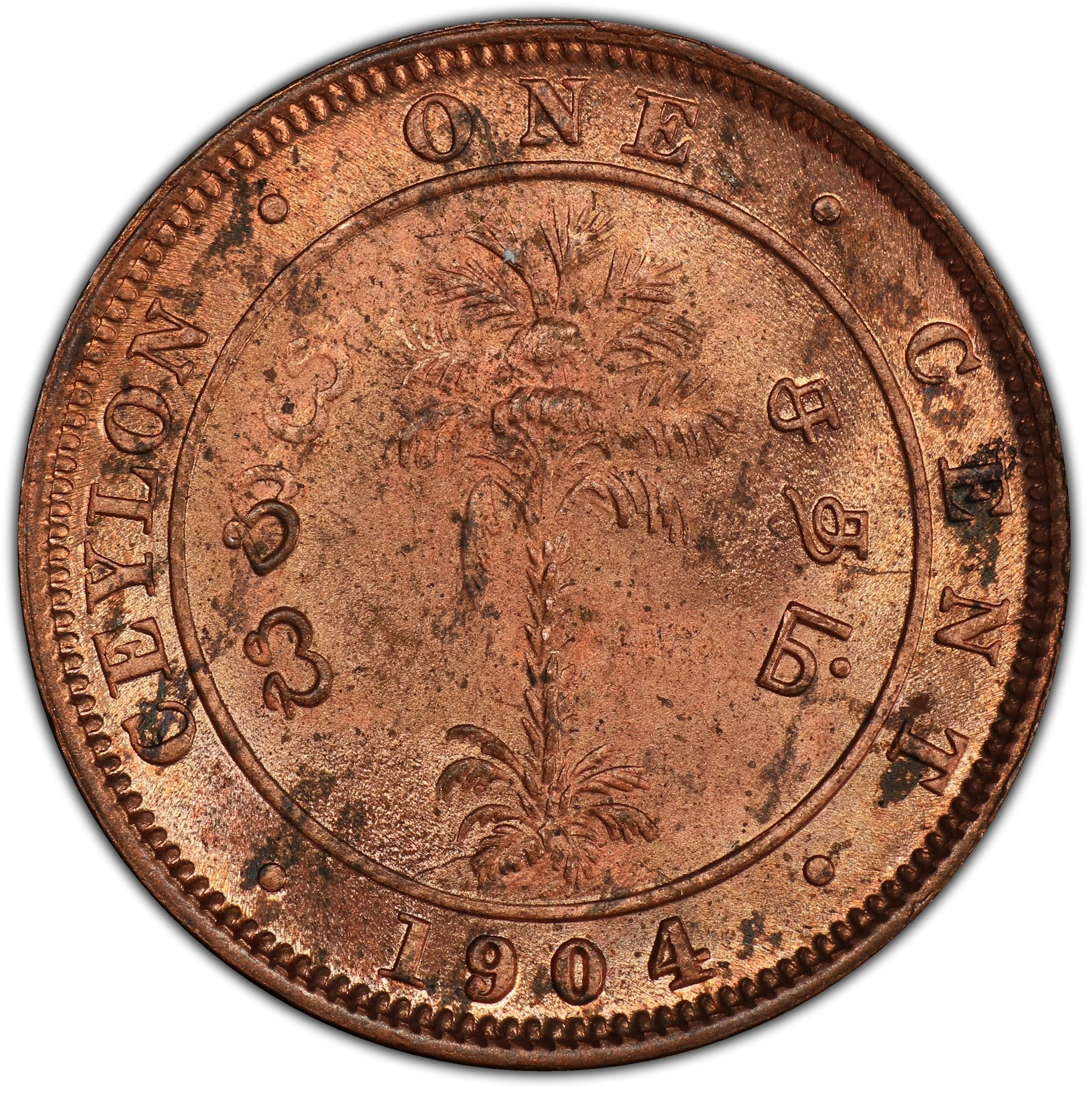
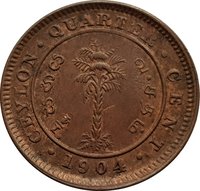
Reverse
Description:
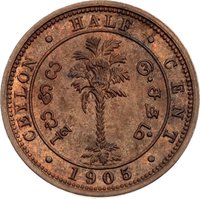
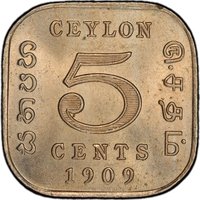
Denomination outside, palm tree and Sinhalese-Tamil lettering inside.
Inscription:
CEYLON · ONE · CENT
සතය சதம்
· 1904 ·
සතය சதம்
· 1904 ·
Translation:
CEYLON · ONE · CENT
One Cent One Cent
· 1904 ·
One Cent One Cent
· 1904 ·
Engraver: Leonard Charles Wyon
Edge
Plain
Mints
| Name | Mark |
|---|---|
| Kolkata / Calcutta / Murshidabad | — |
Mintings
| Year | Mint Mark | Mintage | Quality | Collection |
|---|---|---|---|---|
| 1904 | — | 2,529,000 | ||
| 1904 | — | — | Proof | |
| 1905 | — | 1,509,000 | ||
| 1905 | — | — | Proof | |
| 1906 | — | — | Proof | |
| 1906 | — | 1,751,000 | ||
| 1908 | — | — | ||
| 1908 | — | — | Proof | |
| 1909 | — | 2,500,000 | ||
| 1909 | — | — | Proof | |
| 1910 | — | 8,236,000 | ||
| 1910 | — | — | Proof |
Historical background
In 1904, Ceylon operated under a currency board system, with the Indian rupee as its official legal tender. This arrangement was a direct consequence of the island's economic integration into the British Indian monetary sphere, a linkage formalised in the late 19th century to facilitate trade and administrative efficiency within the Empire. The Ceylon government issued its own notes and coins, but these were strictly backed by and convertible into Indian rupees held in reserve, ensuring a fixed parity. Consequently, Ceylon's money supply and interest rates were largely dictated by financial conditions in India, particularly by the outflow and inflow of rupees to balance trade.
The system faced periodic strains, notably a recurring complaint of currency scarcity, especially of small-denomination coins for everyday transactions. This was partly due to the export of silver rupees to India to settle Ceylon's trade deficits with the mainland, a process that could drain coin from local circulation. The plantation economy—dominated by coffee (though recovering from blight) and rapidly expanding tea and rubber—generated export earnings, but the rigid currency board structure limited the government's ability to manage liquidity. Furthermore, the use of the Indian rupee sometimes complicated Ceylon's separate and growing trade with other regions, like Europe and Australia.
Despite these operational frictions, the currency situation in 1904 was generally viewed as stable and credible, avoiding the exchange rate volatility that might have hampered the vital plantation sector. There was little serious political movement for a separate Ceylonese currency at this time, as the link to India provided a trusted anchor. However, the inherent limitations of the system, particularly its susceptibility to Indian monetary policies and the occasional scarcity of specie, sowed the seeds for future debates that would eventually lead to Ceylon establishing its own independent rupee in 1932.
The system faced periodic strains, notably a recurring complaint of currency scarcity, especially of small-denomination coins for everyday transactions. This was partly due to the export of silver rupees to India to settle Ceylon's trade deficits with the mainland, a process that could drain coin from local circulation. The plantation economy—dominated by coffee (though recovering from blight) and rapidly expanding tea and rubber—generated export earnings, but the rigid currency board structure limited the government's ability to manage liquidity. Furthermore, the use of the Indian rupee sometimes complicated Ceylon's separate and growing trade with other regions, like Europe and Australia.
Despite these operational frictions, the currency situation in 1904 was generally viewed as stable and credible, avoiding the exchange rate volatility that might have hampered the vital plantation sector. There was little serious political movement for a separate Ceylonese currency at this time, as the link to India provided a trusted anchor. However, the inherent limitations of the system, particularly its susceptibility to Indian monetary policies and the occasional scarcity of specie, sowed the seeds for future debates that would eventually lead to Ceylon establishing its own independent rupee in 1932.
🌱 Common