

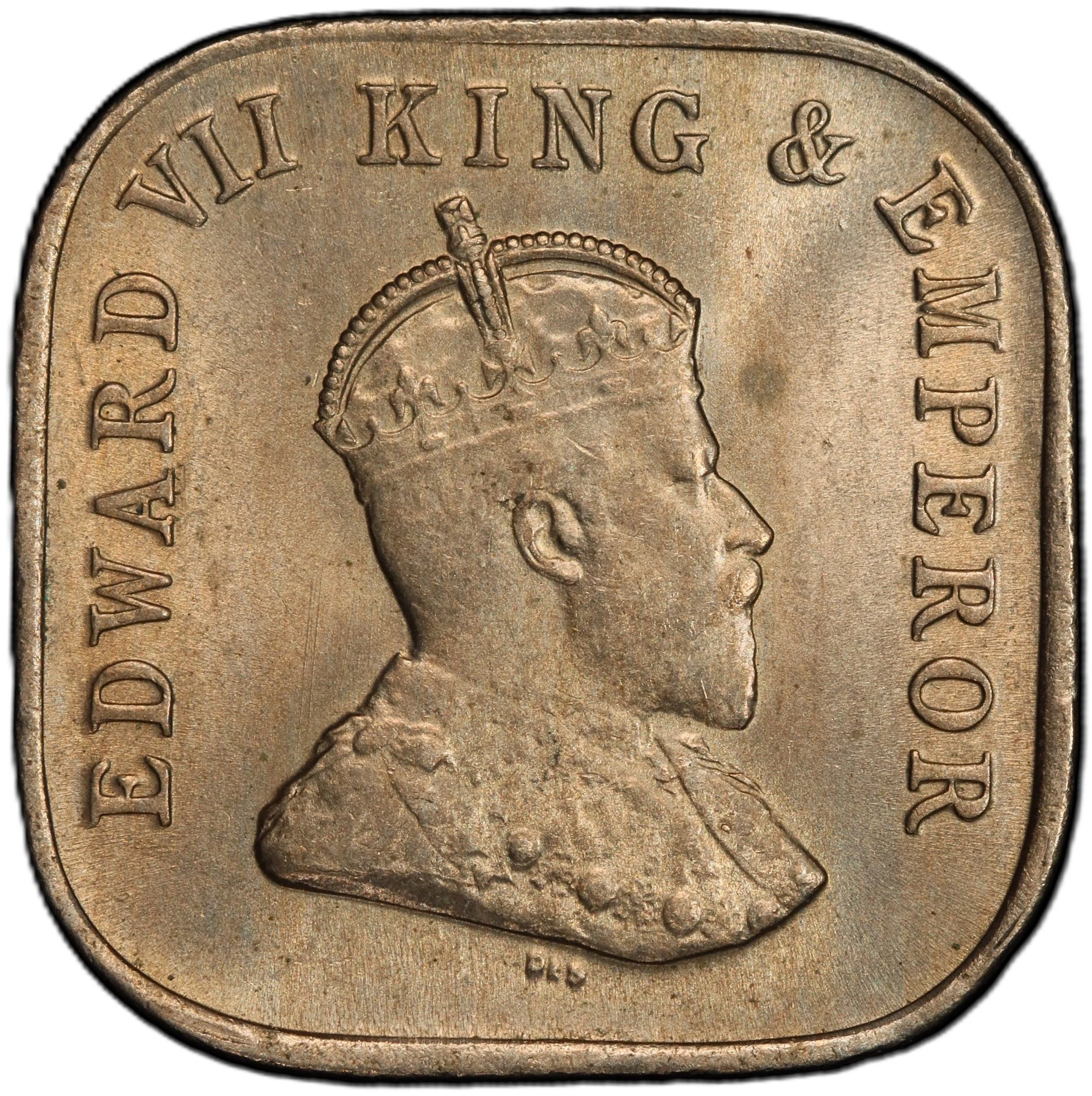
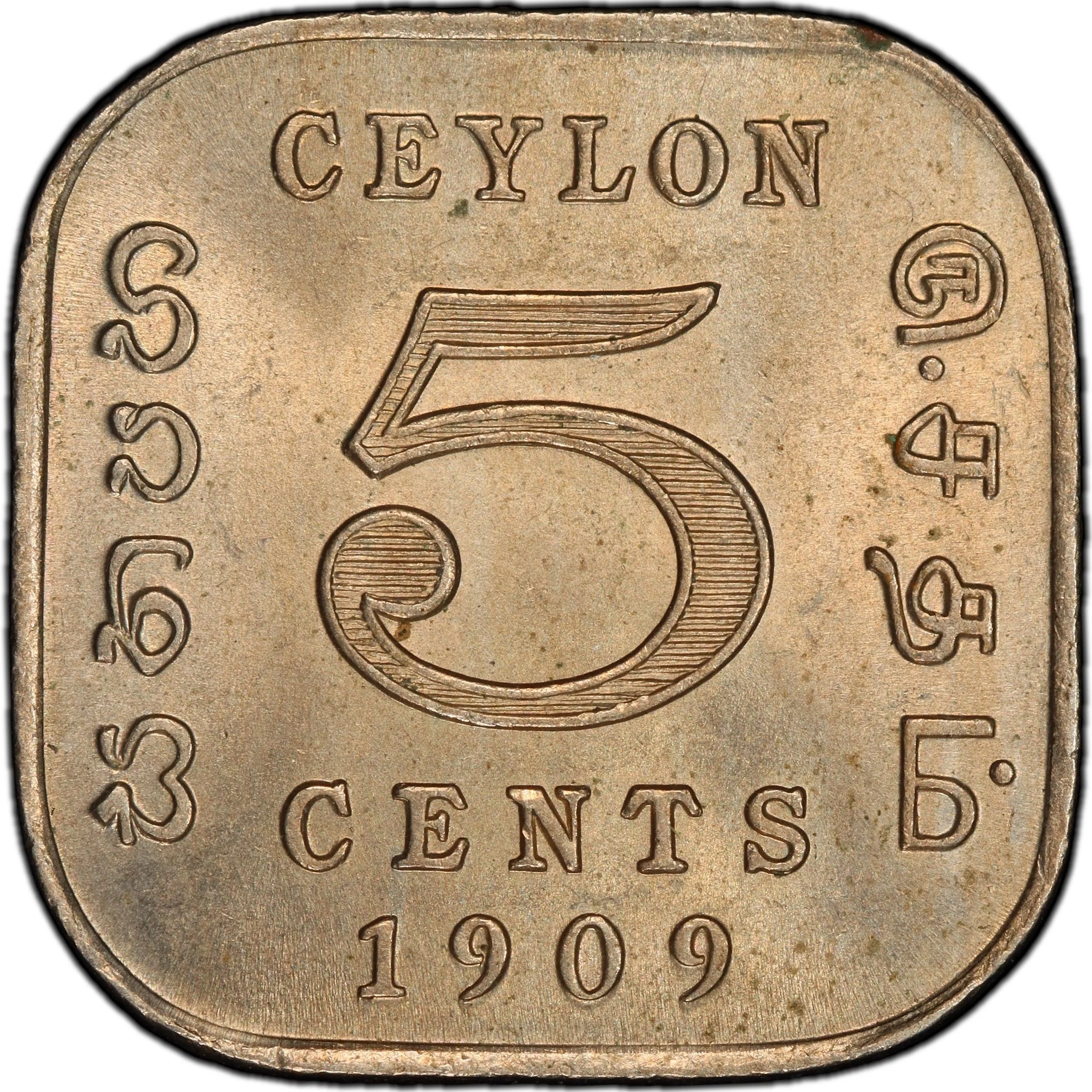
5 cents – Ceylon
Add to wishlist
Sri Lanka
Context
Years: 1909–1910
Country: Sri Lanka
Issuer: Ceylon
Ruler: Edward VII
Currency:
(1871—1972)
Demonetized: Yes
Total mintage: 6,000,000
Material
Weight: 3.9 g
Thickness: 1.71 mm
Shape: Square with rounded corners
Composition: Copper-nickel
Technique: Milled
Alignment: Medal alignment
flip
References
KM: #
Numista: #12117
Obverse
Description:
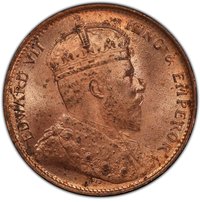
Right-facing crowned bust.
Inscription:
EDWARD VII KING & EMPEROR
Translation:
EDWARD VII KING & EMPEROR
Engraver: George William de Saulles
Reverse
Edge
Plain
Mints
| Name | Mark |
|---|---|
| Royal Mint (Tower Hill) | — |
Mintings
| Year | Mint Mark | Mintage | Quality | Collection |
|---|---|---|---|---|
| 1909 | — | 2,000,000 | ||
| 1910 | — | 4,000,000 |
Historical background
In 1909, Ceylon operated under a currency board system, firmly integrated into the British imperial monetary framework. The island's official currency was the Ceylon Rupee, which was not a fiat currency but a sterling-exchange standard. Its value was legally defined as equivalent to two shillings and three pence British sterling (2s 3d), a fixed rate established in 1901. The Currency Notes Ordinance of 1884 governed the issuance of paper money, requiring the full backing of rupee coins and sterling securities held in London, ensuring strict convertibility and maintaining strong public confidence in the notes.
The monetary landscape was dominated by the Indian Silver Rupee, which remained legal tender and circulated widely alongside the Ceylon Government's own rupee coins and notes. This created a practical bimetallic scenario, though the system was effectively managed on a gold-exchange standard via sterling. A persistent concern for colonial authorities was the outward flow of silver rupees to India to settle trade deficits, leading to occasional shortages of subsidiary coinage in Ceylon. This prompted discussions about the cost and logistics of maintaining an adequate supply of small change for daily transactions.
Economically, this rigid system provided stability for the plantation export economy (centred on tea, rubber, and coconut), facilitating reliable exchange rates with London, the centre of finance and trade. However, it also meant Ceylon had no independent monetary policy; its money supply was entirely determined by the balance of payments and the reserves held by the Currency Board. The year 1909 thus represents a period of monetary orthodoxy within the British Empire, where colonial currency was primarily a mechanism to ensure fiscal discipline and seamless financial integration with the imperial core, rather than a tool for domestic economic management.
The monetary landscape was dominated by the Indian Silver Rupee, which remained legal tender and circulated widely alongside the Ceylon Government's own rupee coins and notes. This created a practical bimetallic scenario, though the system was effectively managed on a gold-exchange standard via sterling. A persistent concern for colonial authorities was the outward flow of silver rupees to India to settle trade deficits, leading to occasional shortages of subsidiary coinage in Ceylon. This prompted discussions about the cost and logistics of maintaining an adequate supply of small change for daily transactions.
Economically, this rigid system provided stability for the plantation export economy (centred on tea, rubber, and coconut), facilitating reliable exchange rates with London, the centre of finance and trade. However, it also meant Ceylon had no independent monetary policy; its money supply was entirely determined by the balance of payments and the reserves held by the Currency Board. The year 1909 thus represents a period of monetary orthodoxy within the British Empire, where colonial currency was primarily a mechanism to ensure fiscal discipline and seamless financial integration with the imperial core, rather than a tool for domestic economic management.
🌱 Common