

½ Gulden – Netherlands
Netherlands
Context
Years: 1846–1848
Issuer: Netherlands 
Ruler: William II
Currency:
(1817—2001)
Demonetized: Yes
Total mintage: 5,205,786
Material
References
KM: #Click to copy to clipboard73
Numista: #6548
Value
Exchange value: ½ NLG
Bullion value: $13.71
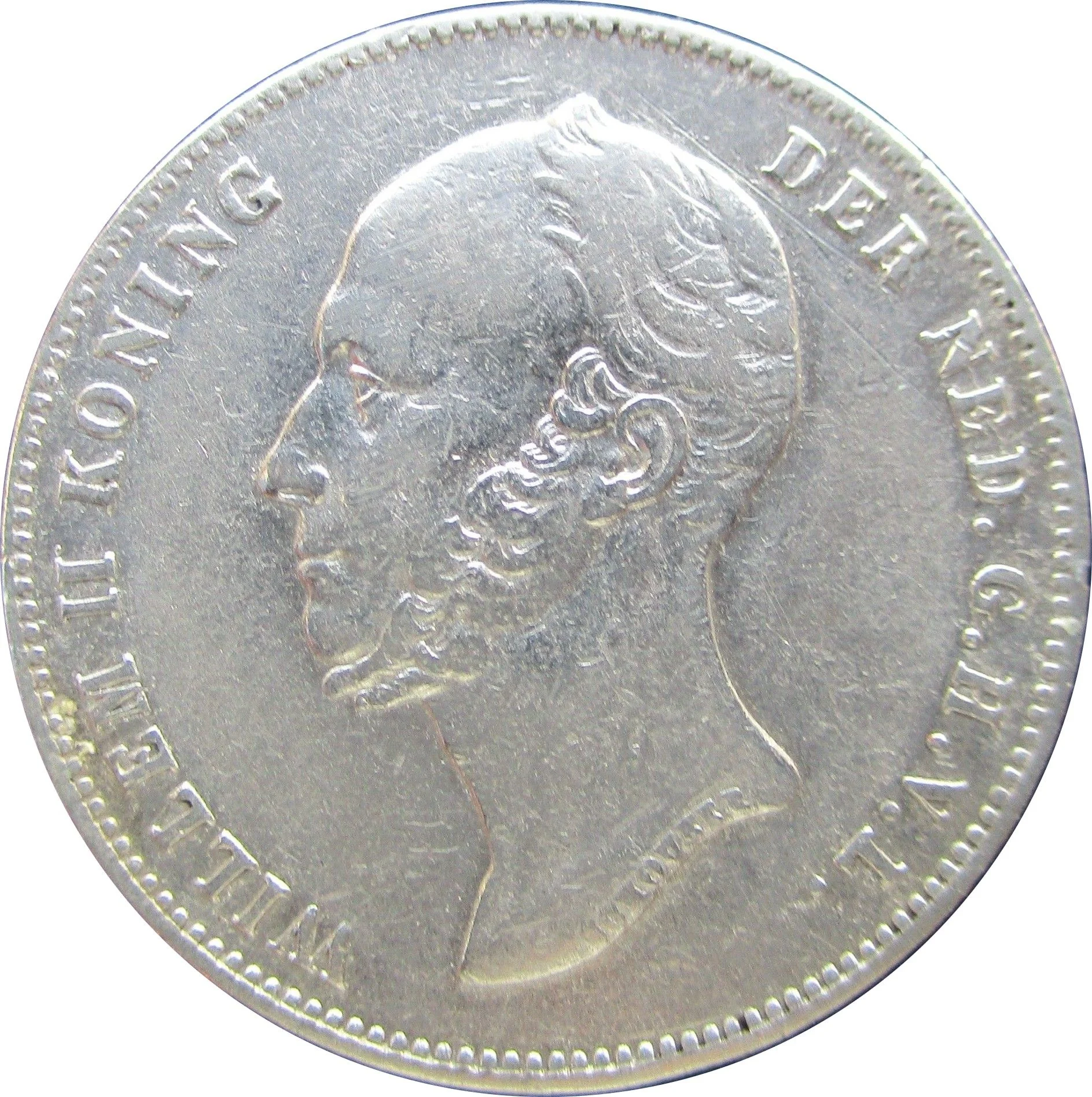
Obverse
Description:
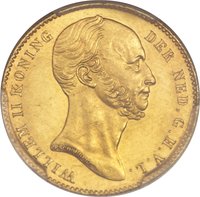
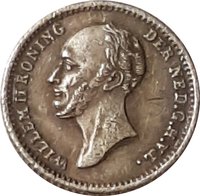
King Willem II's decapitated statue
Inscription:
WILLEM II KONING DER NED. G. H. V. L.
SCHOUBERG
SCHOUBERG
Translation:
WILLEM II KING OF THE NED. G. H. V. L.
SCHOUBERG
SCHOUBERG
Script: Latin
Language: Dutch
Engraver: Johannis Petrus Schouberg
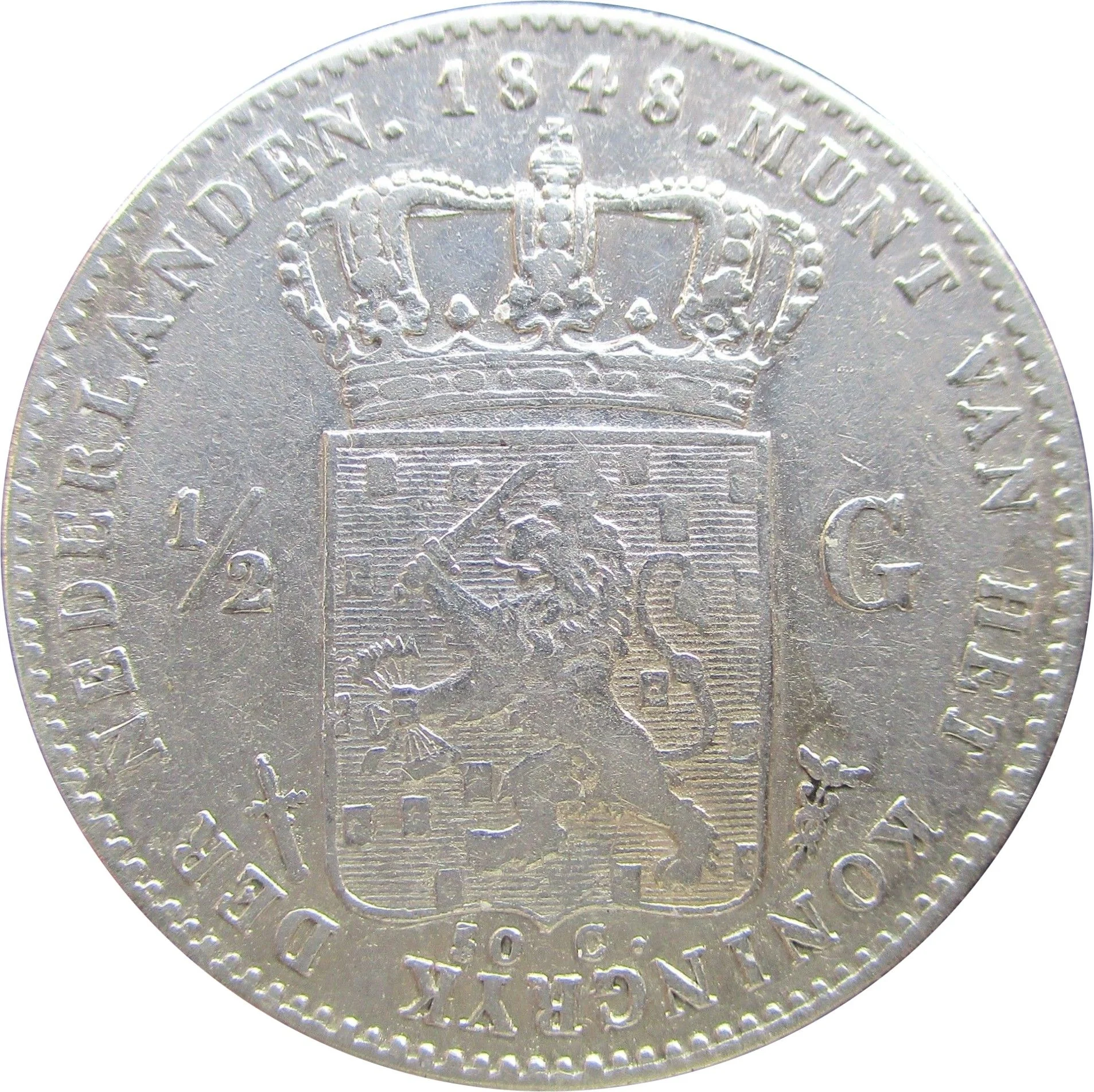
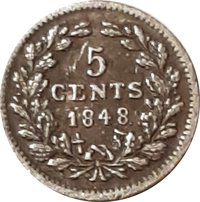
Reverse
Edge
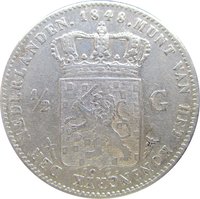
Milled or inscripted (see year comments for lettering)
Categories
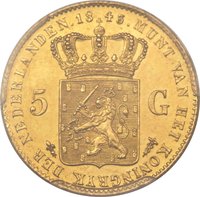
| Symbol> Crown |
| Symbols> Coat of Arms |
Mints
| Name | Mark |
|---|---|
| Royal Dutch Mint | — |
Mintings
| Year | Mint Mark | Mintage | Quality | Collection |
|---|---|---|---|---|
| 1846 | — | — | ||
| 1846 | — | — | Proof | |
| 1847 | — | 1,110,882 | ||
| 1847 | — | — | Proof | |
| 1848 | — | 4,094,904 |
Historical background
In 1846, the Netherlands was navigating a complex and transitional currency landscape, caught between its mercantile past and the need for modern financial integration. The country operated on a de facto silver standard, with the guilder (or gulden) as its unit, but the system was not yet formally codified into law. This period was characterized by the circulation of a bewildering variety of coins, both domestic and foreign. Alongside official Dutch guilders, older Spanish and French coins, as well as regional and municipal issues, remained in use, creating practical challenges for trade and commerce due to inconsistent valuations and a lack of uniform national currency.
This monetary disarray was a legacy of the Napoleonic era and the subsequent creation of the Kingdom of the Netherlands in 1815. Previous attempts at reform, including the Monetary Law of 1816 which introduced the decimal rijksdaalder, had not fully succeeded in creating a single, trusted circulating medium. The situation was further complicated by the global shift in the relative value of gold and silver; the discovery of new silver supplies was beginning to depress its value, subtly undermining the silver-based system. Economic thinkers and policymakers were increasingly aware that a clear, uniform standard was essential for the nation's industrial and commercial development.
Consequently, the late 1840s became a period of intense debate and preparation for definitive reform. The government, led by figures like Finance Minister Floris van Hall, was moving toward legislation that would formally establish a single, national currency. This culminated in the Dutch Coinage Act of 1847, which took effect in 1848. The 1846 moment, therefore, represents the final year of the old, fragmented system, immediately preceding the establishment of a modern, unified silver standard that would provide much-needed stability and pave the way for the Netherlands' economic integration in the decades to follow.
This monetary disarray was a legacy of the Napoleonic era and the subsequent creation of the Kingdom of the Netherlands in 1815. Previous attempts at reform, including the Monetary Law of 1816 which introduced the decimal rijksdaalder, had not fully succeeded in creating a single, trusted circulating medium. The situation was further complicated by the global shift in the relative value of gold and silver; the discovery of new silver supplies was beginning to depress its value, subtly undermining the silver-based system. Economic thinkers and policymakers were increasingly aware that a clear, uniform standard was essential for the nation's industrial and commercial development.
Consequently, the late 1840s became a period of intense debate and preparation for definitive reform. The government, led by figures like Finance Minister Floris van Hall, was moving toward legislation that would formally establish a single, national currency. This culminated in the Dutch Coinage Act of 1847, which took effect in 1848. The 1846 moment, therefore, represents the final year of the old, fragmented system, immediately preceding the establishment of a modern, unified silver standard that would provide much-needed stability and pave the way for the Netherlands' economic integration in the decades to follow.
🌱 Fairly Common