

10 pesos – Uruguay
Add to wishlist
Circulating commemorative coins
Commemoration: Sesquicentennial of Revolution Against Spain
Uruguay
Obverse
Description:
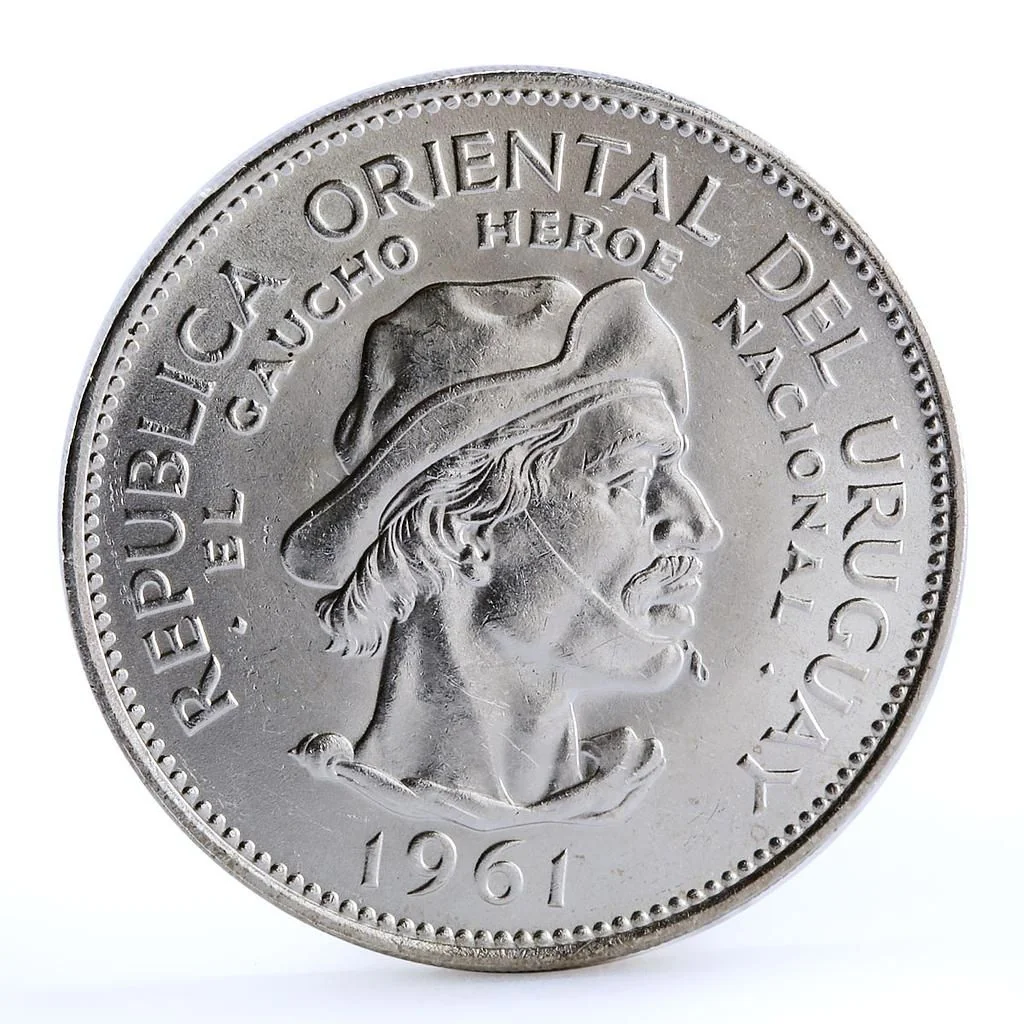
Bust right in hat, date beneath.
Inscription:
REPUBLICA ORIENTAL DEL URUGUAY
EL GAUCHO HEROE NACIONAL
1961
EL GAUCHO HEROE NACIONAL
1961
Translation:
Eastern Republic of Uruguay
The Gaucho National Hero
1961
The Gaucho National Hero
1961
Script: Latin
Language: Spanish
Engraver: Michael Rizzello
Reverse
Description:
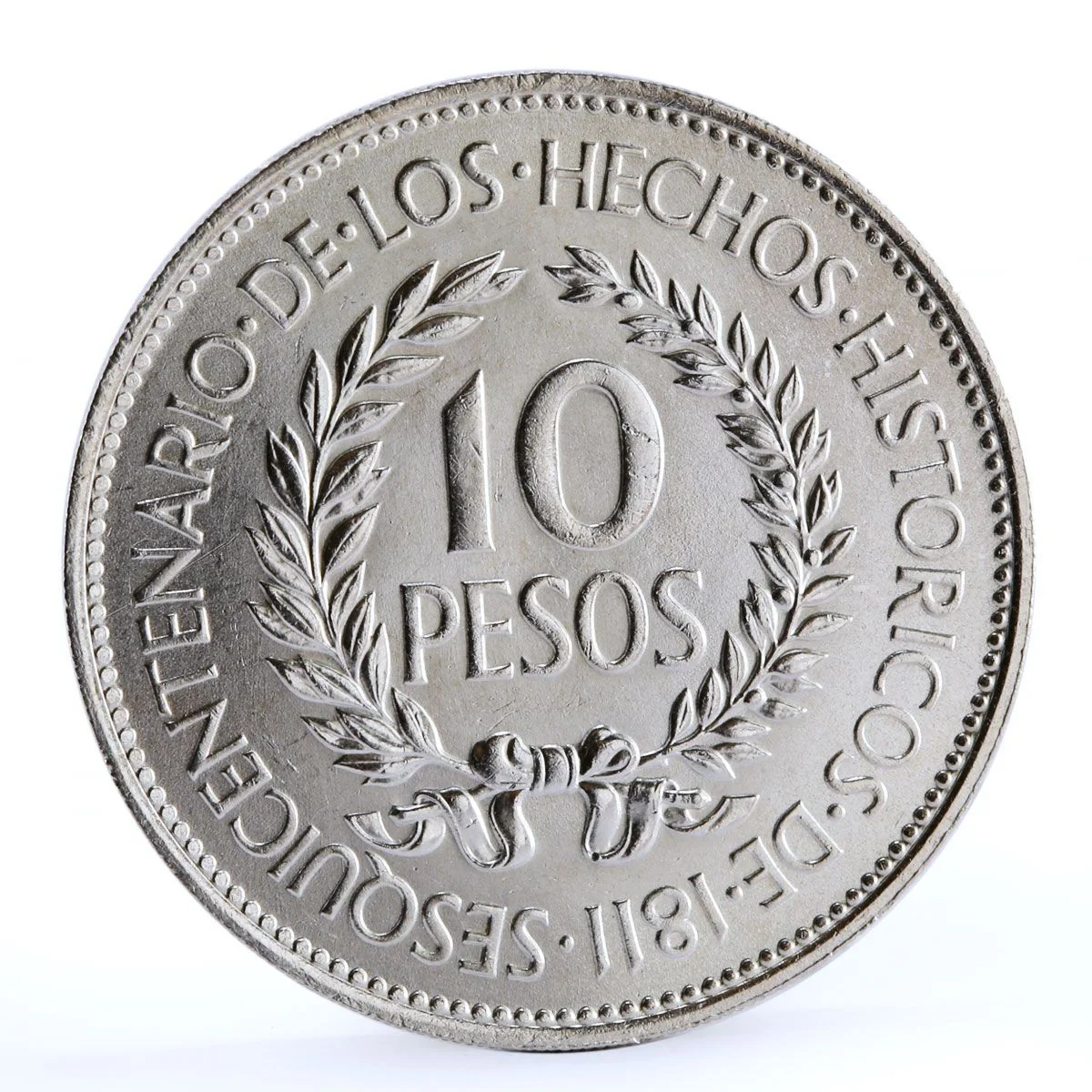
Wreath's worth
Inscription:
SESQUICENTENARIO·DE·LOS·HECHOS·HISTORICOS·DE·1811
10
PESOS
10
PESOS
Script: Latin
Edge
Reeded
Categories
| Event> Revolution |
| Object> Hat |
| Mustache/Beard |
| Symbol> Wreath |
Mints
| Name | Mark |
|---|---|
| Royal Mint (Tower Hill) | — |
Mintings
| Year | Mint Mark | Mintage | Quality | Collection |
|---|---|---|---|---|
| 1961 | — | 3,000,000 | ||
| 1961 | — | — | Proof |
Historical background
In 1961, Uruguay's currency situation was characterized by a complex and deteriorating system of multiple exchange rates, a hallmark of the country's deep-seated economic struggles. The nation, once a prosperous "Switzerland of South America," was grappling with the long-term decline of its traditional agricultural exports, stagnant industrial growth, and persistent fiscal deficits. To manage balance of payments pressures and protect specific sectors, the government maintained a web of official, preferential, and free-market exchange rates for the peso. This created significant distortions, encouraged speculation, and masked the currency's true inflationary devaluation.
The core of the problem was the unsustainable fiscal policy, primarily driven by the expansive welfare state and a bloated public sector, which were entrenched in the country's batllismo political model. The government financed its deficits by borrowing from the Banco de la República, which effectively monetized the debt, leading to rampant inflation. By 1961, annual inflation was approaching 20%, eroding purchasing power and creating a strong incentive to move capital abroad or into stable assets. The multiple exchange rate regime was an attempt to control this fallout, offering cheaper dollars for essential imports and critical industries while a less favorable rate applied to other transactions.
This fragmented system was unstable and ultimately a stopgap measure. It failed to address the fundamental fiscal causes of inflation and instead created a thriving black market for foreign currency (the mercado libre), where the peso's value was significantly weaker. The distortions discouraged legitimate exports, as producers received unfavorable official rates, and bred corruption. The situation in 1961 thus represented the late stages of a failing economic model, setting the stage for the more severe crises, devaluations, and eventual military intervention that would define the subsequent decades in Uruguay.
The core of the problem was the unsustainable fiscal policy, primarily driven by the expansive welfare state and a bloated public sector, which were entrenched in the country's batllismo political model. The government financed its deficits by borrowing from the Banco de la República, which effectively monetized the debt, leading to rampant inflation. By 1961, annual inflation was approaching 20%, eroding purchasing power and creating a strong incentive to move capital abroad or into stable assets. The multiple exchange rate regime was an attempt to control this fallout, offering cheaper dollars for essential imports and critical industries while a less favorable rate applied to other transactions.
This fragmented system was unstable and ultimately a stopgap measure. It failed to address the fundamental fiscal causes of inflation and instead created a thriving black market for foreign currency (the mercado libre), where the peso's value was significantly weaker. The distortions discouraged legitimate exports, as producers received unfavorable official rates, and bred corruption. The situation in 1961 thus represented the late stages of a failing economic model, setting the stage for the more severe crises, devaluations, and eventual military intervention that would define the subsequent decades in Uruguay.
🌱 Common