

5 pesos – Uruguay
Add to wishlist
Circulating commemorative coins
Commemoration: Constitution Centennial
Uruguay
Obverse
Description:
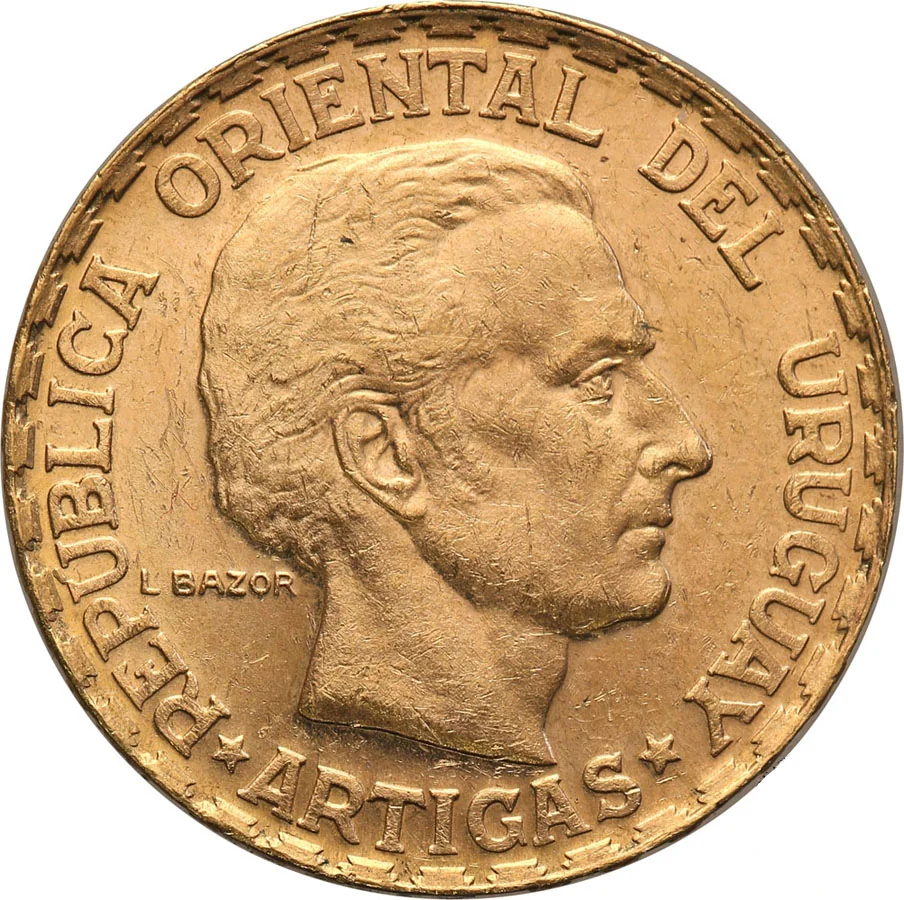
Artigas facing right, L. BAZOR left of neck. Country name arcs above, figure name below.
Inscription:
REPUBLICA ORIENTAL DEL URUGUAY
L. BAZOR
★ ARTIGAS ★
L. BAZOR
★ ARTIGAS ★
Translation:
Eastern Republic of Uruguay
L. Bazor
★ Artigas ★
L. Bazor
★ Artigas ★
Script: Latin
Engraver: Lucien Georges Bazor
Reverse
Description:
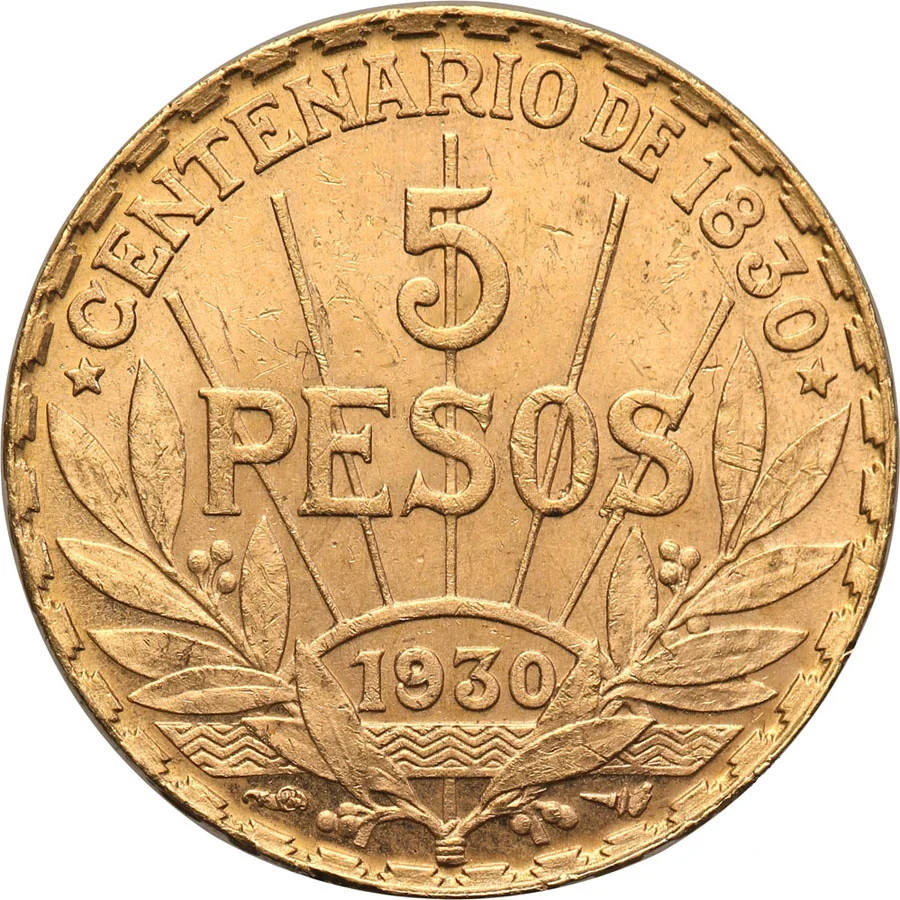
Olive branches flank stylized sunrays, with value centered, date below, and the commemorated event in a curved legend above.
Inscription:
★ CENTENARIO DE 1830 ★
5
PESOS
1930
5
PESOS
1930
Translation:
Centenary of 1830
5
Pesos
1930
5
Pesos
1930
Script: Latin
Language: Spanish
Engraver: Lucien Georges Bazor
Edge
Smooth with uprised legend
Legend:
CON LIBERTAD NI OFENDO NI TEMO ★ ★ ★
Translation:
With Liberty I neither offend nor fear. ★ ★ ★
Language: Spanish
Categories
| Person> Military leader |
| Person> Politician |
Mints
| Name | Mark |
|---|---|
| Monnaie de Paris | — |
Mintings
| Year | Mint Mark | Mintage | Quality | Collection |
|---|---|---|---|---|
| 1930 | — | 100,000 |
Historical background
In 1930, Uruguay's currency situation was characterized by relative stability amidst global economic turmoil, a testament to the nation's prosperous "Batllista" welfare state model. Unlike many countries that abandoned the gold standard after World War I, Uruguay had officially maintained a gold-exchange standard since 1896, pegging the Uruguayan peso to both British pounds and Argentine pesos, which were themselves linked to gold. This system, managed by the state-owned Banco de la República, provided a period of monetary stability and confidence, underpinning Uruguay's strong export-led economy based on beef, wool, and hides.
However, this stability faced mounting pressures. The onset of the Great Depression in 1929 caused a sharp decline in global demand and prices for Uruguay's primary exports, severely reducing foreign currency earnings. This triggered a balance of payments crisis, straining the gold and foreign exchange reserves needed to maintain the peso's parity. Consequently, 1930 marked the beginning of the end for the classical gold standard in Uruguay, as the government and the Banco de la República were forced to intervene heavily to defend the peg, imposing exchange controls and beginning a gradual process of devaluation.
Thus, while the currency regime was formally still intact in 1930, it was operating under severe duress. The year represented a critical juncture, transitioning from the stable pre-Depression order to a new era of managed currency, increased state intervention in finance, and eventual abandonment of the gold standard in 1932. The economic shock exposed the vulnerability of Uruguay's export-dependent model and set the stage for a decade of monetary adjustment and economic nationalism.
However, this stability faced mounting pressures. The onset of the Great Depression in 1929 caused a sharp decline in global demand and prices for Uruguay's primary exports, severely reducing foreign currency earnings. This triggered a balance of payments crisis, straining the gold and foreign exchange reserves needed to maintain the peso's parity. Consequently, 1930 marked the beginning of the end for the classical gold standard in Uruguay, as the government and the Banco de la República were forced to intervene heavily to defend the peg, imposing exchange controls and beginning a gradual process of devaluation.
Thus, while the currency regime was formally still intact in 1930, it was operating under severe duress. The year represented a critical juncture, transitioning from the stable pre-Depression order to a new era of managed currency, increased state intervention in finance, and eventual abandonment of the gold standard in 1932. The economic shock exposed the vulnerability of Uruguay's export-dependent model and set the stage for a decade of monetary adjustment and economic nationalism.
⭐ Somewhat Rare