

½ Toman – Iran
Iran
Context
Year: 1818
Islamic (Hijri) Year: 1233
Issuer: Iran 
Ruler: Fath-Ali Shah
Currency:
(1825—1932)
Demonetized: Yes
Material
Weight: 2.4 g
Gold weight: 2.40 g
Shape: Irregular round
Composition: Gold
Magnetic: No
Technique: Hammered
References
Numista: #435619
Value
Bullion value: $400.15
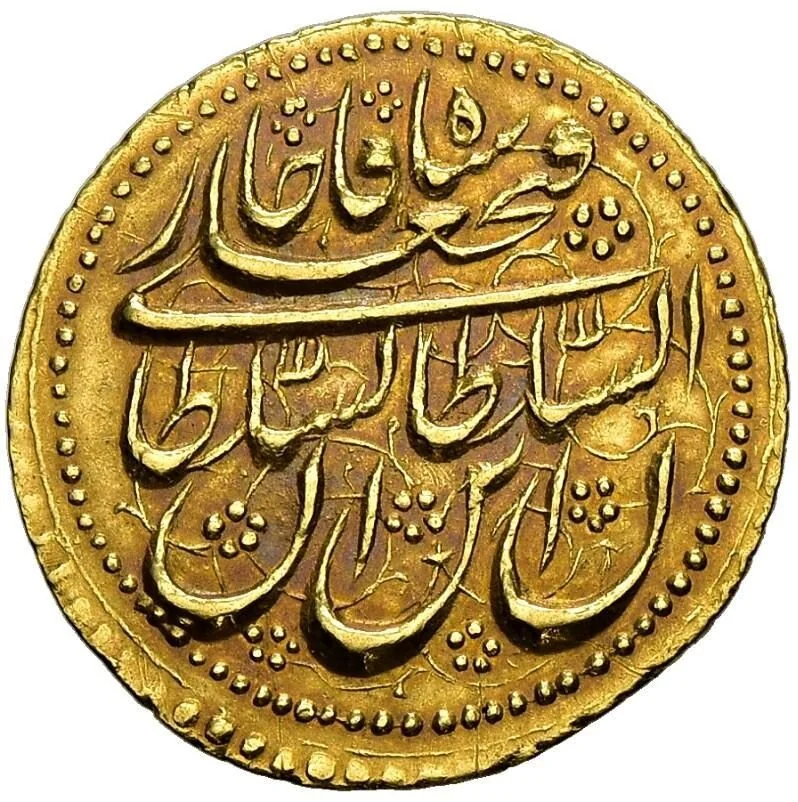
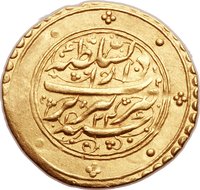
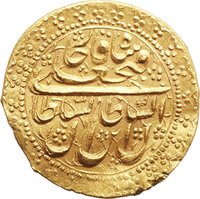
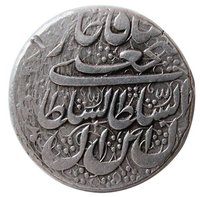
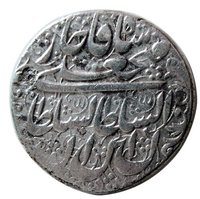
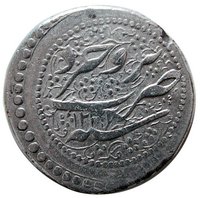
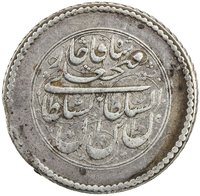
Obverse
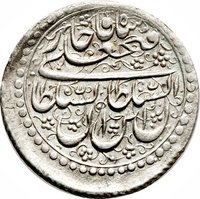
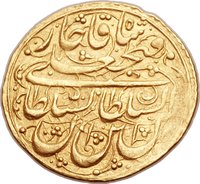
Inscription:
السّلطان ابن السّلطان فتحعلی شاه قاجار
Translation:
The Sultan, son of the Sultan, Fath-Ali Shah Qajar
Script: Persian (nastaliq)
Language: Arabic
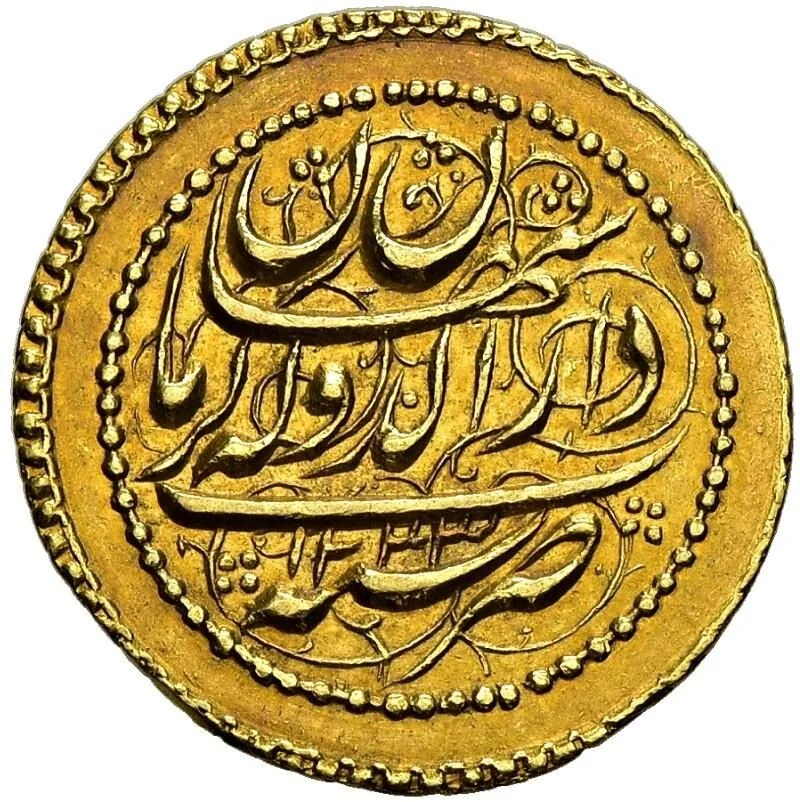
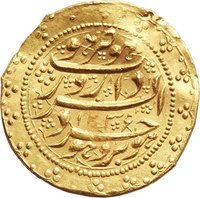
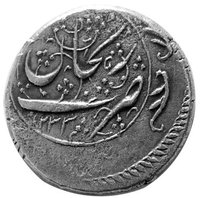
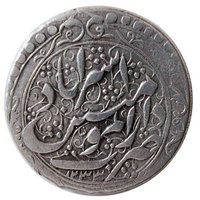
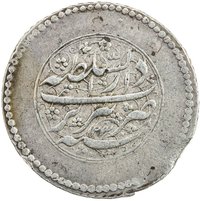
Reverse
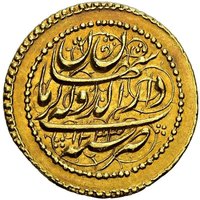
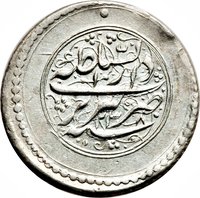
Inscription:
ضرب دارالدوله کرمان شهان
سنه ۱۲۳۳
سنه ۱۲۳۳
Translation:
Struck in Dar al-Dawla Kerman, [city of] kings
Year 1233 [AH]
Year 1233 [AH]
Script: Persian (nastaliq)
Language: Persian
Edge
Mints
| Name | Mark |
|---|---|
| Kermanshah | — |
Mintings
| Year | Mint Mark | Mintage | Quality | Collection |
|---|---|---|---|---|
| 1818 | — | — |
Historical background
In 1818, Iran's currency system was a complex and fragmented reflection of the country's political and economic state under the Qajar dynasty, then ruled by Fath-Ali Shah. The monetary system was not unified, operating on a bimetallic standard of silver and copper, with gold used mainly for foreign trade and large transactions. The primary silver coin was the qiran (later the rial), but its value and purity were inconsistent. More crucially, a vast array of European silver coins, particularly Spanish dollars (8-real pieces known as riyāl) and Austrian thalers (Maria Theresa thalers), circulated widely and were often preferred for their reliable silver content, undermining confidence in domestic coinage.
This period was marked by severe currency debasement and chronic fiscal instability. The Qajar state, engaged in costly military campaigns and maintaining an extravagant court, faced constant budget shortfalls. To raise revenue, the government frequently reduced the silver content of newly minted coins while maintaining their face value, a practice known as ʿayār reduction. This led to rampant inflation, a disconnect between official and market exchange rates, and the hoarding of older, purer coins (Gresham's Law). Provincial governors and private money changers (ṣarrāfs) also issued their own copper coins (fulūs) for local use, adding further layers of complexity and regional variation.
The monetary chaos of 1818 was symptomatic of deeper issues: a weak central authority, the absence of a national bank or unified minting policy, and an economy heavily reliant on foreign trade that was vulnerable to global silver flows. The reliance on imported European coinage highlighted Iran's integration into Indian Ocean and Eurasian trade networks, but also its subordination within them. This unstable system created significant obstacles for both domestic commerce and international trade, contributing to economic stagnation and setting the stage for repeated, unsuccessful monetary reforms throughout the 19th century.
This period was marked by severe currency debasement and chronic fiscal instability. The Qajar state, engaged in costly military campaigns and maintaining an extravagant court, faced constant budget shortfalls. To raise revenue, the government frequently reduced the silver content of newly minted coins while maintaining their face value, a practice known as ʿayār reduction. This led to rampant inflation, a disconnect between official and market exchange rates, and the hoarding of older, purer coins (Gresham's Law). Provincial governors and private money changers (ṣarrāfs) also issued their own copper coins (fulūs) for local use, adding further layers of complexity and regional variation.
The monetary chaos of 1818 was symptomatic of deeper issues: a weak central authority, the absence of a national bank or unified minting policy, and an economy heavily reliant on foreign trade that was vulnerable to global silver flows. The reliance on imported European coinage highlighted Iran's integration into Indian Ocean and Eurasian trade networks, but also its subordination within them. This unstable system created significant obstacles for both domestic commerce and international trade, contributing to economic stagnation and setting the stage for repeated, unsuccessful monetary reforms throughout the 19th century.
Series: 1818 Iran circulation coins
✨ Legendary