

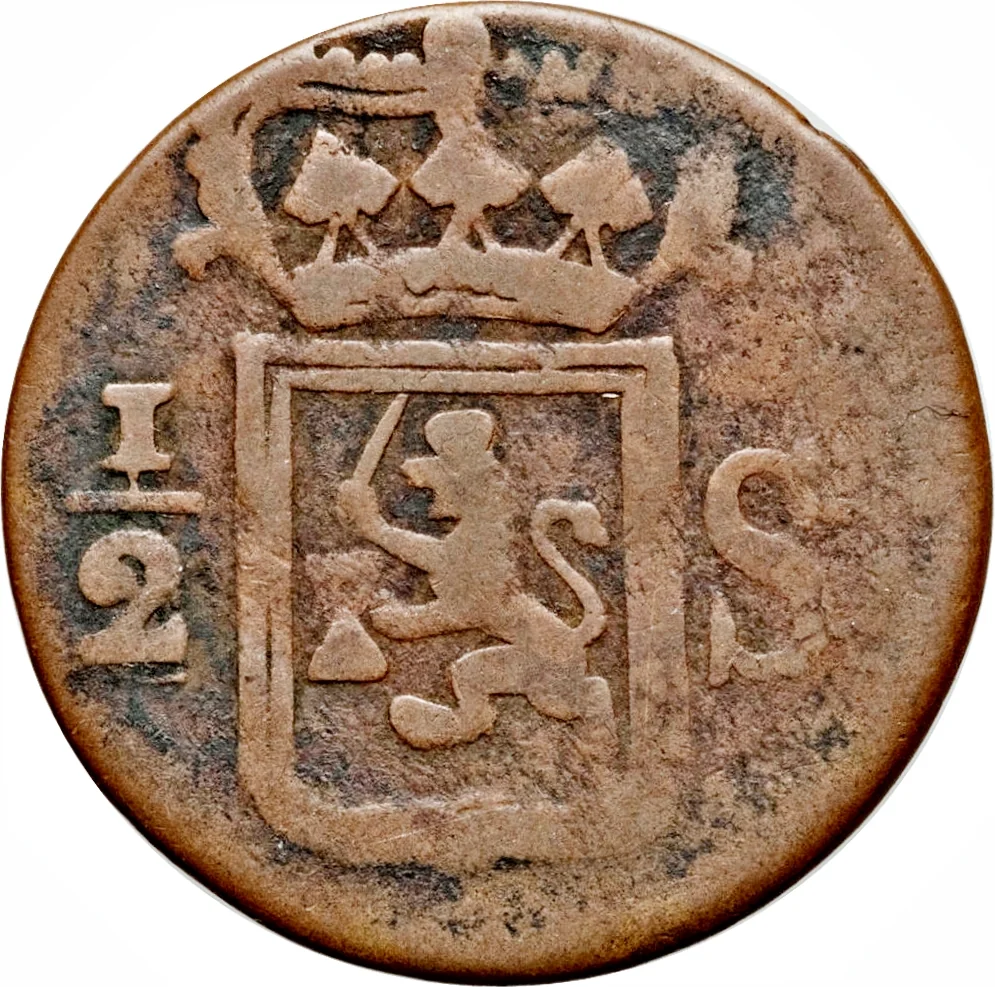
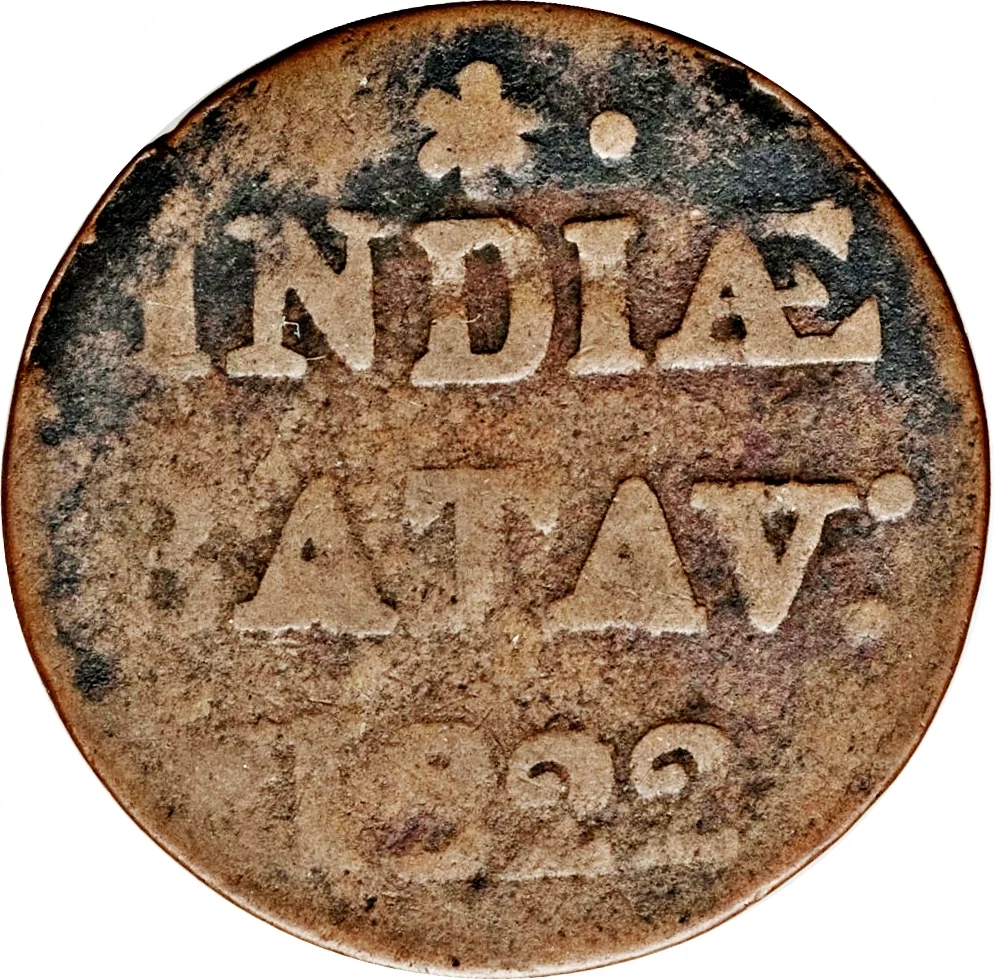
½ stuiver – Netherlands East Indies
Add to wishlist
Indonesia
Context
Years: 1820–1826
Country: Indonesia
Issuer: Netherlands East Indies
Ruler: William I
Currency:
(1726—1854)
Demonetized: Yes
Material
References
KM: #
Numista: #43473
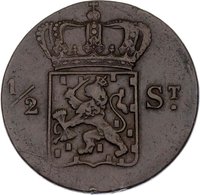
Obverse
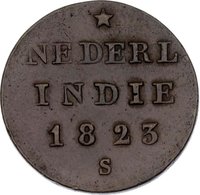
Reverse
Edge
Mints
| Name | Mark |
|---|---|
| Surabaya | — |
Mintings
| Year | Mint Mark | Mintage | Quality | Collection |
|---|---|---|---|---|
| 1820 | — | — | ||
| 1821 | — | — | ||
| 1822 | — | — | ||
| 1823 | — | — | ||
| 1824 | — | — | ||
| 1825 | — | — | ||
| 1826 | — | — |
Historical background
In 1820, the currency situation in the Netherlands East Indies (NEI) was characterized by a complex and chaotic multiplicity of systems, a legacy of the preceding decades of war and shifting authority. The return of Dutch colonial rule in 1816, following the British interregnum (1811-1816), did not immediately bring monetary order. The archipelago was saturated with a wide variety of coins, including Spanish-American silver pesos (the famous "pieces of eight"), Dutch guilders, Japanese koban gold coins, and various local copper duit coins. This created a confusing environment where exchange rates fluctuated locally, hampering both government finance and commercial trade.
The Dutch authorities, under Governor-General G.A.G.P. van der Capellen, recognized the urgent need for a unified currency to consolidate control and stimulate the colonial economy. The primary goal was to replace the dominant Spanish dollar with a Dutch-standard system. In 1820, plans were actively being developed to introduce a new, dedicated colonial currency, which would culminate in the official decree of 1826. The intended system was based on the Netherlands Indies gulden, divisible into 120 copper duit, but its full implementation was still years away.
Consequently, 1820 represents a pivotal year of transition and planning, caught between the old disorder and a new, imposed order. The circulation remained dominated by foreign silver, while the colonial government worked to establish a mint and assert its monetary sovereignty. This period set the stage for the nineteenth-century currency reforms that would firmly tie the Indies' economy to the Netherlands, using a silver standard to facilitate the export-oriented cultivation system that would soon expand across Java.
The Dutch authorities, under Governor-General G.A.G.P. van der Capellen, recognized the urgent need for a unified currency to consolidate control and stimulate the colonial economy. The primary goal was to replace the dominant Spanish dollar with a Dutch-standard system. In 1820, plans were actively being developed to introduce a new, dedicated colonial currency, which would culminate in the official decree of 1826. The intended system was based on the Netherlands Indies gulden, divisible into 120 copper duit, but its full implementation was still years away.
Consequently, 1820 represents a pivotal year of transition and planning, caught between the old disorder and a new, imposed order. The circulation remained dominated by foreign silver, while the colonial government worked to establish a mint and assert its monetary sovereignty. This period set the stage for the nineteenth-century currency reforms that would firmly tie the Indies' economy to the Netherlands, using a silver standard to facilitate the export-oriented cultivation system that would soon expand across Java.
🌟 Uncommon