

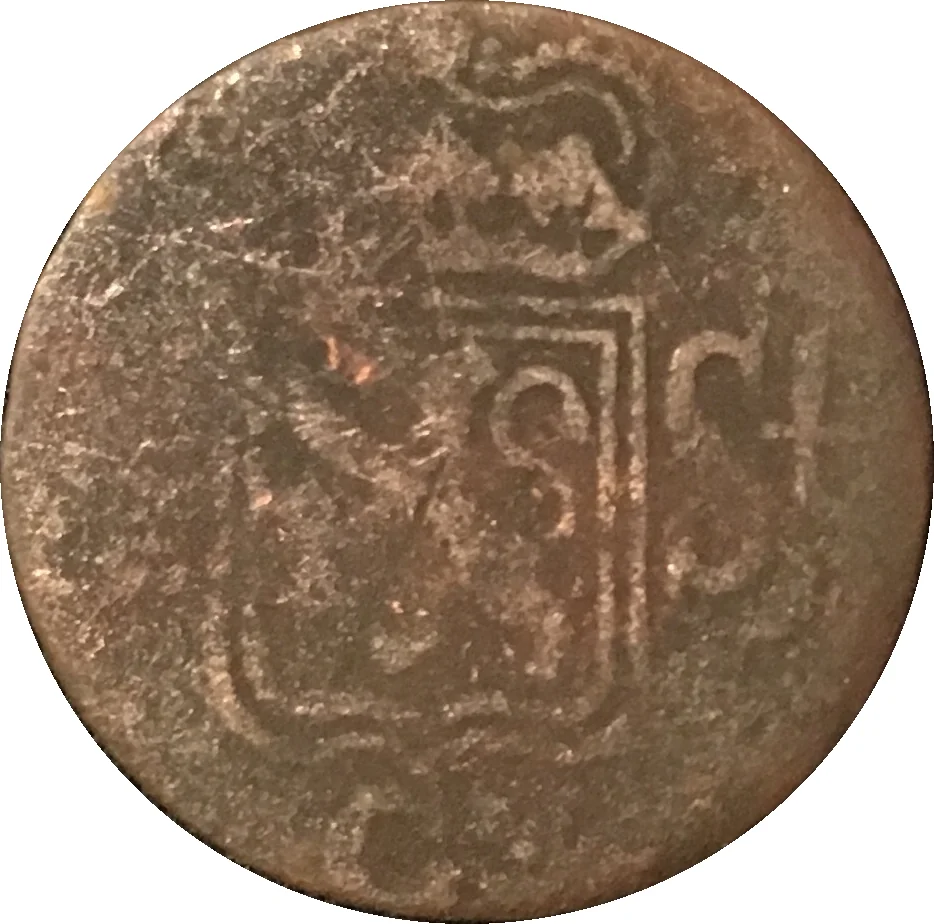
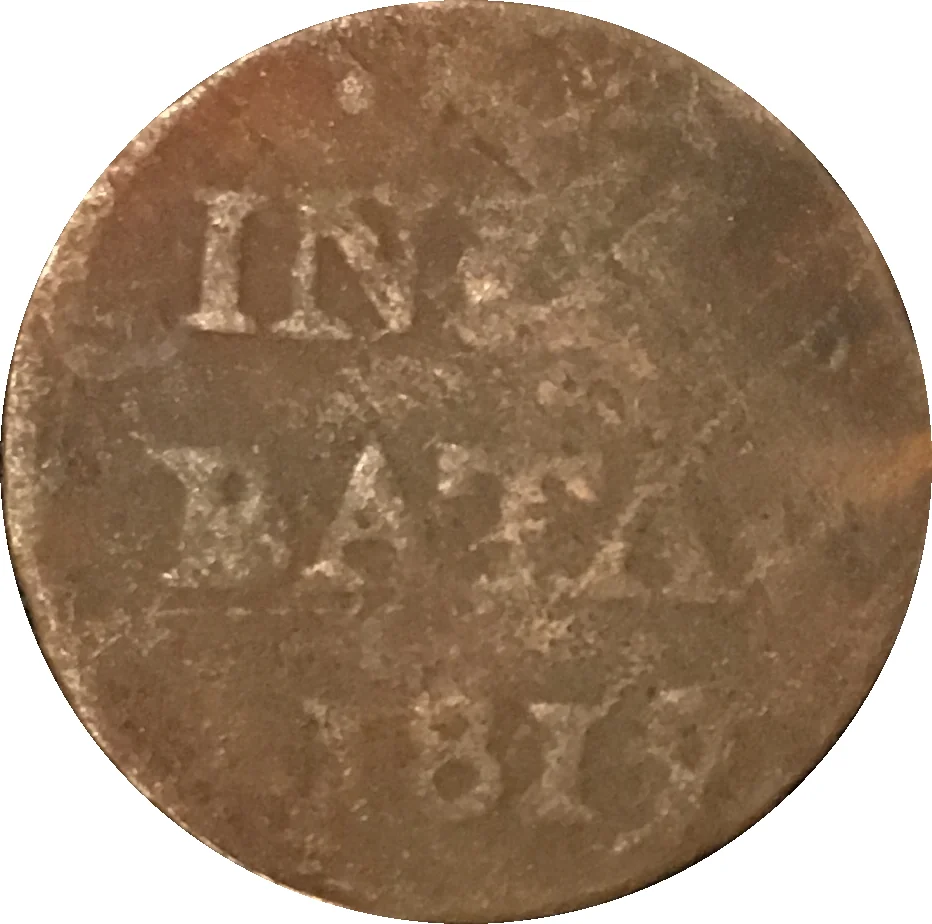
½ stuiver – Netherlands East Indies
Add to wishlist
Indonesia
Context
Years: 1818–1820
Country: Indonesia
Issuer: Netherlands East Indies
Ruler: William I
Currency:
(1726—1854)
Demonetized: Yes
Material
References
KM: #
Numista: #44603
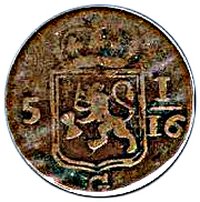
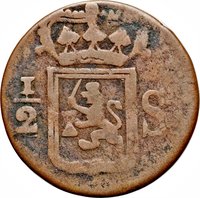
Obverse
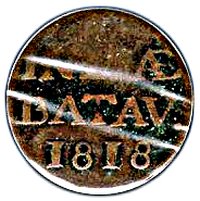
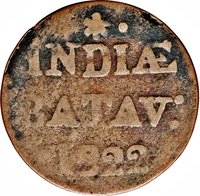
Reverse
Edge
Plain
Mints
| Name | Mark |
|---|---|
| Surabaya | — |
Mintings
| Year | Mint Mark | Mintage | Quality | Collection |
|---|---|---|---|---|
| 1818 | — | — | ||
| 1819 | — | — | ||
| 1820 | — | — |
Historical background
In 1818, the currency situation in the Netherlands East Indies (NEI) was complex and transitional, marked by a severe shortage of reliable specie. Following the British interregnum (1811-1816) and the return of Dutch authority, the colony was flooded with a chaotic mix of devalued coins. These included overstamped Spanish-American silver "Reals" (the popular "Mexican Dollar"), various Dutch and Javanese copper duits, and a significant volume of depreciated paper money issued by the previous British administration. This monetary jungle created widespread confusion, hindered trade, and undermined government finances, as the value of coins varied greatly by region and their metal content was often suspect.
The Dutch authorities, recognizing the crisis, were in the early stages of implementing a centralized reform. The core plan, which would be realized with the establishment of the Java Bank in 1828, was to introduce a standardized silver-based guilder, divided into 100 cents, to replace the myriad of circulating currencies. However, in 1818, this reform was still a decade away. The immediate focus was on restoring confidence by attempting to control and regulate the existing coinage, particularly by addressing the problematic paper notes and establishing official exchange rates for the various silver coins in circulation against the intended Dutch guilder standard.
Consequently, the economy operated on a precarious dual system. Large-scale trade and government transactions were anchored to the silver Real, while daily local commerce relied on a volatile mix of small copper coins and unreliable paper. This period was thus one of monetary instability, where the colonial state struggled to impose order and sovereignty through a uniform currency but had not yet succeeded, leaving merchants and the population to navigate a fragmented and uncertain monetary landscape.
The Dutch authorities, recognizing the crisis, were in the early stages of implementing a centralized reform. The core plan, which would be realized with the establishment of the Java Bank in 1828, was to introduce a standardized silver-based guilder, divided into 100 cents, to replace the myriad of circulating currencies. However, in 1818, this reform was still a decade away. The immediate focus was on restoring confidence by attempting to control and regulate the existing coinage, particularly by addressing the problematic paper notes and establishing official exchange rates for the various silver coins in circulation against the intended Dutch guilder standard.
Consequently, the economy operated on a precarious dual system. Large-scale trade and government transactions were anchored to the silver Real, while daily local commerce relied on a volatile mix of small copper coins and unreliable paper. This period was thus one of monetary instability, where the colonial state struggled to impose order and sovereignty through a uniform currency but had not yet succeeded, leaving merchants and the population to navigate a fragmented and uncertain monetary landscape.
🌟 Limited