

½ stuiver – Netherlands East Indies
Add to wishlist
Indonesia
Context
Years: 1821–1826
Country: Indonesia
Issuer: Netherlands East Indies
Ruler: William I
Currency:
(1726—1854)
Demonetized: Yes
Total mintage: 149,500,000
Material
References
KM: #
Numista: #6562
Obverse
Description:
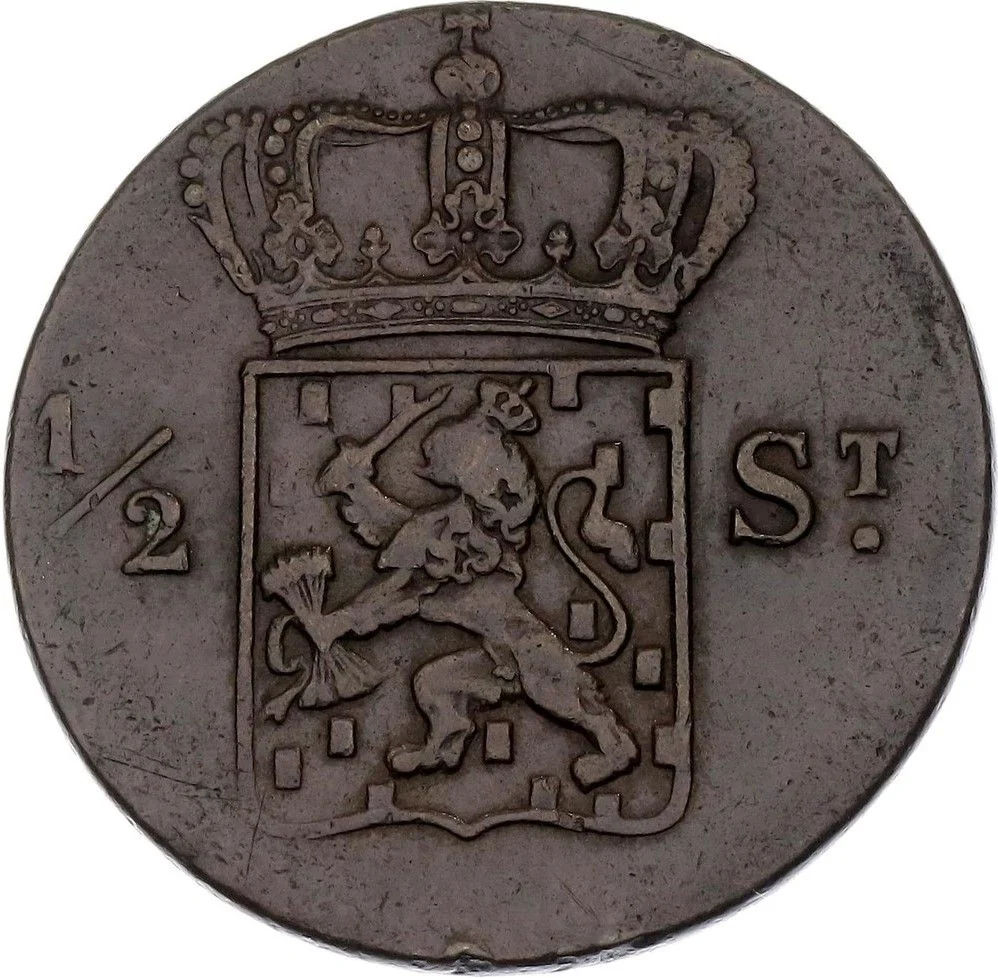
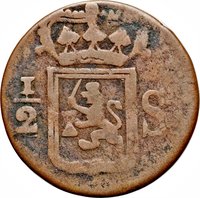
Crowned lion in shield, large crown above. Denomination left, value right.
Inscription:
1/2 ST.
Script: Latin
Reverse
Description:
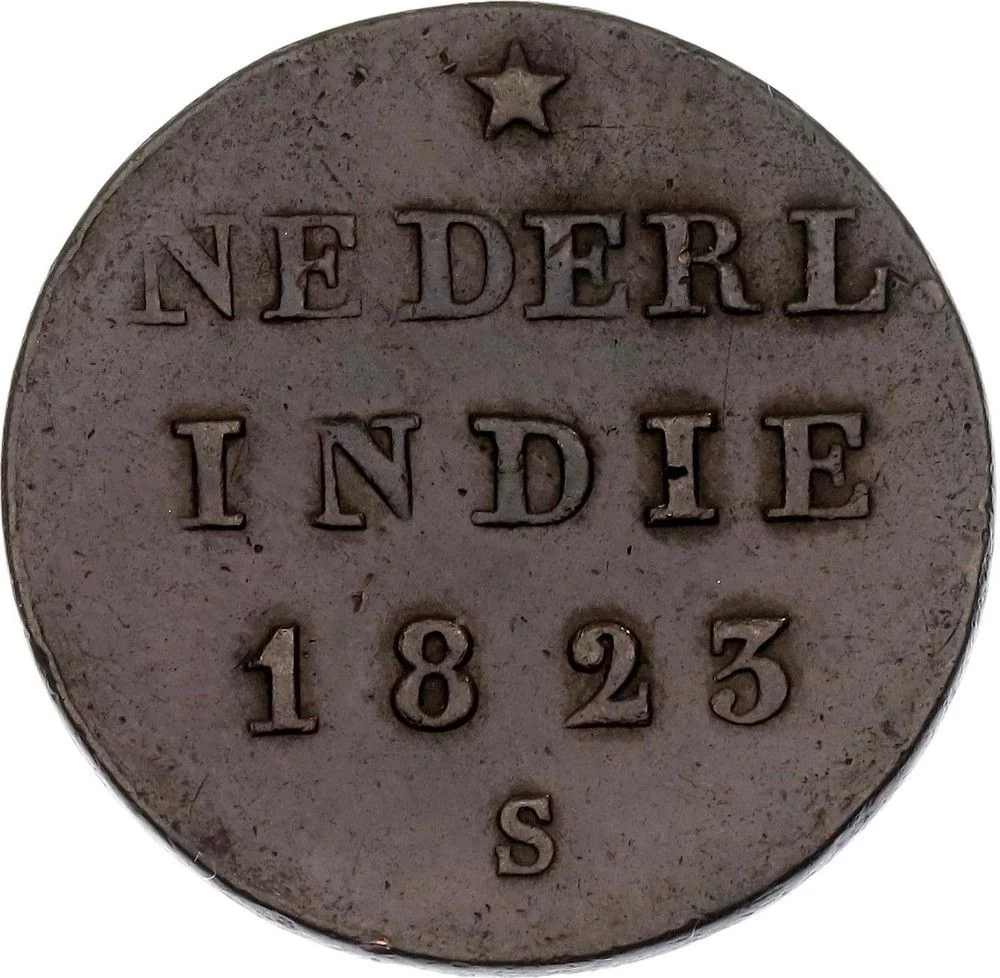
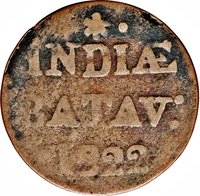
Star above three-line inscription, letter below.
Inscription:
*
NEDERL.
INDIE
1823
S
NEDERL.
INDIE
1823
S
Script: Latin
Edge
Plain
Mints
| Name | Mark |
|---|---|
| Royal Dutch Mint | — |
Mintings
| Year | Mint Mark | Mintage | Quality | Collection |
|---|---|---|---|---|
| 1821 | S | 10,000,000 | ||
| 1822 | S | 7,000,000 | ||
| 1823 | S | 19,000,000 | ||
| 1824 | S | 5,500,000 | ||
| 1825 | S | 42,000,000 | ||
| 1826 | S | 66,000,000 |
Historical background
In 1821, the currency situation in the Netherlands East Indies (NEI) was defined by chronic instability and a severe shortage of acceptable coinage. Following the British interregnum (1811-1816) and the return to Dutch rule, the colony operated under the monetary system reinstated by the Dutch in 1817. This system officially valued coins by their precious metal content, with the Dutch guilder as the unit of account. However, the reality was a chaotic mix of underweight and worn Dutch coins, Spanish-American silver pesos (popularly called "Mexican dollars"), and a vast array of other foreign silver and copper coins that circulated at fluctuating, locally negotiated values.
The core problem was a persistent trade imbalance. The NEI, as a cash crop exporter, sent large quantities of silver coinage to Europe as profit and to pay for administrative costs, while importing more than it exported from other Asian ports, causing further silver drain. This created a crippling deflationary environment where good coin was hoarded and disappeared from daily use. To facilitate local transactions, low-quality copper duits and lead doits minted in enormous quantities filled the void, but their value against silver was unstable and they were not accepted for foreign trade or large payments.
Consequently, the monetary landscape was fragmented and inefficient. In major ports like Batavia, accounts were kept in silver guilders, but actual payments might be made in a confusing assortment of physical currencies. This uncertainty hampered both local commerce and the colonial government's own revenue collection and expenditure. The situation in 1821 was therefore one of acute monetary distress, pushing the colonial administration toward a major reform, which would culminate in the introduction of the Nederlandsch-Indisch gulden based on a silver standard in 1826, aiming to impose a uniform and reliable currency.
The core problem was a persistent trade imbalance. The NEI, as a cash crop exporter, sent large quantities of silver coinage to Europe as profit and to pay for administrative costs, while importing more than it exported from other Asian ports, causing further silver drain. This created a crippling deflationary environment where good coin was hoarded and disappeared from daily use. To facilitate local transactions, low-quality copper duits and lead doits minted in enormous quantities filled the void, but their value against silver was unstable and they were not accepted for foreign trade or large payments.
Consequently, the monetary landscape was fragmented and inefficient. In major ports like Batavia, accounts were kept in silver guilders, but actual payments might be made in a confusing assortment of physical currencies. This uncertainty hampered both local commerce and the colonial government's own revenue collection and expenditure. The situation in 1821 was therefore one of acute monetary distress, pushing the colonial administration toward a major reform, which would culminate in the introduction of the Nederlandsch-Indisch gulden based on a silver standard in 1826, aiming to impose a uniform and reliable currency.
🌱 Fairly Common