

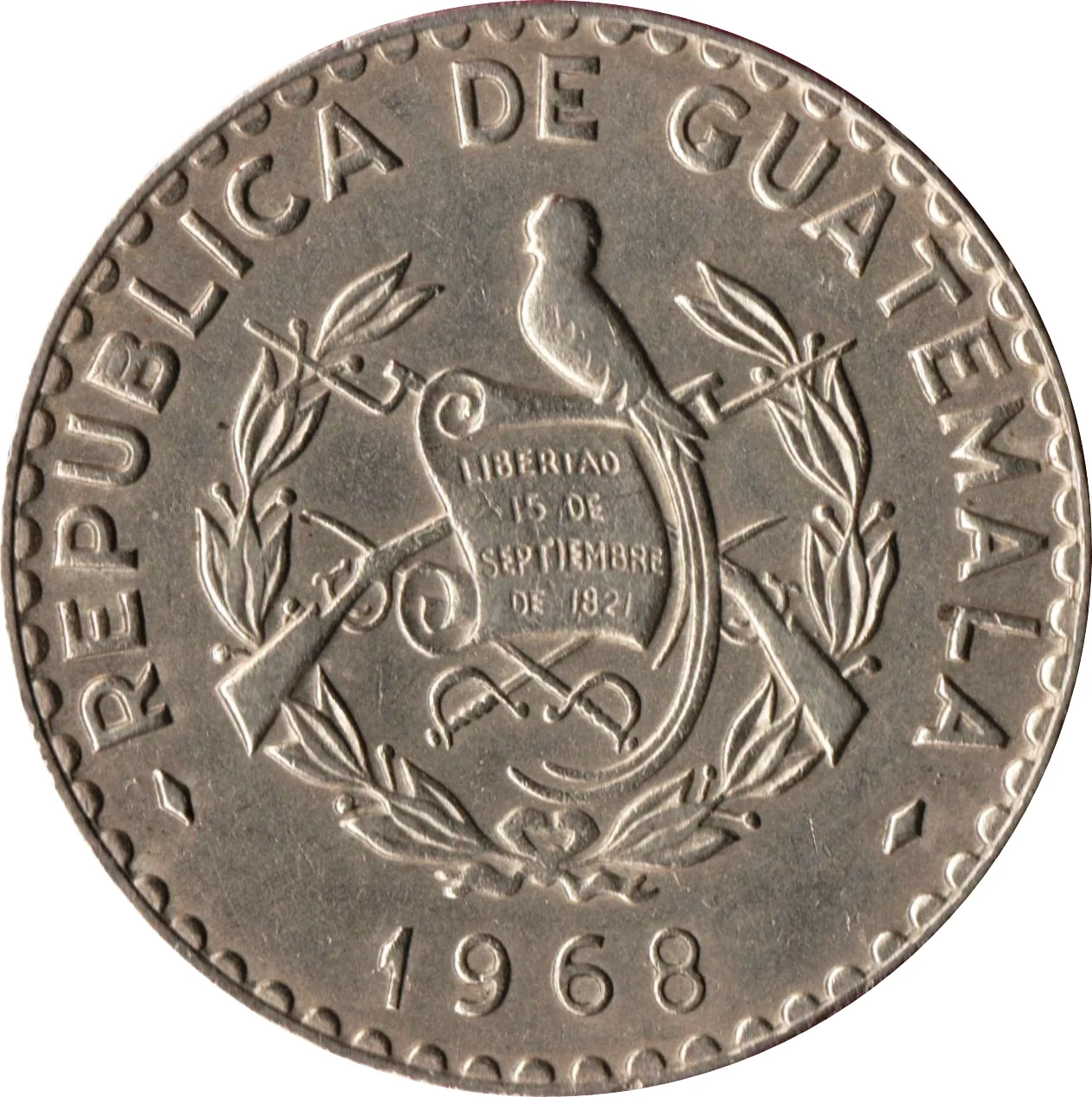
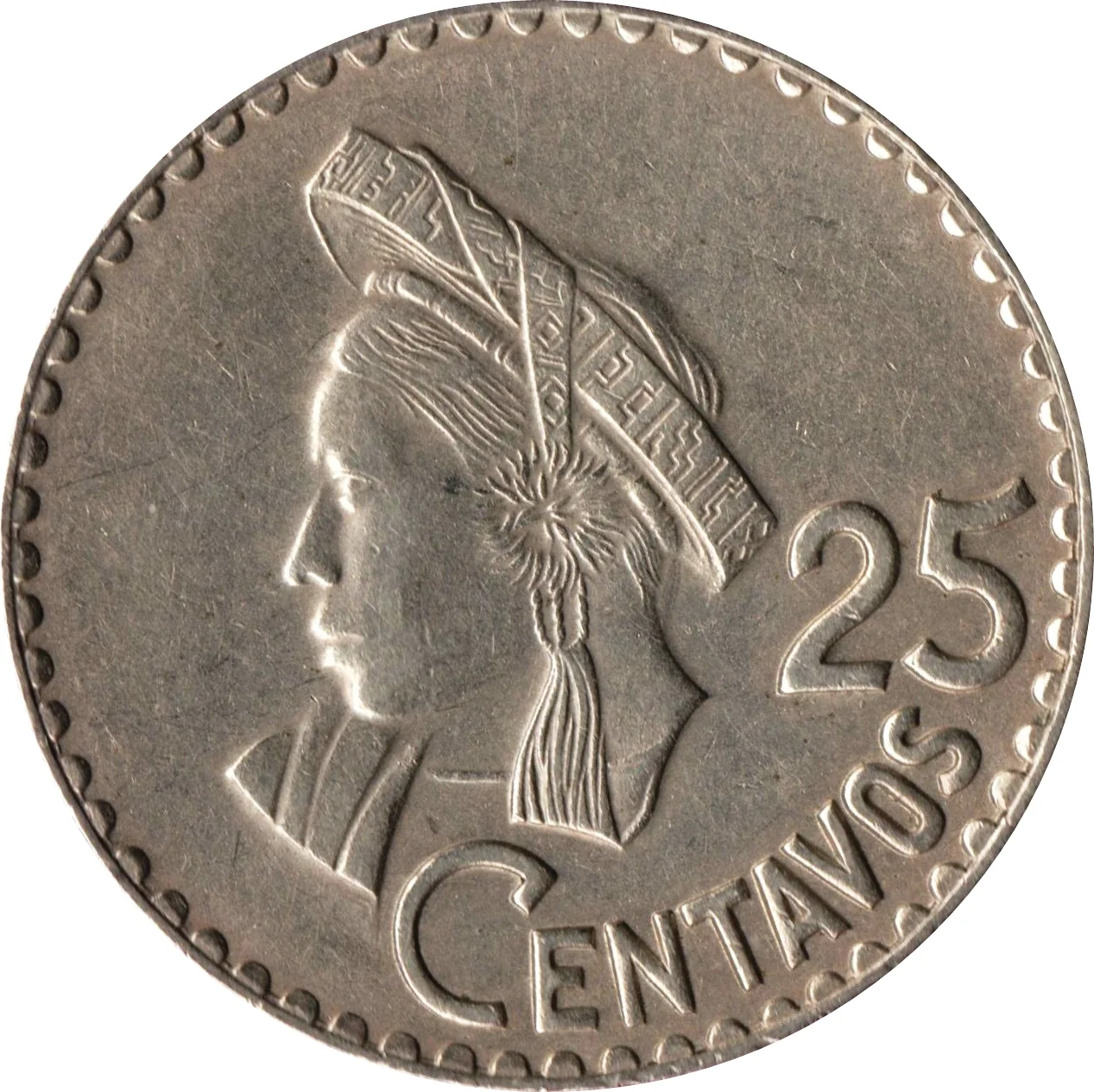
25 centavos – Guatemala
Add to wishlist
Guatemala
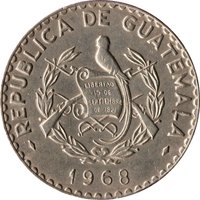
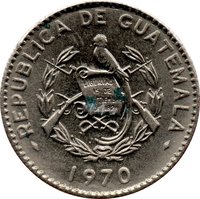
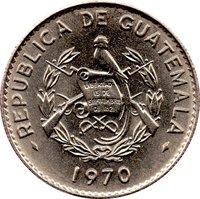
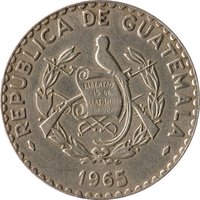
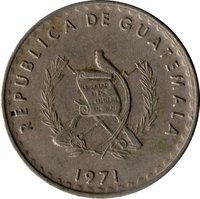
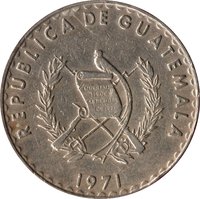
Obverse
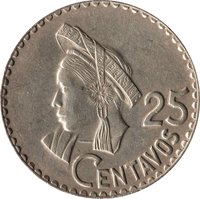
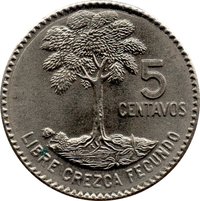
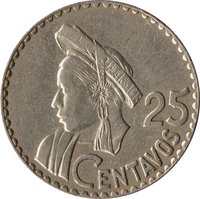
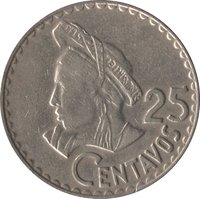
Reverse
Edge
Smooth with lettering
Legend:
REPUBLICA DE GUATEMALA C · A ·
Translation:
REPUBLIC OF GUATEMALA C · A ·
Language: Spanish
Categories
| Symbols> Coat of Arms |
| Object> Hat |
Mints
| Name | Mark |
|---|---|
| Casa de Moneda de Guatemala | — |
Mintings
| Year | Mint Mark | Mintage | Quality | Collection |
|---|---|---|---|---|
| 1967 | — | 1,140,000 | ||
| 1968 | — | 1,540,000 | ||
| 1969 | — | 2,069,000 | ||
| 1970 | — | 2,501,000 |
Historical background
In 1967, Guatemala's currency situation was defined by the stability of the quetzal (GTQ), which was pegged to the United States dollar at a fixed and highly credible rate of 1:1. This parity had been established in 1925 and was meticulously maintained by the Bank of Guatemala, the nation's central bank founded in 1946. The regime was a classic example of a currency board-like system, requiring strict international reserve backing—primarily in U.S. dollars and gold—for any issuance of quetzales. This discipline fostered significant confidence in the currency both domestically and internationally, making the quetzal one of the most stable currencies in Latin America at the time.
This monetary stability existed within a broader context of economic growth and structural change. The 1960s were a period of export-led expansion, primarily driven by coffee, cotton, and sugar, along with the beginnings of a manufacturing sector under the Central American Common Market (CACM). The fixed exchange rate facilitated trade and investment by eliminating currency risk for foreign businesses and providing a clear price signal for exporters. However, this orthodox financial framework also operated alongside significant social inequality and political tension, as the country was emerging from the counter-revolutionary turmoil of the 1954 coup and was in the early stages of a protracted civil conflict.
Consequently, while the currency itself was a pillar of technical management success, the broader economic picture was complex. The stability of the quetzal benefited the agro-export and commercial elites but did little to address widespread rural poverty or fiscal limitations. The government's ability to run expansive fiscal or monetary policy was severely constrained by the need to maintain the dollar reserves required for the peg. Thus, in 1967, Guatemala presented a paradox: a fortress-like currency managed with textbook orthodoxy, existing within a nation facing deep-seated social and political challenges that the monetary system was not designed to resolve.
This monetary stability existed within a broader context of economic growth and structural change. The 1960s were a period of export-led expansion, primarily driven by coffee, cotton, and sugar, along with the beginnings of a manufacturing sector under the Central American Common Market (CACM). The fixed exchange rate facilitated trade and investment by eliminating currency risk for foreign businesses and providing a clear price signal for exporters. However, this orthodox financial framework also operated alongside significant social inequality and political tension, as the country was emerging from the counter-revolutionary turmoil of the 1954 coup and was in the early stages of a protracted civil conflict.
Consequently, while the currency itself was a pillar of technical management success, the broader economic picture was complex. The stability of the quetzal benefited the agro-export and commercial elites but did little to address widespread rural poverty or fiscal limitations. The government's ability to run expansive fiscal or monetary policy was severely constrained by the need to maintain the dollar reserves required for the peg. Thus, in 1967, Guatemala presented a paradox: a fortress-like currency managed with textbook orthodoxy, existing within a nation facing deep-seated social and political challenges that the monetary system was not designed to resolve.
Series: System: 1965-1997
🌱 Common