

20 kroner – Denmark
Add to wishlist
Denmark
Context
Material
Diameter: 27 mm
Weight: 9.3 g
Thickness: 2.35 mm
Shape: Round
Composition: Aluminium bronze
Magnetic: No
Technique: Milled
Alignment: Medal alignment
flip
References
KM: #
Numista: #14559
Value
Exchange value: 20 DKK
Inflation-adjusted value: 30.53 DKK
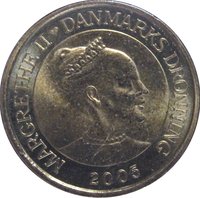
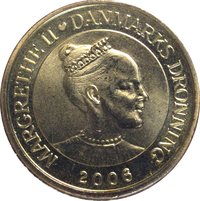
Obverse
Description:
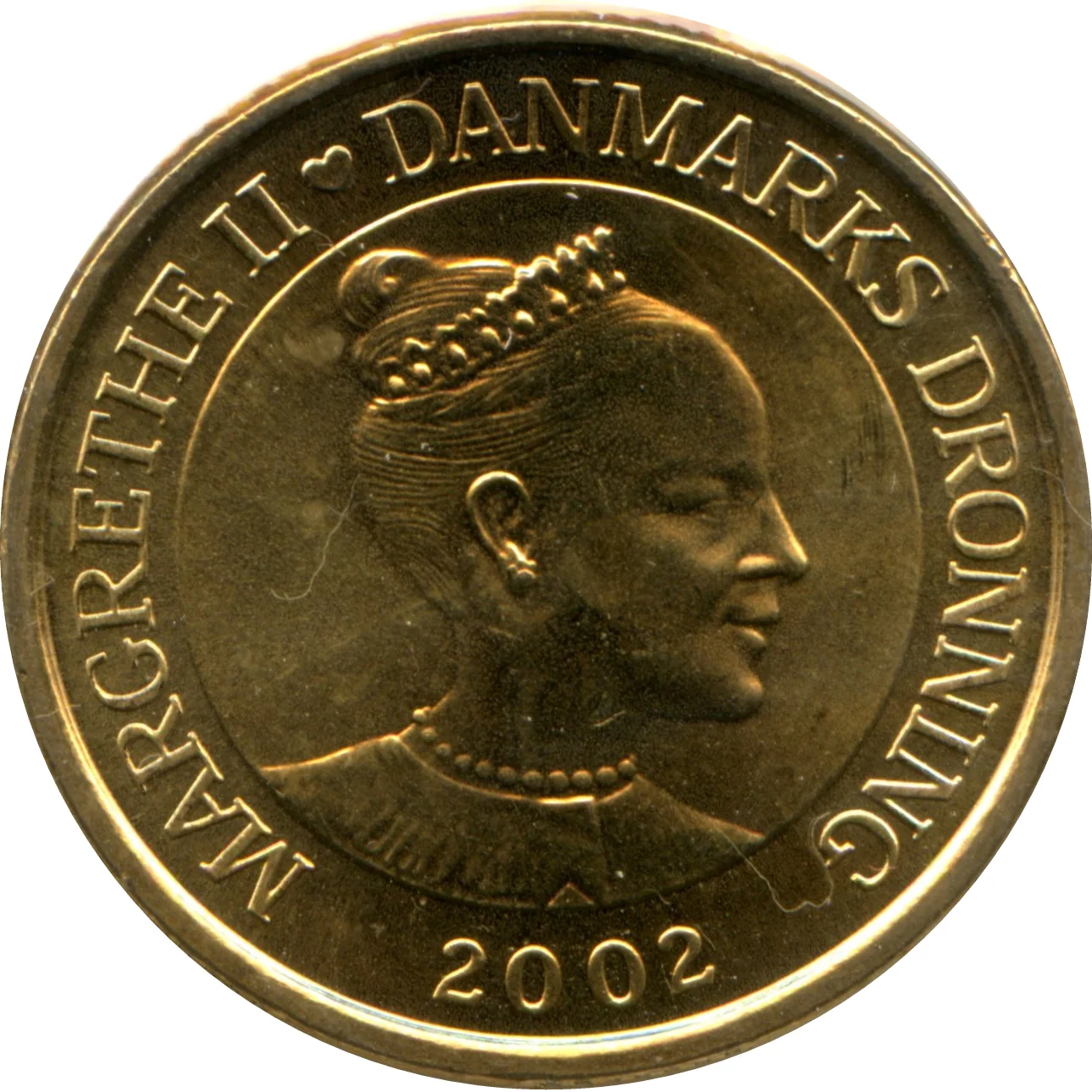
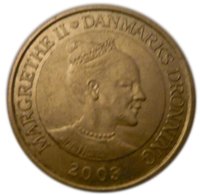
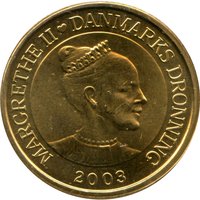
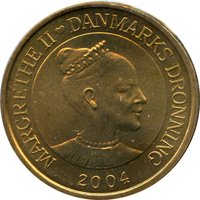
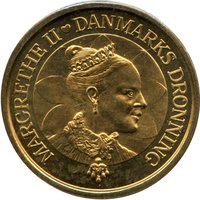
Queen Margrethe in profile.
Inscription:
MAGRETHE II ♥ DANMARKS DRONNIMG
2002
2002
Translation:
MARGARETHE II ♥ DENMARK'S QUEEN
Script: Latin
Engraver: Mogens Møller
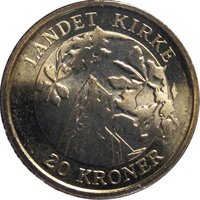
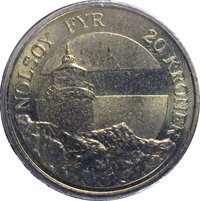
Reverse
Edge
Alternating smooth and reeded segments
Categories
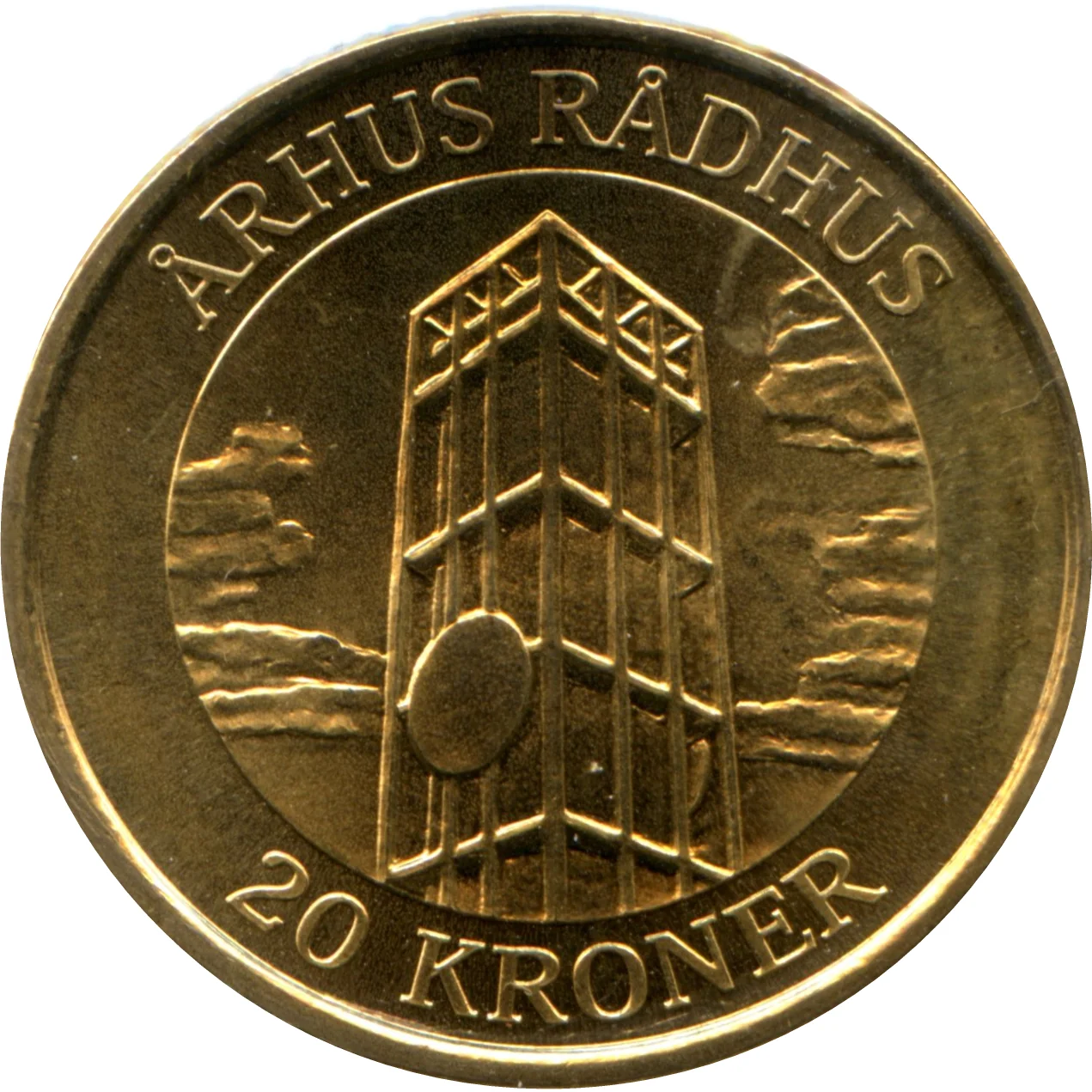
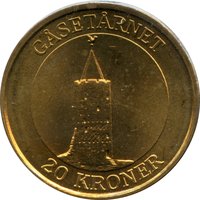
| Building> Governmental building |
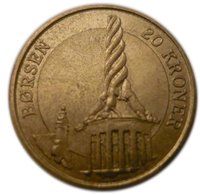
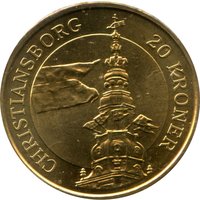
| Building> Tower |
Mints
| Name | Mark |
|---|---|
| Royal Danish Mint | — |
Mintings
| Year | Mint Mark | Mintage | Quality | Collection |
|---|---|---|---|---|
| 2002 | — | 1,000,000 |
Historical background
In 2002, Denmark found itself in a unique position regarding currency as twelve of its fellow European Union members adopted the new euro banknotes and coins. Despite being a full EU member and meeting the economic convergence criteria, Denmark had negotiated an opt-out from the third stage of the Economic and Monetary Union (EMU) following the rejection of the Maastricht Treaty in a 1992 referendum. A subsequent 2000 referendum confirmed this stance, with 53.2% of Danes voting against adopting the euro. Consequently, Denmark entered 2002 maintaining its own long-established currency, the krone (DKK).
The Danish krone was, however, not floating freely. It remained tightly linked to the euro through the European Exchange Rate Mechanism II (ERM II), which it had joined in 1999. This arrangement required the krone to trade within a narrow band of ±2.25% around a central parity rate of 7.46038 kroner per euro. This fixed-exchange-rate policy, managed by Danmarks Nationalbank, was a cornerstone of economic stability, aiming to ensure low inflation and provide a predictable environment for trade and investment with the eurozone, Denmark's most important trading partner.
Therefore, the Danish currency situation in 2002 was one of formal integration without political adoption. While the physical euro entered circulation across much of the continent, Denmark maintained its monetary sovereignty in practice but deliberately chose to shadow the new currency. This hybrid model reflected a pragmatic consensus: securing the economic benefits of eurozone stability while respecting the political decision to retain the national symbol and policy lever of the krone.
The Danish krone was, however, not floating freely. It remained tightly linked to the euro through the European Exchange Rate Mechanism II (ERM II), which it had joined in 1999. This arrangement required the krone to trade within a narrow band of ±2.25% around a central parity rate of 7.46038 kroner per euro. This fixed-exchange-rate policy, managed by Danmarks Nationalbank, was a cornerstone of economic stability, aiming to ensure low inflation and provide a predictable environment for trade and investment with the eurozone, Denmark's most important trading partner.
Therefore, the Danish currency situation in 2002 was one of formal integration without political adoption. While the physical euro entered circulation across much of the continent, Denmark maintained its monetary sovereignty in practice but deliberately chose to shadow the new currency. This hybrid model reflected a pragmatic consensus: securing the economic benefits of eurozone stability while respecting the political decision to retain the national symbol and policy lever of the krone.
Series: Towers
🌱 Fairly Common