

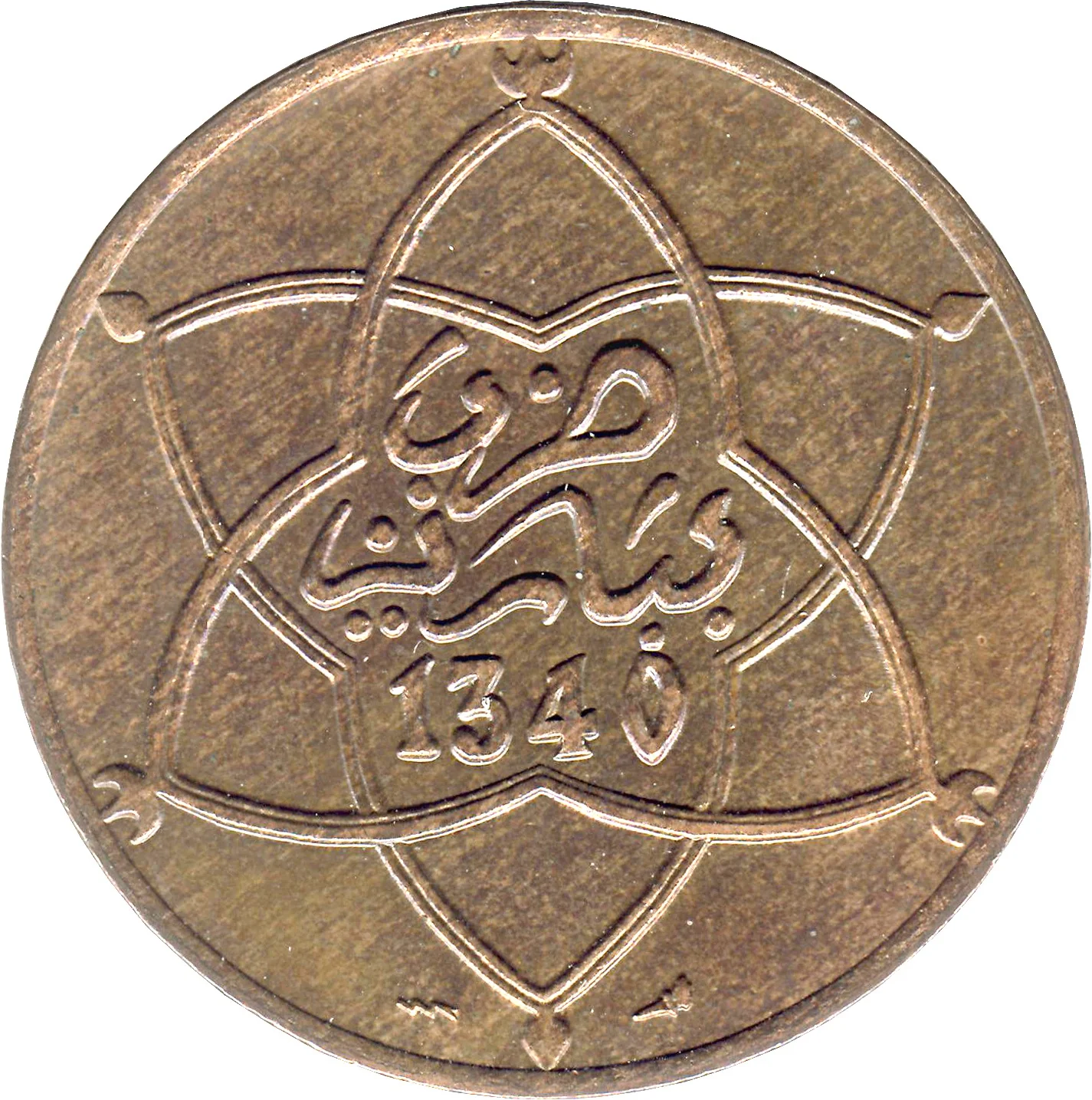
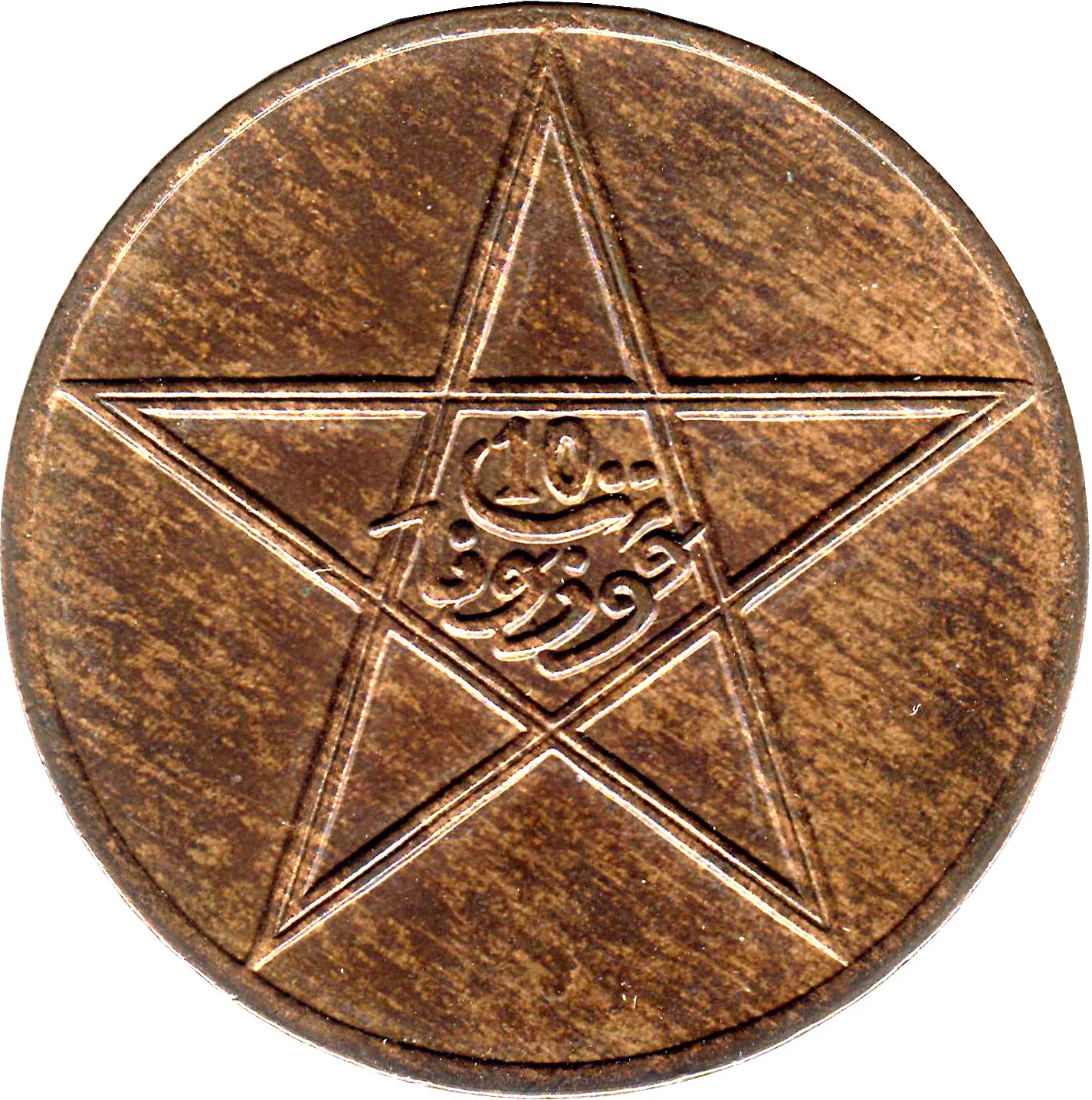
10 mazunas – Morocco
Add to wishlist
Morocco
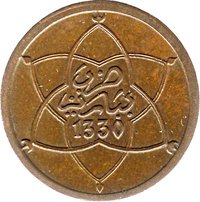
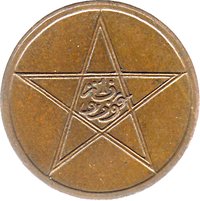
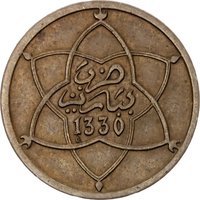
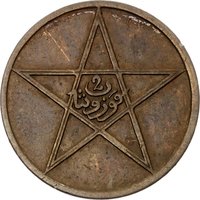
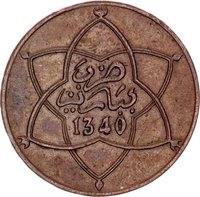
Obverse
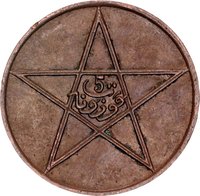
Reverse
Edge
Plain
Mints
| Name | Mark |
|---|---|
| Monnaie de Paris | — |
| Société Française de Monnayage | — |
Mintings
| Year | Mint Mark | Mintage | Quality | Collection |
|---|---|---|---|---|
| 1912 | — | 1,491,183 | ||
| 1922 | — | 1,000,000 |
Historical background
In 1912, Morocco's currency situation was a complex reflection of its political status, caught between tradition and colonial imposition. The year marked the establishment of the French and Spanish protectorates by the Treaty of Fez, which formally dissolved the independent Sultanate. Prior to this, the monetary system was fragmented, relying heavily on a bimetallic system of silver dirhams and gold benduqi coins, alongside a plethora of older, often debased coins and foreign currencies like the Spanish peseta and French franc that circulated in port cities. The Alawite Sultanate struggled with monetary sovereignty, facing counterfeiting, inconsistent weight standards, and a lack of centralized minting authority, which hindered trade and state revenue.
The signing of the protectorate treaties immediately shifted monetary control to the colonial authorities. France, administering the largest zone, moved swiftly to align Morocco's economy with its own. While the existing Moroccan silver dirham and rial (worth 10 dirhams) remained in circulation for local transactions, the French franc was introduced as the official currency for major trade, government accounts, and foreign exchange. This created a de facto dual-currency system, symbolizing the dual power structure of the protectorate itself—where the Sultan remained the nominal spiritual authority, but real economic and political power resided with the French Résident Général.
This transitional period set the stage for a more formal colonial currency reform. The instability and multiplicity of coins in 1912 were seen by the French administration as an obstacle to economic exploitation and administrative efficiency. Therefore, the groundwork was laid in that very year for the eventual creation of a new, unified currency tied firmly to the French franc. This would culminate in 1920 with the introduction of the Moroccan franc, issued by a newly established state bank under French control, completing the integration of Morocco's monetary system into the French imperial economic bloc.
The signing of the protectorate treaties immediately shifted monetary control to the colonial authorities. France, administering the largest zone, moved swiftly to align Morocco's economy with its own. While the existing Moroccan silver dirham and rial (worth 10 dirhams) remained in circulation for local transactions, the French franc was introduced as the official currency for major trade, government accounts, and foreign exchange. This created a de facto dual-currency system, symbolizing the dual power structure of the protectorate itself—where the Sultan remained the nominal spiritual authority, but real economic and political power resided with the French Résident Général.
This transitional period set the stage for a more formal colonial currency reform. The instability and multiplicity of coins in 1912 were seen by the French administration as an obstacle to economic exploitation and administrative efficiency. Therefore, the groundwork was laid in that very year for the eventual creation of a new, unified currency tied firmly to the French franc. This would culminate in 1920 with the introduction of the Moroccan franc, issued by a newly established state bank under French control, completing the integration of Morocco's monetary system into the French imperial economic bloc.
Series: 1912 Morocco circulation coins
🌱 Very Common