

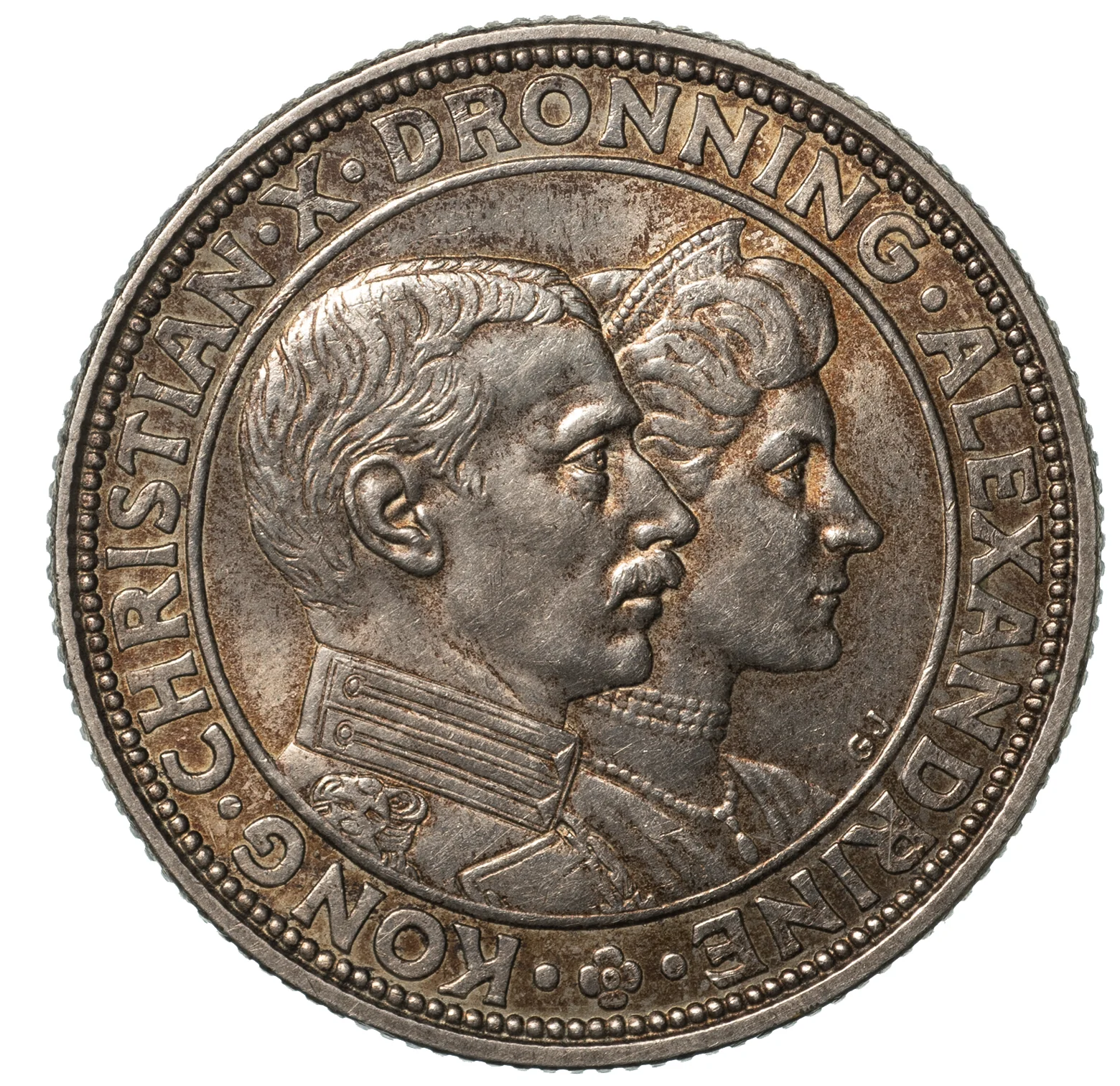
2 kroner (Silver) – Denmark
Add to wishlist
Circulating commemorative coins
Commemoration: Silver wedding anniversary
Denmark
Obverse
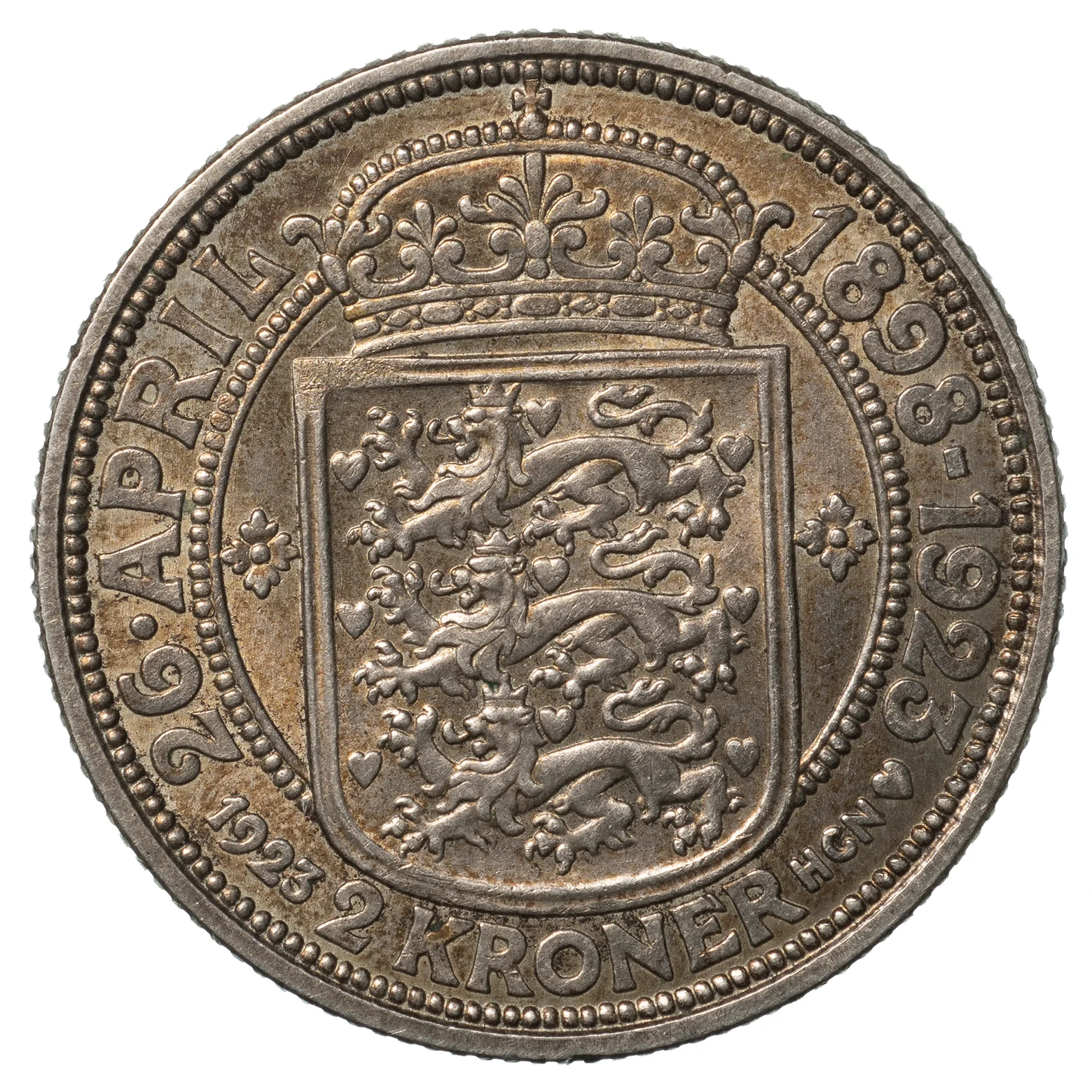
Reverse
Description:
Royal crest between dates.
Inscription:
26 APRIL 1898 - 1923
1923 2 KRONER HCN
1923 2 KRONER HCN
Script: Latin
Edge
Reeded
Categories
| Marriage |
Mintings
| Year | Mint Mark | Mintage | Quality | Collection |
|---|---|---|---|---|
| 1923 | HCN;GJ | 203,000 |
Historical background
In 1923, Denmark found itself navigating the turbulent aftermath of the First World War, grappling with a significant currency crisis rooted in wartime inflation and post-war instability. Unlike many European nations, Denmark had remained neutral during the war, but its economy was deeply intertwined with those of the belligerents, particularly Germany and Britain. The war years saw a classic pattern of inflation, as the Nationalbank suspended the gold standard and financed government spending by printing money, leading to a sharp decline in the krone's value and a substantial rise in domestic prices.
The situation came to a head in the early 1920s. A severe post-war recession, combined with a misguided attempt to return to the pre-war gold standard parity in 1924, had created a period of painful deflation and high interest rates. By 1923, the krone was weak and volatile on foreign exchanges, and Denmark held insufficient gold reserves to credibly back its currency. Public and political pressure mounted for stability, leading to intense debates between those advocating for a devaluation to reflect the krone's true market value and conservatives insisting on a return to the pre-war gold standard to restore confidence and discipline.
Ultimately, the crisis of 1923 set the stage for a decisive political resolution. In 1924, a new Social Democratic government, with the crucial support of the Danish Farmers' Party, passed the Kroneloven (The Krone Law). This legislation abandoned the goal of restoring the pre-war parity and instead legally devalued the krone, pegging it to gold at a level that reflected its diminished purchasing power. This pragmatic devaluation, enacted in 1926, successfully stabilized the currency, ended the deflationary spiral, and laid the foundation for Denmark's economic recovery in the late 1920s.
The situation came to a head in the early 1920s. A severe post-war recession, combined with a misguided attempt to return to the pre-war gold standard parity in 1924, had created a period of painful deflation and high interest rates. By 1923, the krone was weak and volatile on foreign exchanges, and Denmark held insufficient gold reserves to credibly back its currency. Public and political pressure mounted for stability, leading to intense debates between those advocating for a devaluation to reflect the krone's true market value and conservatives insisting on a return to the pre-war gold standard to restore confidence and discipline.
Ultimately, the crisis of 1923 set the stage for a decisive political resolution. In 1924, a new Social Democratic government, with the crucial support of the Danish Farmers' Party, passed the Kroneloven (The Krone Law). This legislation abandoned the goal of restoring the pre-war parity and instead legally devalued the krone, pegging it to gold at a level that reflected its diminished purchasing power. This pragmatic devaluation, enacted in 1926, successfully stabilized the currency, ended the deflationary spiral, and laid the foundation for Denmark's economic recovery in the late 1920s.
🌱 Fairly Common