

2 kroner – Denmark
Add to wishlist
Circulating commemorative coins
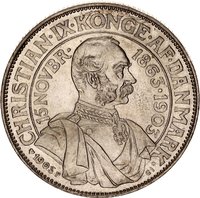
Commemoration: Death of Frederik VIII and accession of Christian X
Denmark
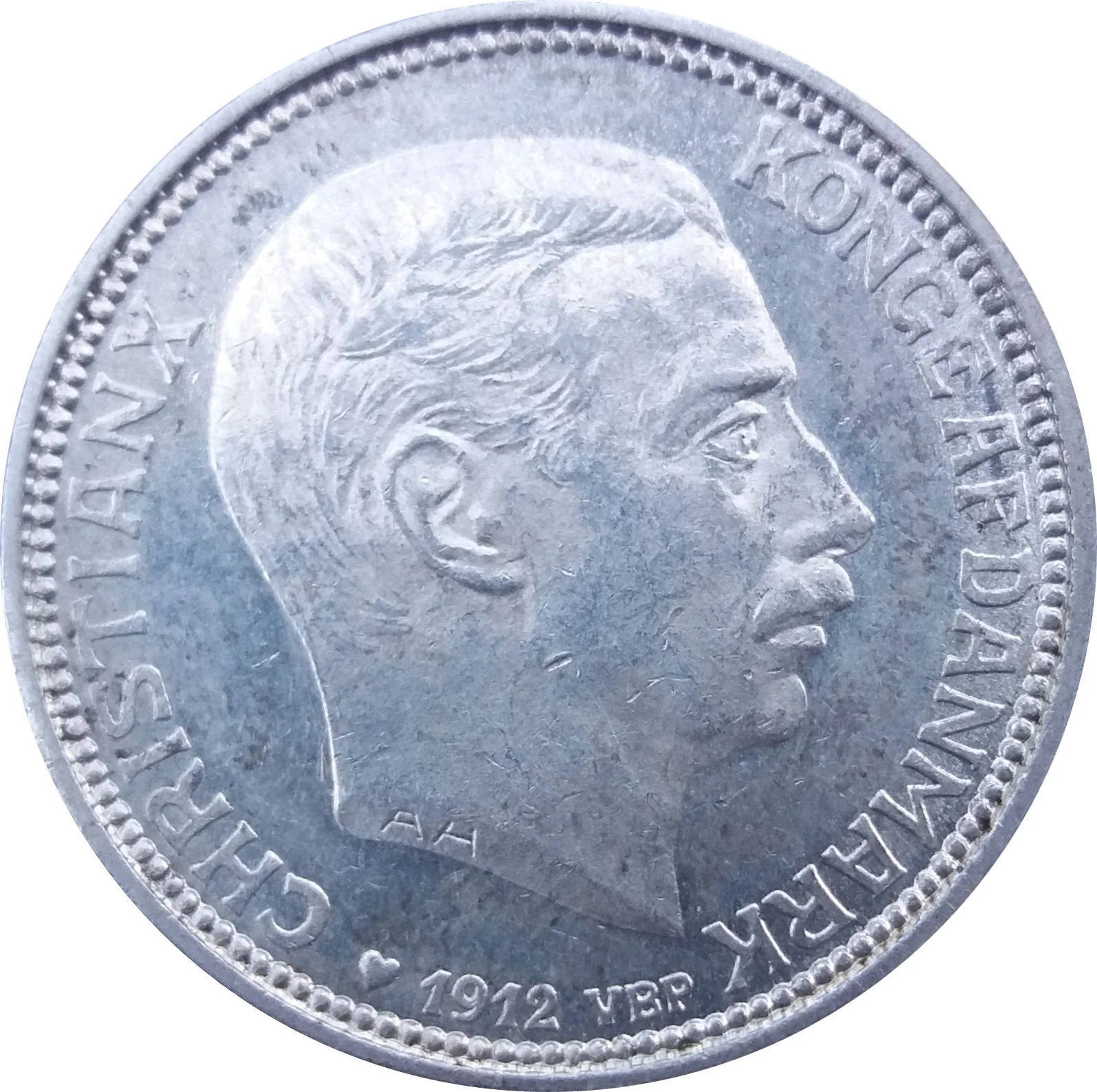
Obverse
Description:
AH at neck, date, mint mark, and VBP below.
Script: Latin
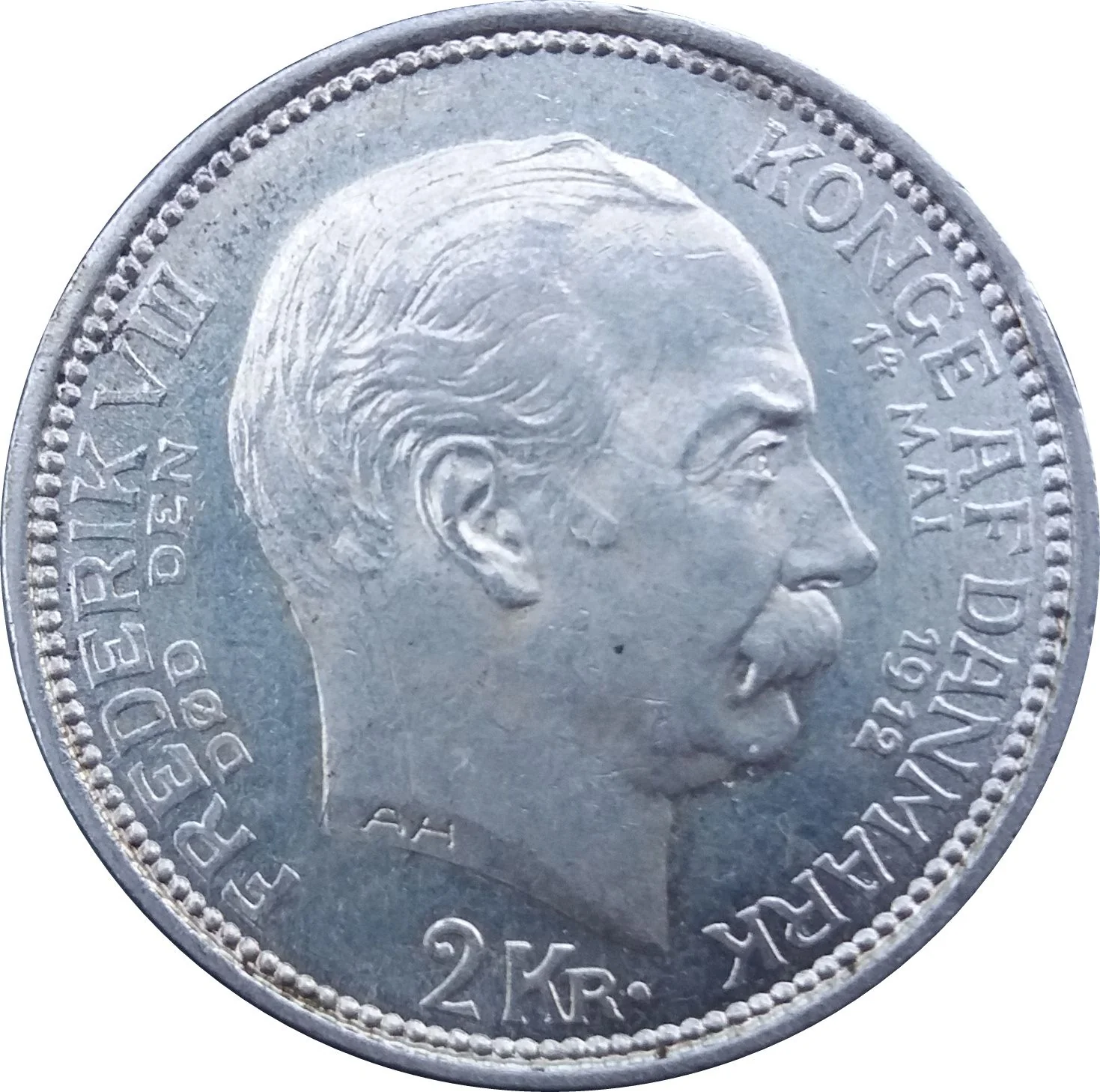
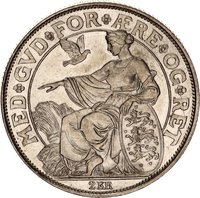
Reverse
Description:
AH, value, DOD
Script: Latin
Edge
Reeded
Categories
| Event> Coronation |
| Person> Monarch |
Mints
| Name | Mark |
|---|---|
| Royal Danish Mint | — |
Mintings
| Year | Mint Mark | Mintage | Quality | Collection |
|---|---|---|---|---|
| 1912 | VBP; | 101,917 |
Historical background
In 1912, Denmark operated under the classical gold standard, a system it had adhered to since 1873. The Danish krone was legally defined as a fixed quantity of gold, and the Nationalbank (Denmark's central bank) was obligated to exchange banknotes for gold on demand. This system created a stable and internationally trusted currency, with the krone's value pegged not only to gold but also, de facto, to the currencies of other gold-standard nations like Germany, the United Kingdom, and Sweden. This stability was crucial for Denmark's economy, which was heavily reliant on agricultural exports, particularly to the British market.
The monetary landscape was dominated by the Nationalbank, which held the exclusive right to issue banknotes. However, the actual money in circulation was a mix of these notes, gold coins, and silver token coins for smaller transactions. A key feature of the era was the "currency rule," a self-imposed restriction requiring the Nationalbank to back its note issuance with gold and foreign exchange reserves of at least 50%. This conservative policy bolstered confidence but also limited the bank's ability to actively manage the money supply in response to domestic economic conditions.
Despite this outward stability, the international gold standard system was showing signs of strain by 1912. Political tensions in Europe were rising, leading to increased hoarding of gold by central banks and governments in preparation for potential conflict. While Denmark itself enjoyed economic prosperity, this global environment of financial precaution meant that the Nationalbank had to vigilantly manage its gold reserves. The system that had served Denmark so well for decades was, unbeknownst to most at the time, on the brink of collapse with the outbreak of World War I in 1914, which would force Denmark and most other nations to suspend gold convertibility.
The monetary landscape was dominated by the Nationalbank, which held the exclusive right to issue banknotes. However, the actual money in circulation was a mix of these notes, gold coins, and silver token coins for smaller transactions. A key feature of the era was the "currency rule," a self-imposed restriction requiring the Nationalbank to back its note issuance with gold and foreign exchange reserves of at least 50%. This conservative policy bolstered confidence but also limited the bank's ability to actively manage the money supply in response to domestic economic conditions.
Despite this outward stability, the international gold standard system was showing signs of strain by 1912. Political tensions in Europe were rising, leading to increased hoarding of gold by central banks and governments in preparation for potential conflict. While Denmark itself enjoyed economic prosperity, this global environment of financial precaution meant that the Nationalbank had to vigilantly manage its gold reserves. The system that had served Denmark so well for decades was, unbeknownst to most at the time, on the brink of collapse with the outbreak of World War I in 1914, which would force Denmark and most other nations to suspend gold convertibility.
🌱 Fairly Common