

1 escudo – Spain
Add to wishlist
Spain
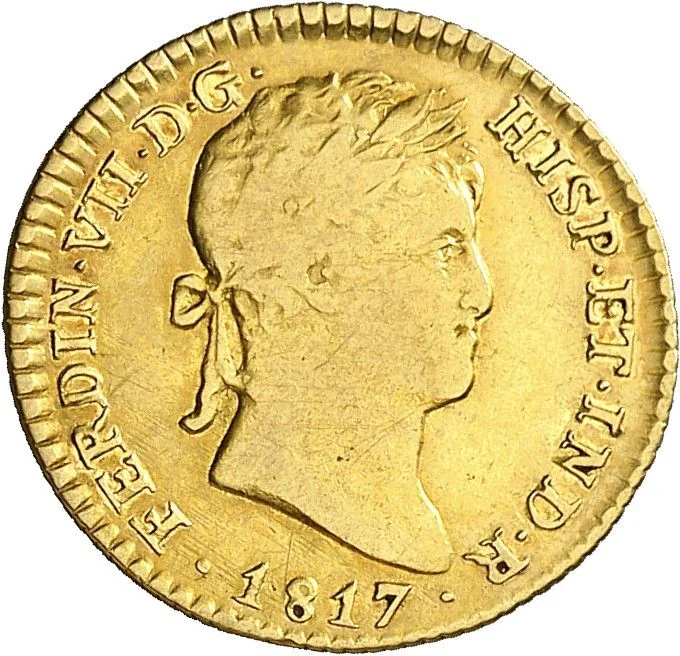
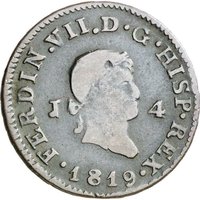
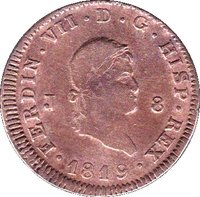
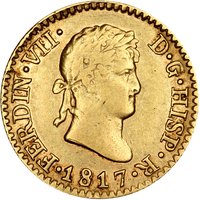
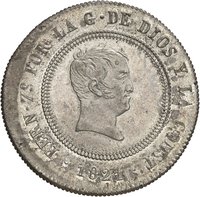
Obverse
Description:
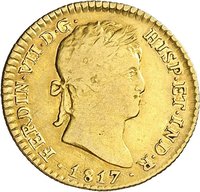
King Ferdinand VII facing right.
Inscription:
FERDIN · VII · D · G · HISP · ET IND · R
· 1817 ·
· 1817 ·
Translation:
FERDINAND VII, BY THE GRACE OF GOD, KING OF SPAIN AND THE INDIES.
· 1817 ·
· 1817 ·
Script: Latin
Language: Latin
Engraver: Félix Sagau y Dalmau de Galcerán
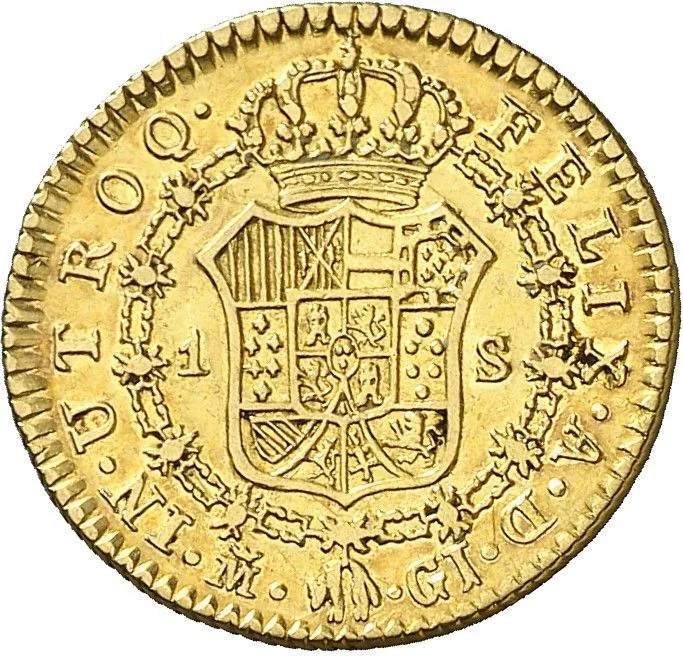
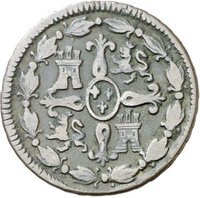
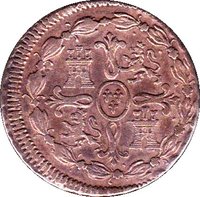
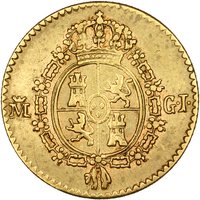
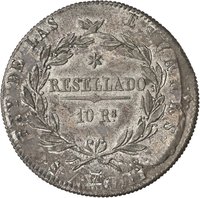
Reverse
Description:
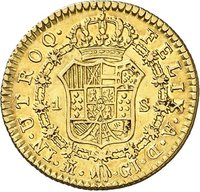
Crowned Spanish coat of arms with the Golden Fleece.
Inscription:
IN · UTROQ · FELIX · A · D ·
1 S
· M · · GJ ·
1 S
· M · · GJ ·
Translation:
In both, fortunate, from God.
1 S
Mint of Gj
1 S
Mint of Gj
Script: Latin
Language: Latin
Engraver: Félix Sagau y Dalmau de Galcerán
Edge
Categories
| Symbols> Coat of Arms |
Mints
| Name | Mark |
|---|---|
| Royal Mint of Madrid | (M) |
Mintings
| Year | Mint Mark | Mintage | Quality | Collection |
|---|---|---|---|---|
| 1817 | MGJ | — |
Historical background
In 1817, Spain was in the midst of a profound monetary and economic crisis, a direct legacy of the Peninsular War (1808-1814) against Napoleon. The conflict had devastated the country's agriculture, industry, and infrastructure, while the government resorted to massive borrowing and the printing of paper money—vales reales—to finance the war effort. This led to rampant inflation and a severe loss of confidence in paper currency, which traded at a steep discount to silver. The state was effectively bankrupt, with a crippling public debt and its American colonies in open revolt, cutting off the vital flow of silver bullion that had historically underpinned the Spanish economy.
The monetary system was chaotic and fragmented. While the official unit of account was the real, circulating mediums included devalued paper vales, a mix of older silver coins (like the real de plata and the peso), and even clipped and counterfeit coins. The most trusted and sought-after currency was physical silver, particularly the peso fuerte (strong peso) or silver dollar, but its scarcity drove hoarding and economic stagnation. In this environment, regional economies often operated with varying exchange rates and local credit instruments, further hindering national recovery and trade.
King Ferdinand VII's restored absolutist government, focused more on political repression than financial reform, offered no coherent solution in 1817. The desperate shortage of sound coinage stifled commerce and exacerbated social hardship. This precarious currency situation underscored Spain's decline as a global power and set the stage for the turbulent political and economic conflicts that would define the rest of the 19th century, including the eventual loss of most of its American empire.
The monetary system was chaotic and fragmented. While the official unit of account was the real, circulating mediums included devalued paper vales, a mix of older silver coins (like the real de plata and the peso), and even clipped and counterfeit coins. The most trusted and sought-after currency was physical silver, particularly the peso fuerte (strong peso) or silver dollar, but its scarcity drove hoarding and economic stagnation. In this environment, regional economies often operated with varying exchange rates and local credit instruments, further hindering national recovery and trade.
King Ferdinand VII's restored absolutist government, focused more on political repression than financial reform, offered no coherent solution in 1817. The desperate shortage of sound coinage stifled commerce and exacerbated social hardship. This precarious currency situation underscored Spain's decline as a global power and set the stage for the turbulent political and economic conflicts that would define the rest of the 19th century, including the eventual loss of most of its American empire.
Series: 1817 Spain circulation coins
✨ Legendary