

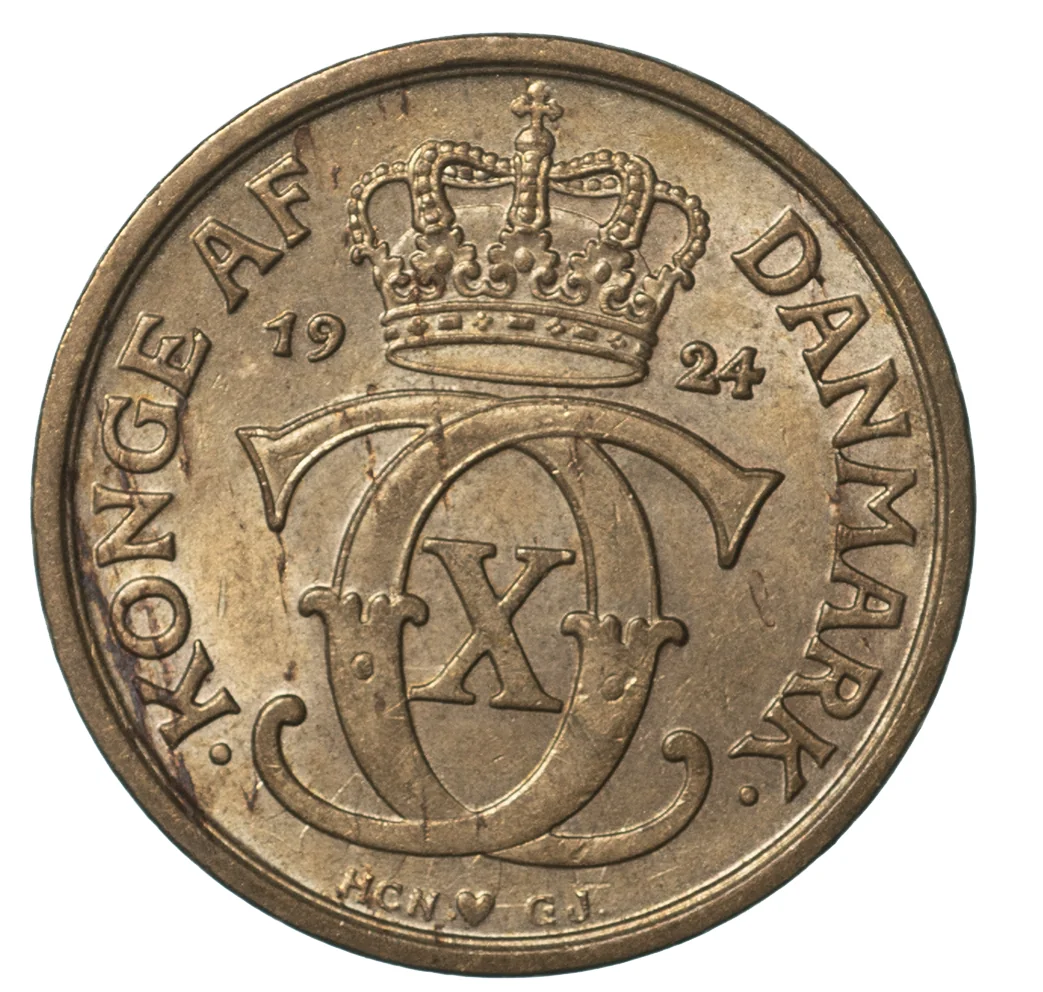
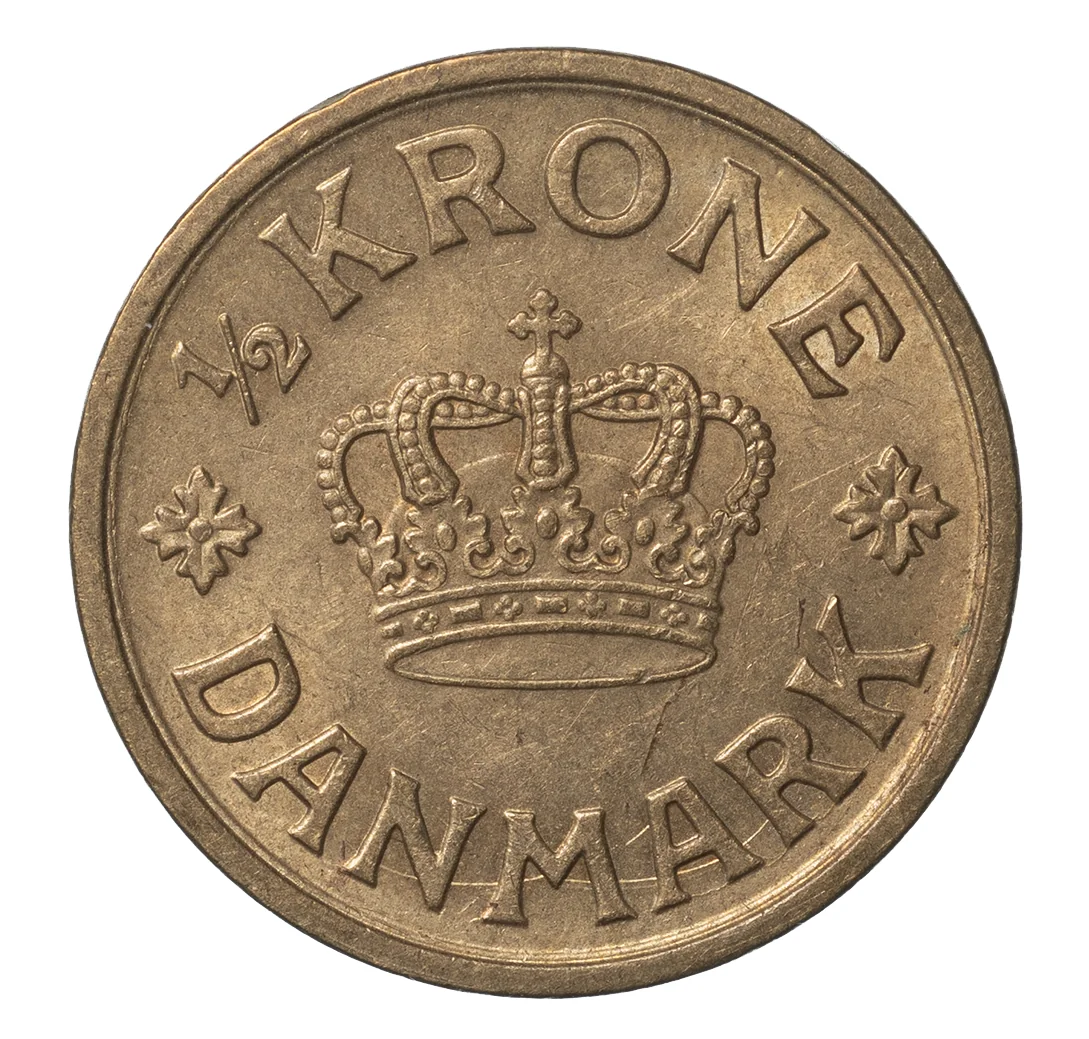
½ krone – Denmark
Add to wishlist
Denmark
Context
Years: 1924–1940
Issuer: Denmark
Ruler: Christian X
Currency:
(since 1873)
Demonetization: 1942
Total mintage: 8,395,000
Material
Diameter: 20 mm
Weight: 3 g
Thickness: 2 mm
Shape: Round
Composition: Aluminium bronze
Magnetic: No
Technique: Milled
Alignment: Medal alignment
flip
References
KM: #
Numista: #14514
Value
Exchange value: ½ DKK
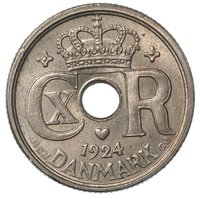
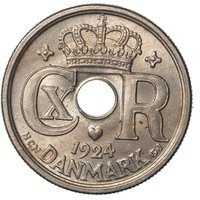
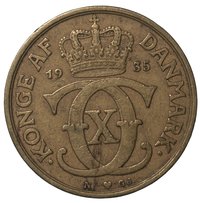
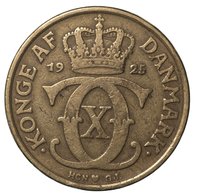
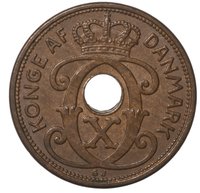
Obverse
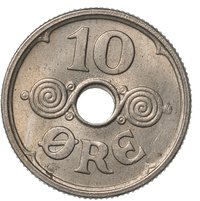
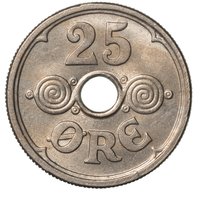
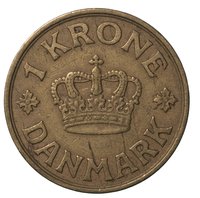
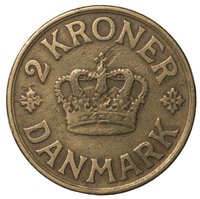
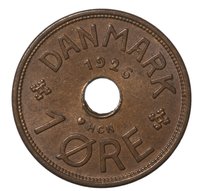
Reverse
Edge
Plain
Mintings
| Year | Mint Mark | Mintage | Quality | Collection |
|---|---|---|---|---|
| 1924 | HCN♥GJ | 2,150,000 | ||
| 1925 | HCN♥GJ | 3,432,000 | ||
| 1926 | HCN♥GJ | 716,000 | ||
| 1939 | N♥GJ | 226,000 | ||
| 1940 | N♥GJ | 1,871,000 |
Historical background
In 1924, Denmark's currency situation was defined by its adherence to the gold standard and the aftermath of significant post-war economic turbulence. The country had returned to the gold standard in January 1924, following a suspension during World War I. This move, which pegged the Danish krone to gold at its pre-war parity, was a deliberate policy to restore monetary stability, international credibility, and control inflation after a period of sharp currency depreciation and economic uncertainty in the early 1920s.
However, this return to the pre-war parity came at a considerable economic cost. The krone was effectively revalued upwards, making Danish agricultural exports—the backbone of the economy—more expensive on the world market. This placed a strain on farmers and the wider economy, contributing to a period of deflation and downward pressure on domestic prices and wages. The policy was politically contentious, seen as favoring financial and urban interests over the powerful agricultural sector.
Consequently, the Danish economy in 1924 was operating under a strict monetary regime that prioritized external stability over internal flexibility. The Nationalbank was required to hold sufficient gold reserves to back the krone, limiting its ability to respond to domestic economic conditions. While the move succeeded in halting inflation and stabilizing the currency for international trade, it set the stage for the economic challenges of the late 1920s, as Denmark, like many nations, found the constraints of the gold standard increasingly difficult to manage in the face of shifting global economic currents.
However, this return to the pre-war parity came at a considerable economic cost. The krone was effectively revalued upwards, making Danish agricultural exports—the backbone of the economy—more expensive on the world market. This placed a strain on farmers and the wider economy, contributing to a period of deflation and downward pressure on domestic prices and wages. The policy was politically contentious, seen as favoring financial and urban interests over the powerful agricultural sector.
Consequently, the Danish economy in 1924 was operating under a strict monetary regime that prioritized external stability over internal flexibility. The Nationalbank was required to hold sufficient gold reserves to back the krone, limiting its ability to respond to domestic economic conditions. While the move succeeded in halting inflation and stabilizing the currency for international trade, it set the stage for the economic challenges of the late 1920s, as Denmark, like many nations, found the constraints of the gold standard increasingly difficult to manage in the face of shifting global economic currents.
Series: 1924 Denmark circulation coins
🌱 Common