

1 øre – Denmark
Add to wishlist
Denmark
Context
Years: 1926–1940
Issuer: Denmark
Ruler: Christian X
Currency:
(since 1873)
Demonetization: 31 March 1973
Total mintage: 80,624,333
Material
References
KM: #
Numista: #6850
Value
Exchange value: 0.01 DKK
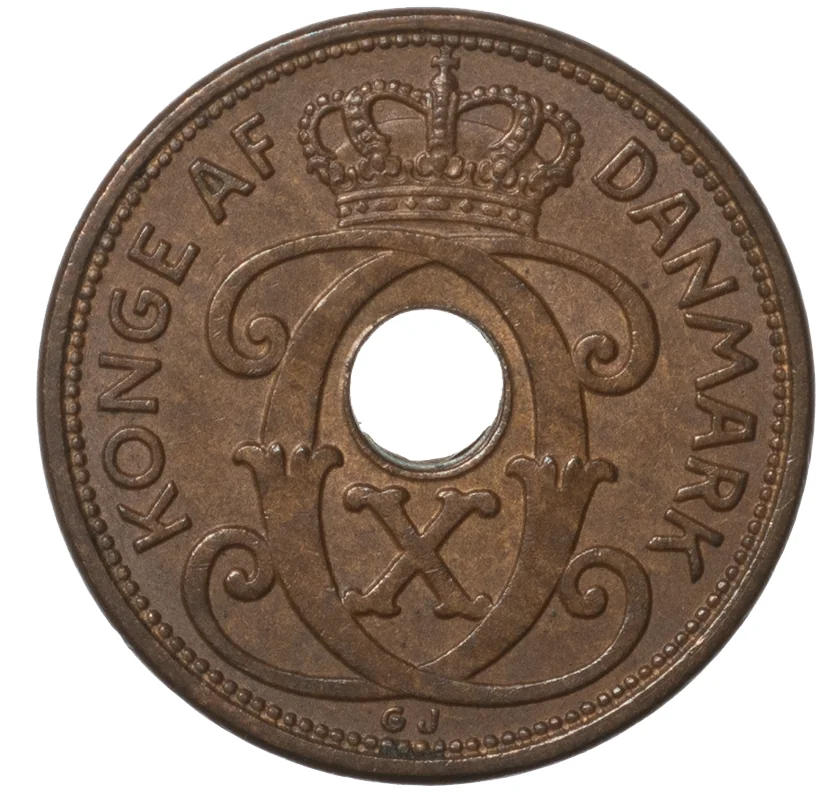
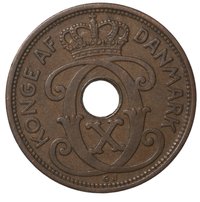
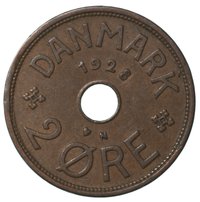
Obverse
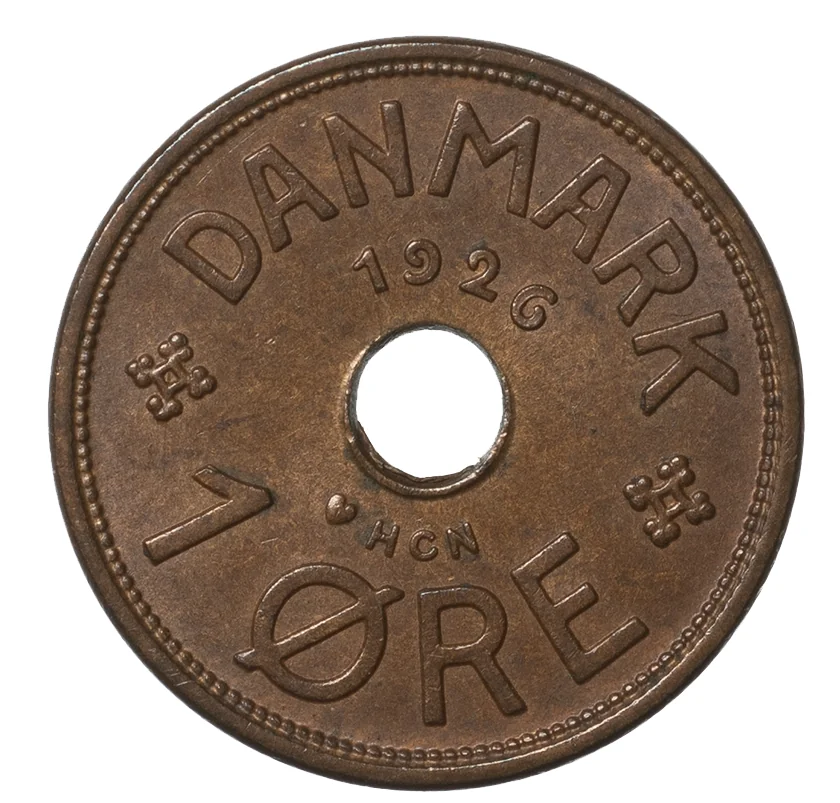
Reverse
Edge
Plain
Mints
| Name | Mark |
|---|---|
| Royal Danish Mint | — |
Mintings
| Year | Mint Mark | Mintage | Quality | Collection |
|---|---|---|---|---|
| 1926 | GJ;♥HCN | 12,691,428 | ||
| 1927 | GJ;♥HCN | — | ||
| 1927 | GJ;♥N | — | ||
| 1928 | GJ;♥N | 16,999,905 | ||
| 1929 | GJ;♥N | 5,172,000 | ||
| 1930 | GJ;♥N | 5,306,000 | ||
| 1932 | GJ;♥N | 5,089,000 | ||
| 1933 | GJ;♥N | 2,095,000 | ||
| 1934 | GJ;♥N | 3,665,000 | ||
| 1935 | GJ;♥N | 5,668,000 | ||
| 1936 | GJ;♥N | 5,584,000 | ||
| 1937 | GJ;♥N | 6,877,000 | ||
| 1938 | GJ;♥N | 3,850,000 | ||
| 1939 | GJ;♥N | 5,662,000 | ||
| 1940 | GJ;♥N | 1,965,000 |
Historical background
In 1926, Denmark's currency situation was defined by its recent and successful return to the gold standard. Following the economic disruptions of World War I, which had forced the country off gold in 1914, Denmark, like many nations, experienced periods of inflation and currency instability. After a period of deliberation and preparation, the Danish krone was formally re-pegged to gold in January 1924 at its pre-war parity. This decisive move, championed by the National Bank and the government, was intended to restore international confidence, stabilize prices, and facilitate trade.
By 1926, the policy was largely seen as a success, having brought a period of monetary stability and low inflation. The krone was considered a strong and reliable currency, backed by substantial gold reserves held by Danmarks Nationalbank. This stability encouraged foreign investment and supported Denmark's important agricultural exports, particularly to the United Kingdom. However, maintaining the pre-war parity required a strict fiscal and monetary discipline, which contributed to higher interest rates and placed pressure on certain sectors of the economy, such as manufacturing and debtors.
The stability of 1926, however, existed within a fragile international context. The Danish krone's fate was closely tied to the British pound sterling, the key currency for Danish trade. While the system functioned smoothly in the mid-1920s, the underlying imbalances in the global gold standard would later be exposed. The challenges of the Great Depression would ultimately force Denmark to abandon gold again in 1931, following the United Kingdom's departure, marking the end of this brief era of restored classical monetary order.
By 1926, the policy was largely seen as a success, having brought a period of monetary stability and low inflation. The krone was considered a strong and reliable currency, backed by substantial gold reserves held by Danmarks Nationalbank. This stability encouraged foreign investment and supported Denmark's important agricultural exports, particularly to the United Kingdom. However, maintaining the pre-war parity required a strict fiscal and monetary discipline, which contributed to higher interest rates and placed pressure on certain sectors of the economy, such as manufacturing and debtors.
The stability of 1926, however, existed within a fragile international context. The Danish krone's fate was closely tied to the British pound sterling, the key currency for Danish trade. While the system functioned smoothly in the mid-1920s, the underlying imbalances in the global gold standard would later be exposed. The challenges of the Great Depression would ultimately force Denmark to abandon gold again in 1931, following the United Kingdom's departure, marking the end of this brief era of restored classical monetary order.
🌱 Very Common