

25 euro – Estonia
Add to wishlist
Estonia
Context
Year: 2024
Issuer: Estonia
Issuing organization: Bank of Estonia
Period:
(since 1991)
Currency:
(since 2011)
Total mintage: 3,000
Material
Diameter: 18 mm
Weight: 3.11 g
Gold Weight:: 3.11 g
Shape: Round
Composition: 99.99% Gold
Standard: Gold tenth ounce
Magnetic: No
Technique: Milled
Alignment: Medal alignment

flip
References
KM: #
Numista: #420395
Value
Exchange value: 25 EUR
Bullion value: $477.08
Inflation-adjusted value: 26.08 EUR
Obverse
Description:
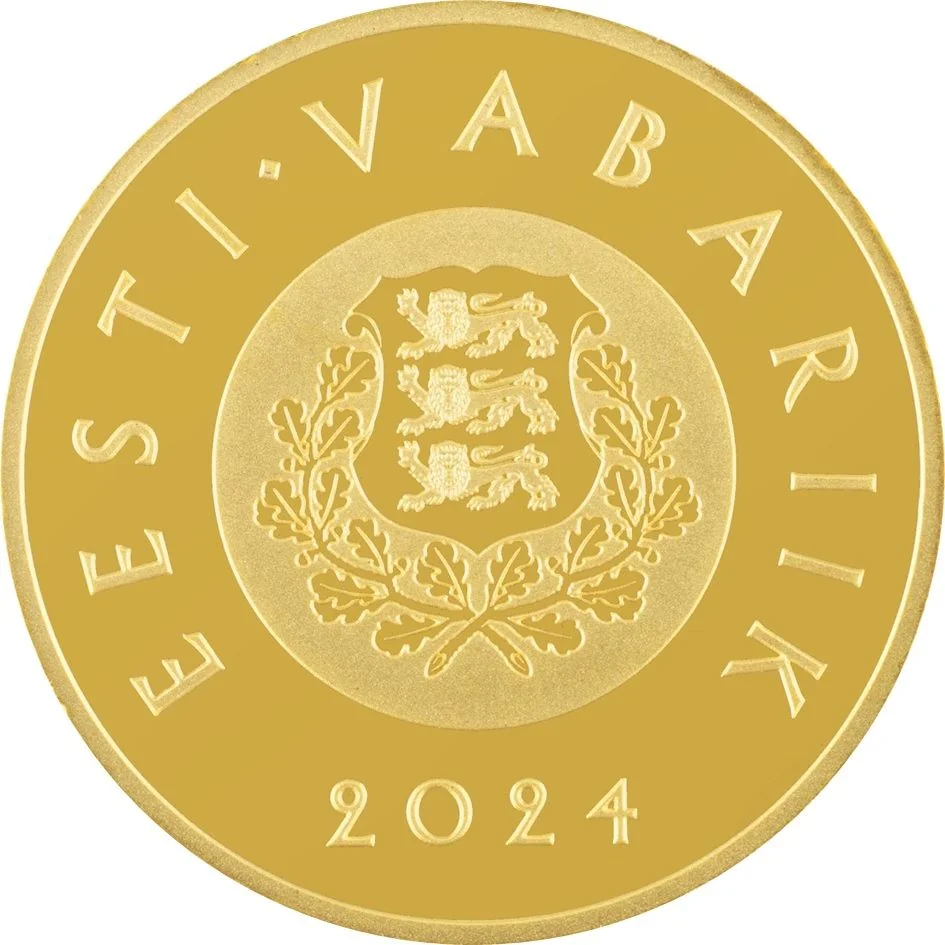
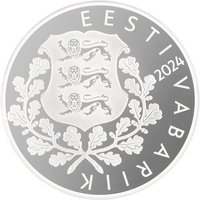
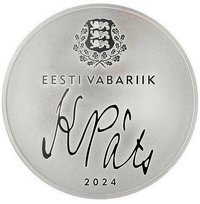
Estonia's coat of arms.
Inscription:
EESTI ♦ VABARIIK
2024
2024
Translation:
REPUBLIC OF ESTONIA ♦
2024
2024
Script: Latin
Language: Estonian
Designer: Heino Prunsvelt
Reverse
Edge
Categories
| Geography> Town |
| Symbols> Coat of Arms |
Mints
| Name | Mark |
|---|---|
| Lithuanian Mint | — |
Mintings
| Year | Mint Mark | Mintage | Quality | Collection |
|---|---|---|---|---|
| 2024 | — | 3,000 | Proof |
Historical background
Estonia continues to operate within the Eurozone framework in 2024, having adopted the euro in 2011. The currency situation is therefore characterized by stability and full integration into the monetary policy of the European Central Bank (ECB). This provides the country with low transaction costs, protection against currency speculation, and a clear framework for trade and investment within the EU's single market. Domestically, the euro is well-established, with cash use declining in favor of digital payments, a trend accelerated by Estonia's advanced digital infrastructure and high adoption of fintech solutions.
The primary monetary policy challenges for Estonia in 2024 are not national but Eurozone-wide, as the country is directly impacted by the ECB's efforts to manage inflation following the post-pandemic surge and energy crisis. High interest rates set by the ECB to curb inflation have a mixed effect, cooling the overheated housing market but also increasing borrowing costs for businesses and households. A significant domestic concern remains persistently high inflation relative to the Eurozone average, driven largely by service sector prices and wage growth, which erodes purchasing power despite strong nominal wage increases.
Looking forward, Estonia's currency stability is firmly anchored, but economic debates focus on fiscal policy and competitiveness within the euro framework. There is ongoing discussion about utilizing the nation's strong digital capabilities to explore innovations like the digital euro pilot, while maintaining a cautious stance on cryptocurrencies. The core economic challenge is to enhance productivity and manage cost pressures to ensure long-term growth and convergence with wealthier Eurozone members, as the tool of independent currency devaluation is not available.
The primary monetary policy challenges for Estonia in 2024 are not national but Eurozone-wide, as the country is directly impacted by the ECB's efforts to manage inflation following the post-pandemic surge and energy crisis. High interest rates set by the ECB to curb inflation have a mixed effect, cooling the overheated housing market but also increasing borrowing costs for businesses and households. A significant domestic concern remains persistently high inflation relative to the Eurozone average, driven largely by service sector prices and wage growth, which erodes purchasing power despite strong nominal wage increases.
Looking forward, Estonia's currency stability is firmly anchored, but economic debates focus on fiscal policy and competitiveness within the euro framework. There is ongoing discussion about utilizing the nation's strong digital capabilities to explore innovations like the digital euro pilot, while maintaining a cautious stance on cryptocurrencies. The core economic challenge is to enhance productivity and manage cost pressures to ensure long-term growth and convergence with wealthier Eurozone members, as the tool of independent currency devaluation is not available.




💎 Extremely Rare