

15 euro – Estonia
Add to wishlist
Non-circulating coins
Commemoration: Lilli Suburg
Estonia
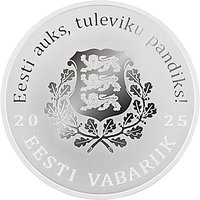
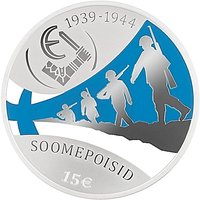
Obverse
Reverse
Edge
Plain
Mints
| Name | Mark |
|---|---|
| Lithuanian Mint | — |
Mintings
| Year | Mint Mark | Mintage | Quality | Collection |
|---|---|---|---|---|
| 2025 | — | 3,000 | Proof |
Historical background
In 2025, Estonia remains a fully integrated member of the Eurozone, with the euro as its sole official currency. This status, achieved in 2011, continues to provide macroeconomic stability, predictable exchange rates for its dominant export sector, and seamless trade within the Single Market. The common currency is widely seen as a cornerstone of Estonia's economic identity within the European Union, reinforcing its strategic alignment with core European institutions and monetary policy set by the European Central Bank in Frankfurt.
However, the monetary landscape is not without debate. Domestically, discussions persist regarding the trade-offs of euro membership. While businesses and the financial sector largely appreciate the stability, some economists and political voices periodically question the loss of independent monetary tools, especially in the face of asymmetric economic shocks. The high inflation experienced across the Eurozone in the early 2020s, though since moderated, fueled this ongoing conversation about fiscal flexibility and the one-size-fits-all nature of ECB interest rate policy.
Looking forward, Estonia's currency situation is inextricably linked to broader European developments. The primary focus in 2025 is less on any return to a national currency and more on Estonia's active role in the EU's digital finance agenda. The country is a keen proponent of the digital euro project, viewing it as a natural extension of its own advanced digital society. Concurrently, the regulatory framework for cryptocurrencies and other digital assets continues to evolve under EU-wide legislation like MiCA (Markets in Crypto-Assets), with Estonia working to balance its historic openness to fintech innovation with stringent anti-money laundering requirements.
However, the monetary landscape is not without debate. Domestically, discussions persist regarding the trade-offs of euro membership. While businesses and the financial sector largely appreciate the stability, some economists and political voices periodically question the loss of independent monetary tools, especially in the face of asymmetric economic shocks. The high inflation experienced across the Eurozone in the early 2020s, though since moderated, fueled this ongoing conversation about fiscal flexibility and the one-size-fits-all nature of ECB interest rate policy.
Looking forward, Estonia's currency situation is inextricably linked to broader European developments. The primary focus in 2025 is less on any return to a national currency and more on Estonia's active role in the EU's digital finance agenda. The country is a keen proponent of the digital euro project, viewing it as a natural extension of its own advanced digital society. Concurrently, the regulatory framework for cryptocurrencies and other digital assets continues to evolve under EU-wide legislation like MiCA (Markets in Crypto-Assets), with Estonia working to balance its historic openness to fintech innovation with stringent anti-money laundering requirements.
✨ Legendary