

1 cent – United States
Add to wishlist
United States
Context
Years: 1959–1982
Issuer: United States
Period:
(since 1776)
Currency:
(since 1785)
Total mintage: 135,698,753,277
Material
References
KM: #
Numista: #42
Value
Exchange value: 0.01 USD = $0.01
Inflation-adjusted value: 0.11 USD
Obverse
Description:
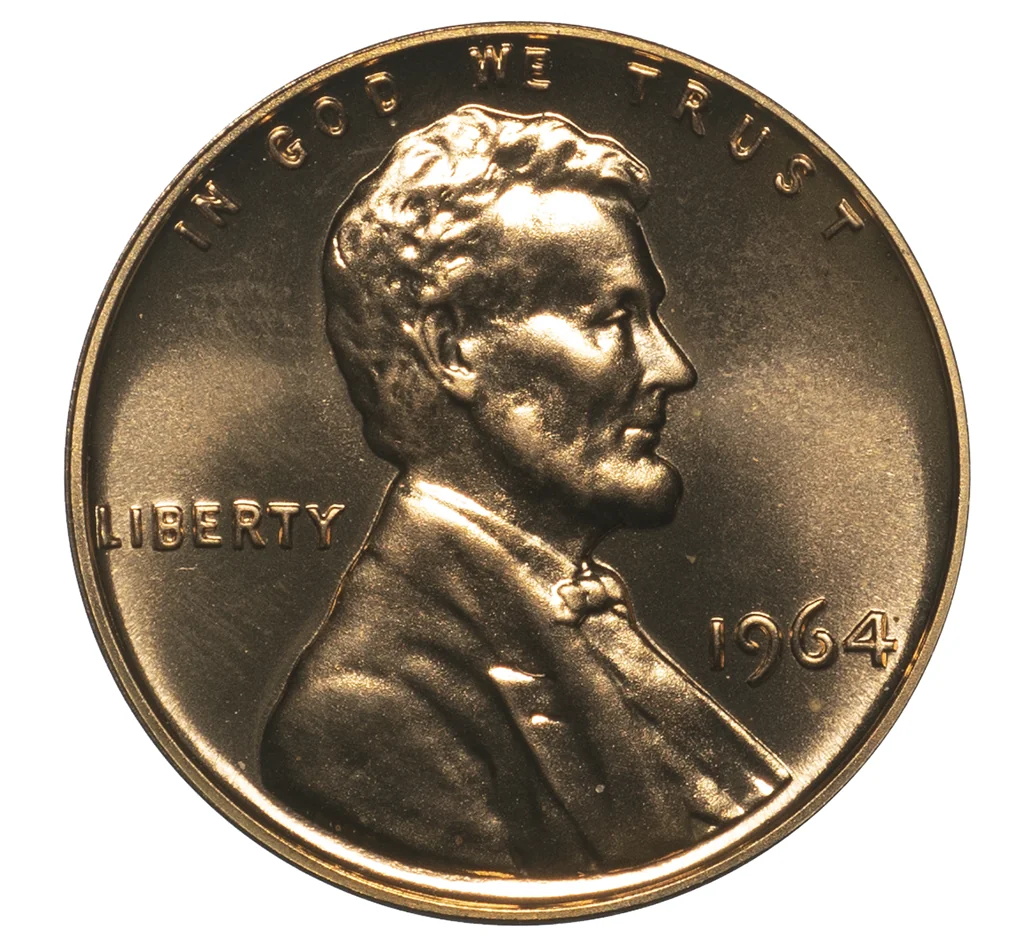
Portrait of Abraham Lincoln facing right, with motto.
Inscription:
IN GOD WE TRUST
LIBERTY
1978
S
V D B
LIBERTY
1978
S
V D B
Script: Latin
Engraver: Victor David Brenner
Reverse
Description:
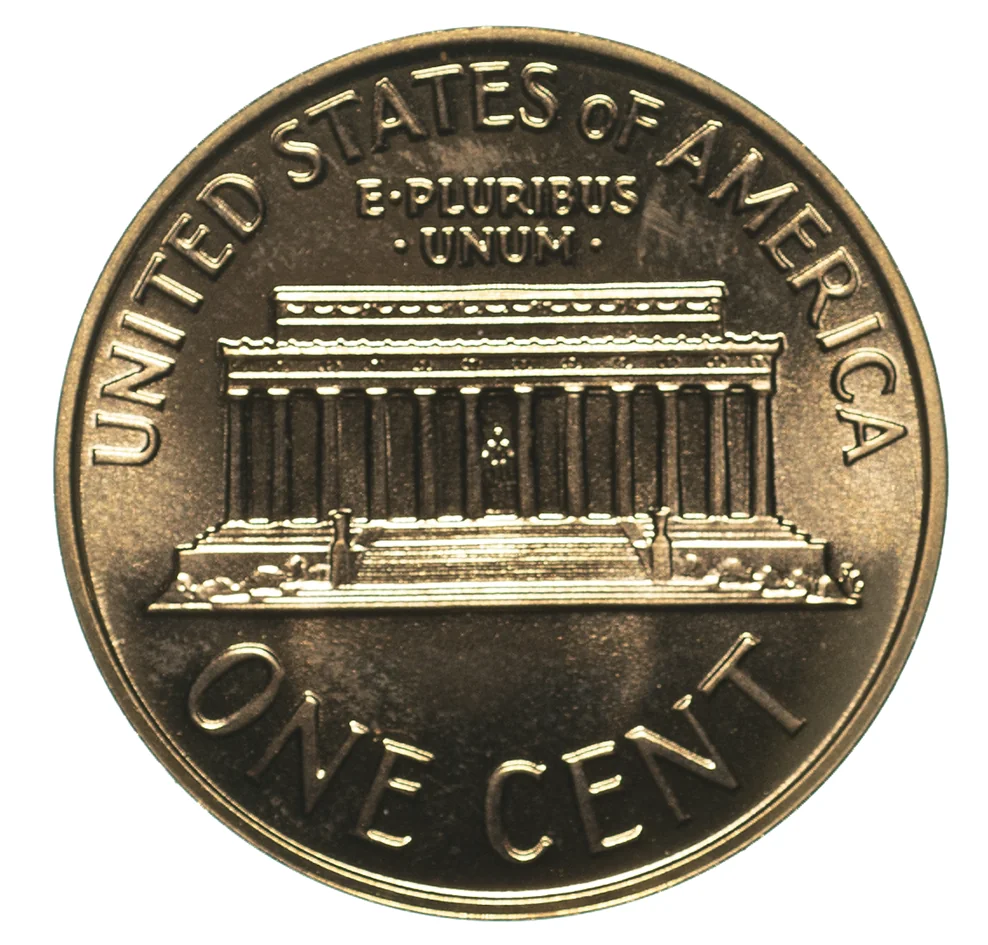
Lincoln Memorial encircled by denomination.
Inscription:
UNITED STATES OF AMERICA
E • PLURIBUS
• UNUM •
FG
ONE CENT
E • PLURIBUS
• UNUM •
FG
ONE CENT
Translation:
UNITED STATES OF AMERICA
OUT OF MANY
ONE
FG
ONE CENT
OUT OF MANY
ONE
FG
ONE CENT
Script: Latin
Engraver: Frank Gasparro
Edge
Plain
Categories
| Building> Memorial |
| Person> Politician |
Mints
| Name | Mark |
|---|---|
| United States Mint of Denver | — |
| United States Mint of Philadelphia | — |
| United States Mint of West Point | — |
| United States Mint of Denver | D |
| United States Mint of San Francisco | S |
Mintings
| Year | Mint Mark | Mintage | Quality | Collection |
|---|---|---|---|---|
| 1959 | — | 609,715,000 | ||
| 1959 | — | 1,149,291 | Proof | |
| 1959 | D | 1,279,760,000 | ||
| 1960 | — | — | ||
| 1960 | — | 1,691,602 | Proof | |
| 1960 | D | — | ||
| 1961 | — | 753,345,000 | ||
| 1961 | D | 1,753,266,700 | ||
| 1961 | — | 3,028,244 | Proof | |
| 1962 | — | 606,045,000 | ||
| 1962 | — | 3,218,019 | Proof | |
| 1962 | D | 1,793,148,140 | ||
| 1963 | — | 754,110,000 | ||
| 1963 | — | 3,075,645 | Proof | |
| 1963 | D | 1,774,020,400 | ||
| 1964 | — | 3,950,762 | Proof | |
| 1964 | D | 3,799,071,500 | ||
| 1964 | — | 2,648,575,000 | ||
| 1965 | — | 1,497,224,900 | ||
| 1965 | — | 2,360,000 | Prooflike | |
| 1966 | — | 2,188,147,783 | ||
| 1966 | — | 2,261,583 | Prooflike | |
| 1967 | — | 3,048,667,100 | ||
| 1967 | — | 1,863,344 | Prooflike | |
| 1968 | — | 1,707,880,970 | ||
| 1968 | D | 2,886,269,600 | ||
| 1968 | S | 3,041,506 | Proof | |
| 1968 | S | 258,270,001 | ||
| 1969 | — | 1,136,910,000 | ||
| 1969 | D | 4,002,832,200 | ||
| 1969 | S | 544,375,000 | ||
| 1969 | S | 2,934,631 | Proof | |
| 1970 | D | 2,891,438,900 | ||
| 1970 | S | — | Proof | |
| 1970 | — | 1,898,315,000 | ||
| 1970 | S | — | ||
| 1971 | S | 3,220,733 | Proof | |
| 1971 | — | 1,919,490,000 | ||
| 1971 | D | 2,911,045,600 | ||
| 1971 | S | 525,133,459 | ||
| 1972 | — | — | ||
| 1972 | D | 2,665,071,400 | ||
| 1972 | S | 376,939,108 | ||
| 1972 | S | 3,260,996 | Proof | |
| 1973 | S | 2,760,339 | Proof | |
| 1973 | — | 3,728,245,000 | ||
| 1973 | D | 3,549,576,588 | ||
| 1973 | S | 317,177,295 | ||
| 1974 | — | 4,232,140,523 | ||
| 1974 | D | 4,235,098,000 | ||
| 1974 | S | 409,426,660 | ||
| 1974 | S | 2,612,568 | Proof | |
| 1975 | — | 5,451,476,142 | ||
| 1975 | D | 4,505,275,300 | ||
| 1975 | S | 2,845,450 | Proof | |
| 1976 | D | 4,221,592,455 | ||
| 1976 | S | 4,149,730 | Proof | |
| 1976 | — | 4,674,292,426 | ||
| 1977 | — | 4,469,930,000 | ||
| 1977 | D | 4,194,062,300 | ||
| 1977 | S | 3,251,152 | Proof | |
| 1978 | — | 5,558,605,000 | ||
| 1978 | D | 4,280,233,400 | ||
| 1978 | S | 3,127,781 | Proof | |
| 1979 | — | 6,018,515,000 | ||
| 1979 | D | 4,139,357,254 | ||
| 1979 | S | 3,677,175 | Proof | |
| 1980 | — | 7,414,705,000 | ||
| 1980 | D | 5,140,098,660 | ||
| 1980 | S | 3,554,806 | Proof | |
| 1981 | — | 7,491,750,000 | ||
| 1981 | D | 5,373,235,677 | ||
| 1981 | S | — | Proof | |
| 1982 | — | — | ||
| 1982 | D | — | ||
| 1982 | S | 3,857,479 | Proof |
Historical background
In 1959, the United States operated under the Bretton Woods monetary system, established in 1944, which pegged the U.S. dollar to gold at $35 per ounce and tied other major world currencies to the dollar. This made the dollar the world's primary reserve currency and the anchor of international finance. Domestically, currency was entirely physical—coins and paper bills—as credit cards were in their infancy and electronic transfers were limited to large institutional transactions. The money in circulation was largely in the form of U.S. Notes and Federal Reserve Notes, with the latter becoming increasingly dominant, and all paper currency was still redeemable in silver to a degree, upholding public confidence in its tangible value.
Economically, the year was one of transition and mild concern. The country was emerging from the sharp recession of 1958, and while growth resumed, there were persistent worries about inflation and the balance of payments deficit. For the average American, prices were stable by modern standards, with a gallon of gasoline costing around 25 cents and a new house averaging $12,400. However, the persistent outflow of gold to cover international deficits was beginning to strain the Bretton Woods system, hinting at future instability. Internally, the Treasury and Federal Reserve maintained a careful balance to support growth without triggering price spikes.
A significant numismatic event of 1959 was the removal of the motto "In God We Trust" from the reverse of the one-dollar silver certificate, as it had been absent from that series since its 1935 design. This change was temporary, however, as a congressional mandate the following year would require the motto on all U.S. currency. The year thus represented a late period of monetary stability before the pressures of the 1960s would lead to the end of silver redemption in circulating coinage and, ultimately, the collapse of the gold standard itself in 1971.
Economically, the year was one of transition and mild concern. The country was emerging from the sharp recession of 1958, and while growth resumed, there were persistent worries about inflation and the balance of payments deficit. For the average American, prices were stable by modern standards, with a gallon of gasoline costing around 25 cents and a new house averaging $12,400. However, the persistent outflow of gold to cover international deficits was beginning to strain the Bretton Woods system, hinting at future instability. Internally, the Treasury and Federal Reserve maintained a careful balance to support growth without triggering price spikes.
A significant numismatic event of 1959 was the removal of the motto "In God We Trust" from the reverse of the one-dollar silver certificate, as it had been absent from that series since its 1935 design. This change was temporary, however, as a congressional mandate the following year would require the motto on all U.S. currency. The year thus represented a late period of monetary stability before the pressures of the 1960s would lead to the end of silver redemption in circulating coinage and, ultimately, the collapse of the gold standard itself in 1971.
🌱 Very Common