

½ dollar – United States
Add to wishlist
United States
Context
Year: 1964
Issuer: United States
Period:
(since 1776)
Currency:
(since 1785)
Subdivision: ½ dollar = 50 Cents
Total mintage: 437,410,974
Material
References
KM: #
Numista: #943
Value
Exchange value: ½ USD = $0.50
Bullion value: $27.51
Inflation-adjusted value: 5.24 USD
Obverse
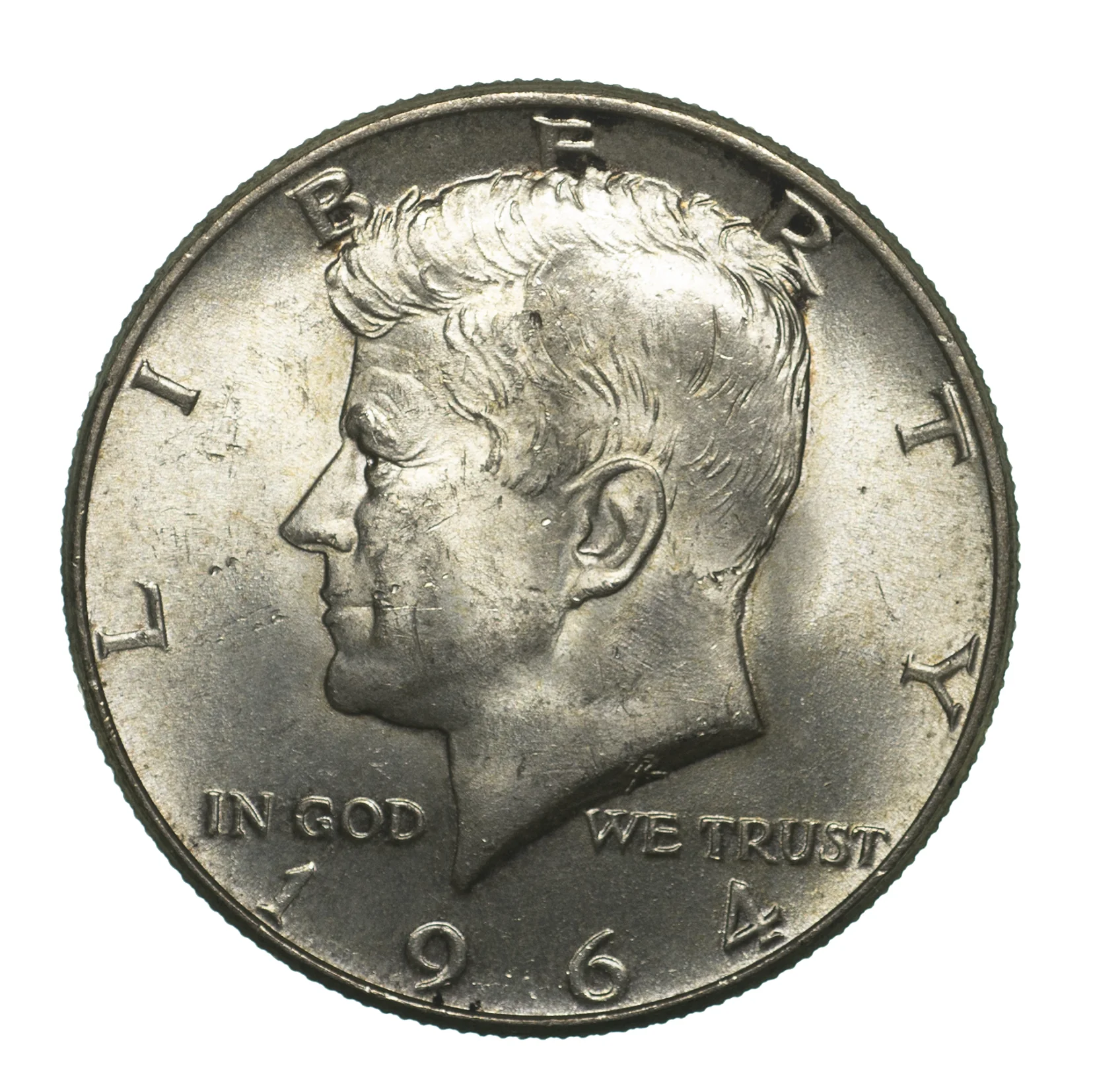
Description:
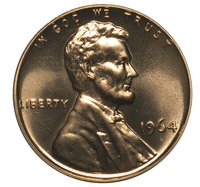
JFK portrait left, date below.
Inscription:
LIBERTY
GR
IN GOD WE TRUST
1964
GR
IN GOD WE TRUST
1964
Script: Latin
Engraver: Gilroy Roberts
Reverse
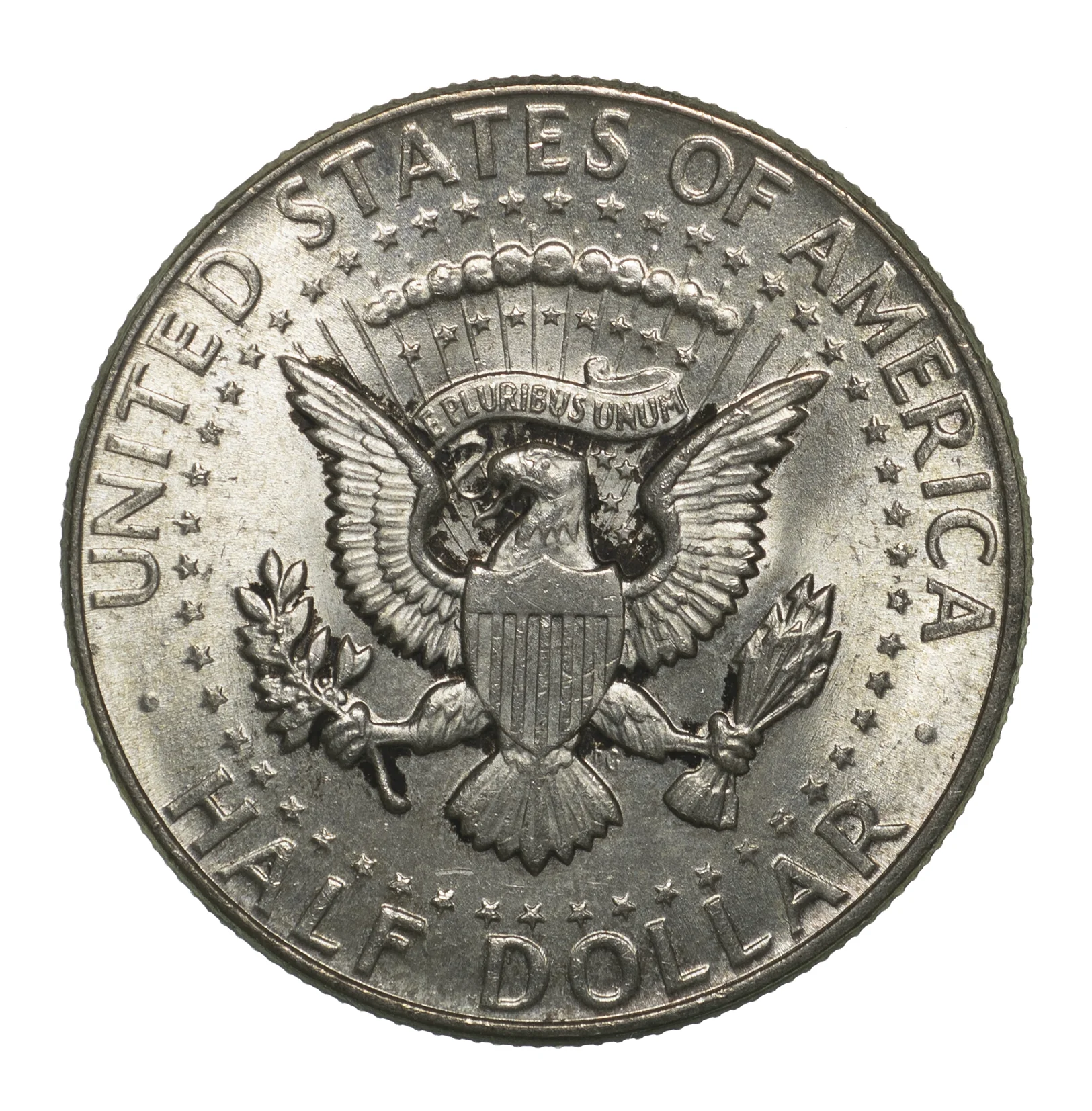
Description:
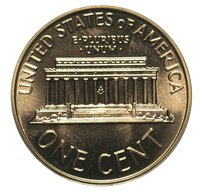
The U.S. presidential seal features an eagle holding arrows and an olive branch, with a striped shield on its chest, a scroll reading "E PLURIBUS UNUM" in its beak, and a circle of stars.
Inscription:
UNITED STATES OF AMERICA
E PLURIBUS UNUM
FG
HALF DOLLAR
E PLURIBUS UNUM
FG
HALF DOLLAR
Translation:
UNITED STATES OF AMERICA
OUT OF MANY, ONE
FG
HALF DOLLAR
OUT OF MANY, ONE
FG
HALF DOLLAR
Script: Latin
Engraver: Frank Gasparro
Edge
Reeded
Categories
| Object> Cold weapons |
| Animal> Bird> Eagle |
| Person> Politician |
| Symbols> Coat of Arms |
Mints
| Name | Mark |
|---|---|
| United States Mint of Philadelphia | — |
| United States Mint of Denver | D |
Mintings
| Year | Mint Mark | Mintage | Quality | Collection |
|---|---|---|---|---|
| 1964 | — | 277,254,766 | ||
| 1964 | — | 3,950,762 | Proof | |
| 1964 | D | 156,205,446 |
Historical background
In 1964, the United States stood at the monetary crossroads between a commodity-backed currency and a purely fiat system. The official currency was still the Silver Certificate, with the familiar "ONE DOLLAR" note explicitly stating it was redeemable "in silver on demand" at the U.S. Treasury. This promise was backed by a substantial physical stockpile of silver bullion, a legacy of centuries of bimetallism. Coins, crucially, contained intrinsic value: dimes and quarters were 90% silver, and even the ubiquitous Kennedy half-dollar (first minted in 1964 as a memorial to the assassinated president) was minted in 90% silver for that year.
However, this system was under immense strain due to the rising market price of silver, which began to exceed the face value of the coins. This created a powerful economic incentive for individuals to hoard or even melt down coins for their bullion value, threatening to remove them from circulation entirely—a classic example of Gresham's Law, where "bad" money (less intrinsic value) drives out "good." The Treasury faced a looming shortage of circulating coinage and the unsustainable depletion of the government's strategic silver reserves.
Consequently, 1964 was the final year of truly silver circulating coinage for dimes and quarters, though the half-dollar's silver content would be reduced in 1965 and phased out by 1971. Congress had already passed the Coinage Act of 1965, which would take effect the following year, authorizing the production of copper-nickel "clad" coins for dimes and quarters and eliminating silver from most new circulating currency. Thus, 1964 marked the end of an era, as the U.S. consciously moved toward a fiduciary coinage system where the value was based solely on government mandate rather than precious metal content, a necessary step in the transition to the fully fiat currency system of today.
However, this system was under immense strain due to the rising market price of silver, which began to exceed the face value of the coins. This created a powerful economic incentive for individuals to hoard or even melt down coins for their bullion value, threatening to remove them from circulation entirely—a classic example of Gresham's Law, where "bad" money (less intrinsic value) drives out "good." The Treasury faced a looming shortage of circulating coinage and the unsustainable depletion of the government's strategic silver reserves.
Consequently, 1964 was the final year of truly silver circulating coinage for dimes and quarters, though the half-dollar's silver content would be reduced in 1965 and phased out by 1971. Congress had already passed the Coinage Act of 1965, which would take effect the following year, authorizing the production of copper-nickel "clad" coins for dimes and quarters and eliminating silver from most new circulating currency. Thus, 1964 marked the end of an era, as the U.S. consciously moved toward a fiduciary coinage system where the value was based solely on government mandate rather than precious metal content, a necessary step in the transition to the fully fiat currency system of today.

🌱 Very Common