

Obverse
Description:
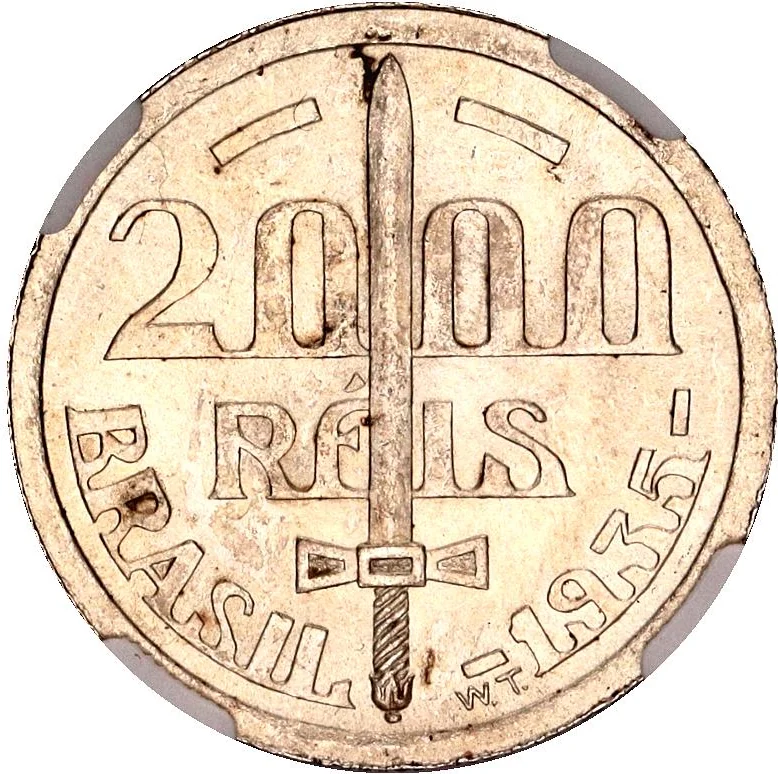
Face-card sword
Inscription:
2000
Réis
Brasil
-1935-
W.T.
Réis
Brasil
-1935-
W.T.
Translation:
Two Thousand Réis
Brazil
1935
W.T.
Brazil
1935
W.T.
Script: Latin
Language: Portuguese
Engraver: Walter Rodrigues Toledo
Reverse
Description:
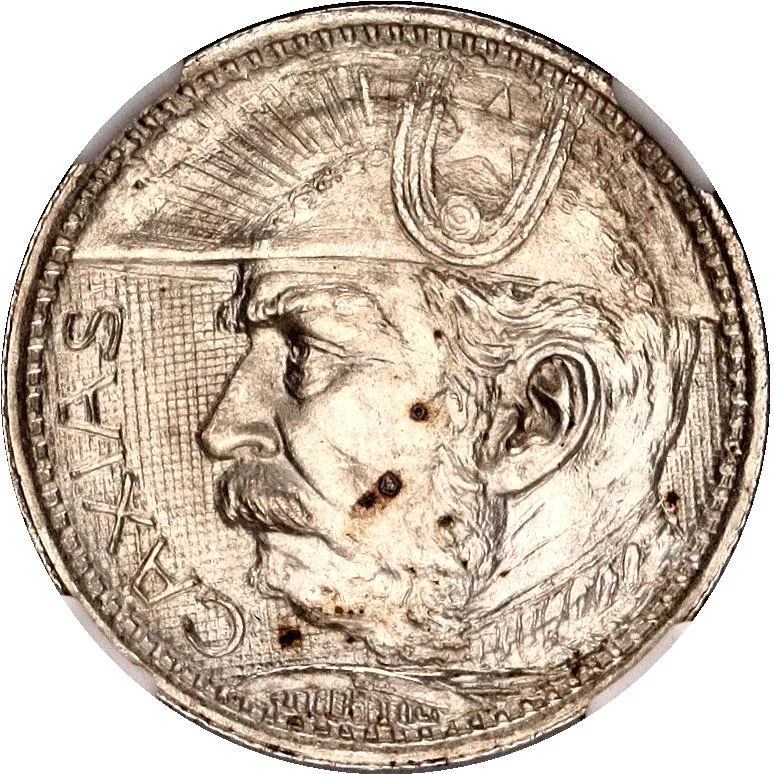
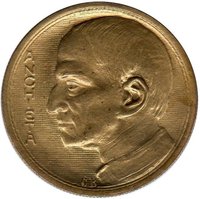
Portrait of the Duke of Caxias (1803-1880)
Inscription:
CAXIAS
Script: Latin
Engraver: Walter Rodrigues Toledo
Edge
Reeded
Categories
| Person> Military leader |
| Object> Cold weapons |
Mints
| Name | Mark |
|---|---|
| Casa da Moeda do Brasil | — |
Mintings
| Year | Mint Mark | Mintage | Quality | Collection |
|---|---|---|---|---|
| 1935 | — | 2,131,000 |
Historical background
In 1935, Brazil's currency situation was characterized by the dominance of the mil-réis and the lingering effects of the global economic turmoil of the 1920s and early 1930s. The country was still grappling with the aftermath of the collapse of the coffee valorization schemes, which had previously propped up the economy but left it vulnerable to external shocks. The Great Depression had severely reduced demand and prices for Brazil's primary exports, leading to a balance of payments crisis, a depletion of gold reserves, and significant depreciation of the mil-réis. This period of instability was a key factor in the political unrest of the era, including the Communist-led uprising of November 1935.
Monetary policy was under the control of the Brazilian Treasury, as the country lacked a central bank (the Banco do Brasil performed some central banking functions). The government of President Getúlio Vargas, who had taken power in 1930, responded to the crisis with increasing interventionism. Efforts were made to manage the exchange rate and control the outflow of gold, but these were largely reactive measures. Inflation was a growing concern, fueled by fiscal deficits and the monetization of debt, creating a complex environment of economic nationalism and ad-hoc financial controls.
This unstable backdrop set the stage for the major monetary reforms that would follow later in the Vargas era. The difficulties of managing an economy with a depreciating and unpredictable currency highlighted the need for systemic change. These pressures ultimately culminated in the creation of the Conselho Federal de Comércio Exterior (Federal Council for Foreign Trade) in 1934 to better manage trade and currency flows, and paved the way for the more radical solution implemented in 1942: the cruzeiro reform, which introduced a new, decimalized currency to replace the aged mil-réis and symbolically mark a new era for the Brazilian economy.
Monetary policy was under the control of the Brazilian Treasury, as the country lacked a central bank (the Banco do Brasil performed some central banking functions). The government of President Getúlio Vargas, who had taken power in 1930, responded to the crisis with increasing interventionism. Efforts were made to manage the exchange rate and control the outflow of gold, but these were largely reactive measures. Inflation was a growing concern, fueled by fiscal deficits and the monetization of debt, creating a complex environment of economic nationalism and ad-hoc financial controls.
This unstable backdrop set the stage for the major monetary reforms that would follow later in the Vargas era. The difficulties of managing an economy with a depreciating and unpredictable currency highlighted the need for systemic change. These pressures ultimately culminated in the creation of the Conselho Federal de Comércio Exterior (Federal Council for Foreign Trade) in 1934 to better manage trade and currency flows, and paved the way for the more radical solution implemented in 1942: the cruzeiro reform, which introduced a new, decimalized currency to replace the aged mil-réis and symbolically mark a new era for the Brazilian economy.
Series: Illustrious Brazilian Series
🌱 Common