

5 cents – Netherlands
Add to wishlist
Netherlands
Context
Years: 1907–1909
Issuer: Netherlands
Ruler: Wilhelmina
Currency:
(1817—2001)
Demonetization: 1 July 1916
Total mintage: 14,000,000
Material
Diameter: 18 mm
Weight: 4.5 g
Thickness: 1.8 mm
Shape: 75% copper, 25% nickel round
Composition: Copper-nickel
Technique: Milled
Alignment: Coin alignment
flip
References
KM: #
Numista: #4146
Value
Exchange value: 0.05 NLG
Obverse
Description:
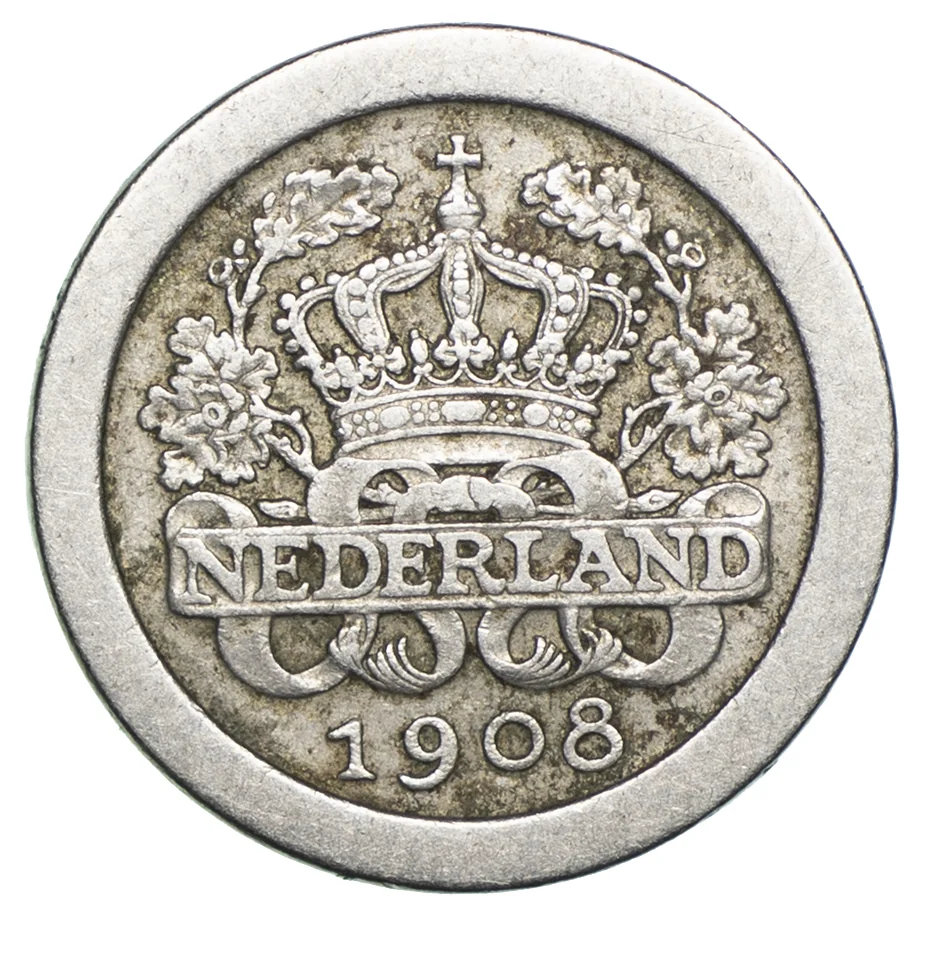
Crown above crossed sprigs tied with a bow, inscription and date beneath.
Inscription:
NEDERLAND
1908
1908
Translation:
Netherlands
1908
1908
Script: Latin
Language: Dutch
Engraver: Johannes Cornelis Wienecke
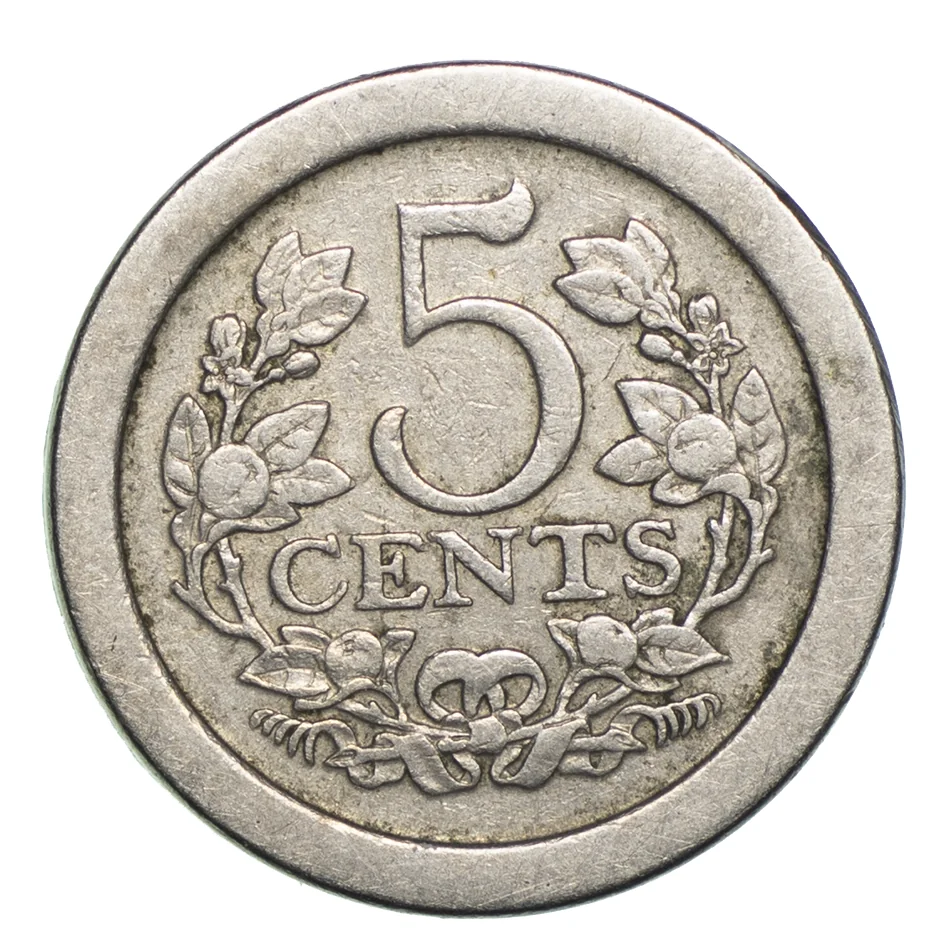
Reverse
Edge
Plain
Mintings
| Year | Mint Mark | Mintage | Quality | Collection |
|---|---|---|---|---|
| 1907 | — | 6,000,000 | ||
| 1908 | — | 5,430,000 | ||
| 1909 | — | 2,570,000 |
Historical background
In 1907, the Netherlands operated under the classical gold standard, a system it had adhered to since 1875. This meant the Dutch guilder (florin) had a fixed value defined in terms of gold, and the central bank, De Nederlandsche Bank, was obligated to exchange banknotes for gold on demand. This system provided significant international monetary stability and facilitated trade, anchoring the currency's value and ensuring price discipline. However, it also meant the domestic money supply was largely dictated by international gold flows, limiting the bank's ability to respond to local economic conditions.
The year itself was one of financial tension within this rigid framework. A major banking panic in the United States in late 1907 (the "Knickerbocker Crisis") caused a global liquidity crunch as investors sought safety and called in loans. While the Netherlands avoided a domestic bank run, it was not insulated from the international shock. Capital flows and trade disruptions put pressure on the system, testing the resilience of the gold standard. De Nederlandsche Bank had to carefully manage its gold reserves to maintain convertibility, potentially raising discount rates to attract or retain gold, a common tool that could tighten credit domestically.
Consequently, the currency situation in 1907 highlighted both the strength and the vulnerability of the pre-war monetary order. The guilder itself remained strong and fully convertible, a testament to the Netherlands's sound fiscal position and the bank's conservative management. Yet the international crisis exposed the system's inherent inflexibility, where defending the gold peg could conflict with supporting the domestic economy during a shock. This period underscored the challenges that would later contribute to the gold standard's collapse after World War I, as nations sought greater monetary autonomy.
The year itself was one of financial tension within this rigid framework. A major banking panic in the United States in late 1907 (the "Knickerbocker Crisis") caused a global liquidity crunch as investors sought safety and called in loans. While the Netherlands avoided a domestic bank run, it was not insulated from the international shock. Capital flows and trade disruptions put pressure on the system, testing the resilience of the gold standard. De Nederlandsche Bank had to carefully manage its gold reserves to maintain convertibility, potentially raising discount rates to attract or retain gold, a common tool that could tighten credit domestically.
Consequently, the currency situation in 1907 highlighted both the strength and the vulnerability of the pre-war monetary order. The guilder itself remained strong and fully convertible, a testament to the Netherlands's sound fiscal position and the bank's conservative management. Yet the international crisis exposed the system's inherent inflexibility, where defending the gold peg could conflict with supporting the domestic economy during a shock. This period underscored the challenges that would later contribute to the gold standard's collapse after World War I, as nations sought greater monetary autonomy.
🌱 Common