

4 Skilling – Norway
Norway
Context
Year: 1871
Issuer: Norway 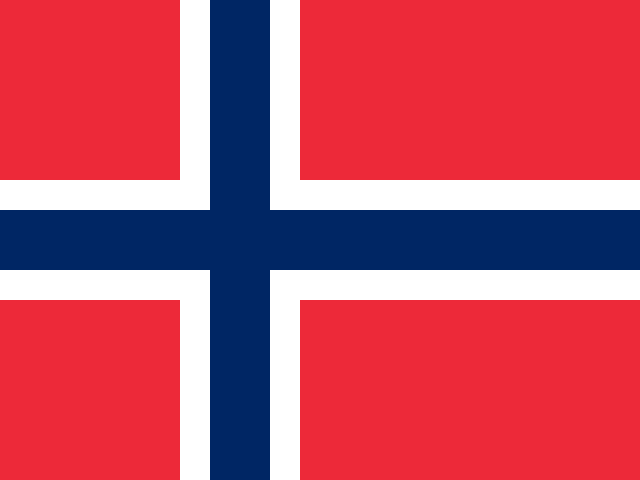
Ruler: Charles IV
Currency:
(1816—1875)
Demonetized: Yes
Total mintage: 558,600
Material
References
KM: #Click to copy to clipboard337
Numista: #4144
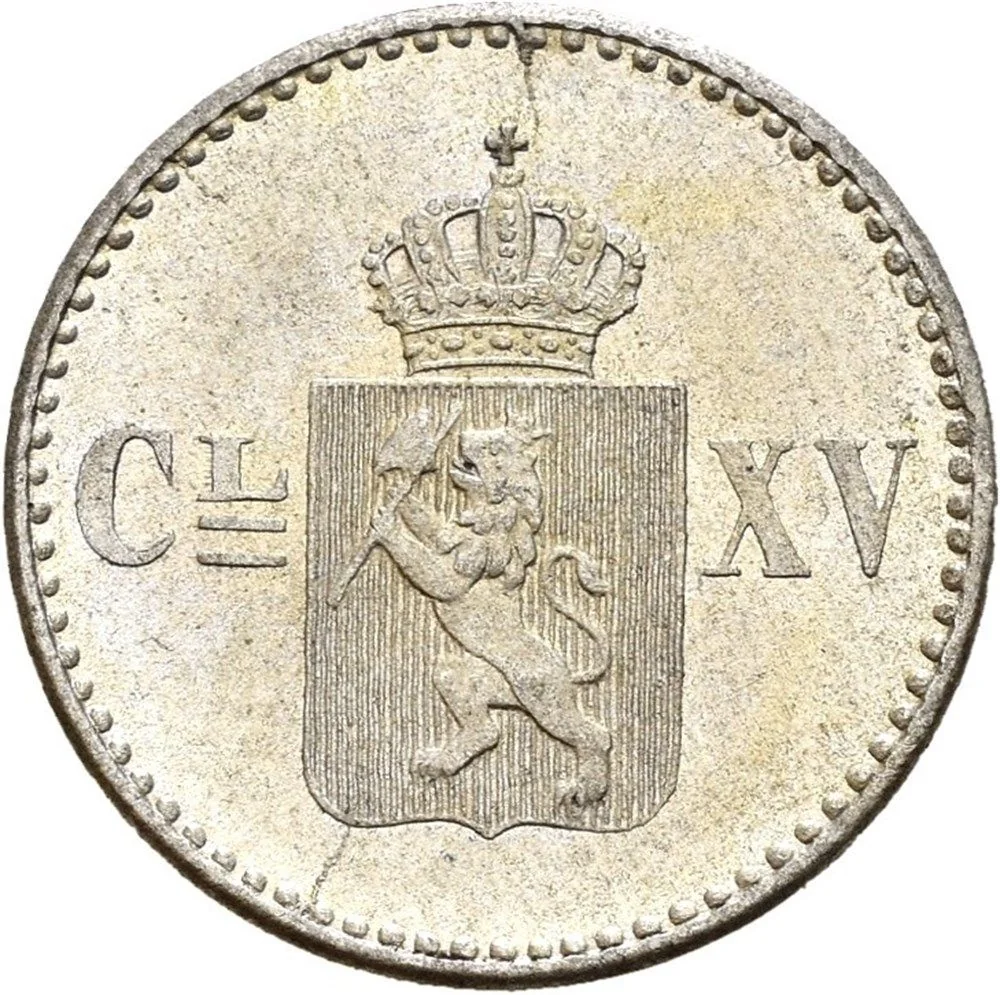
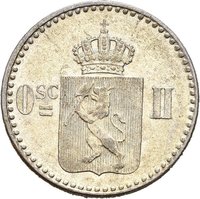
Obverse
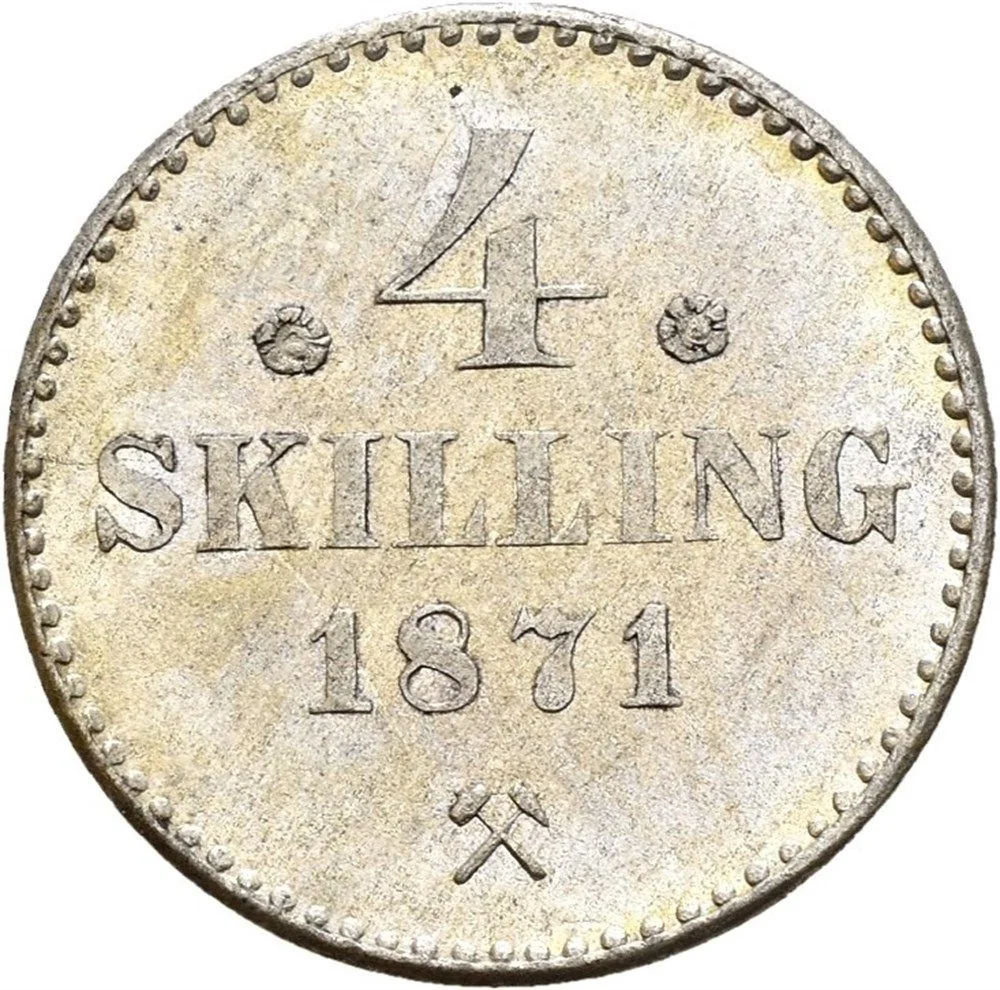
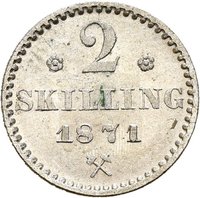
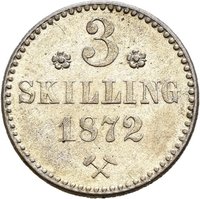
Reverse
Description:
Value and date stacked.
Mintmark below date.
Beaded rim border.
Mintmark below date.
Beaded rim border.
Inscription:
🏵4🏵
SKILLING
1871
⚒
SKILLING
1871
⚒
Script: Latin
Edge
Mints
| Name | Mark |
|---|---|
| Norwegian Mint | — |
Mintings
| Year | Mint Mark | Mintage | Quality | Collection |
|---|---|---|---|---|
| 1871 | — | 558,600 |
Historical background
In 1871, Norway found itself at a monetary crossroads, navigating the complex legacy of its union with Sweden. Since 1816, the primary currency had been the speciedaler, a silver-based coin. However, Norway was part of the Scandinavian Monetary Union (SMU), established in 1873 with Denmark and Sweden. The year 1871 was a pivotal period of negotiation and preparation for this shift, driven by the global trend towards the gold standard and the practical need for uniform currency with its closest trading partners.
The existing system was cumbersome. While the speciedaler was stable, international trade and travel were hindered by the lack of uniformity with Sweden, despite the political union. Furthermore, the global scarcity of silver and the dominance of the gold standard, particularly following Germany's adoption in 1871, pressured Norway to modernize. The goal was to replace the silver speciedaler with a new gold-based currency, the krone (crown), subdivided into 100 øre, which would be equal in value and fully interchangeable with the Danish and Swedish krone.
Thus, the currency situation in 1871 was one of imminent transformation. The Storting (Norwegian parliament) passed the necessary laws that year, setting the legal framework for the transition to the gold standard and membership in the SMU. Although the union formally began in 1873, 1871 was the decisive year of legislative action, positioning Norway to abandon its historic speciedaler and fully integrate into a stable, modern, and Scandinavian monetary system.
The existing system was cumbersome. While the speciedaler was stable, international trade and travel were hindered by the lack of uniformity with Sweden, despite the political union. Furthermore, the global scarcity of silver and the dominance of the gold standard, particularly following Germany's adoption in 1871, pressured Norway to modernize. The goal was to replace the silver speciedaler with a new gold-based currency, the krone (crown), subdivided into 100 øre, which would be equal in value and fully interchangeable with the Danish and Swedish krone.
Thus, the currency situation in 1871 was one of imminent transformation. The Storting (Norwegian parliament) passed the necessary laws that year, setting the legal framework for the transition to the gold standard and membership in the SMU. Although the union formally began in 1873, 1871 was the decisive year of legislative action, positioning Norway to abandon its historic speciedaler and fully integrate into a stable, modern, and Scandinavian monetary system.
💎 Very Rare