

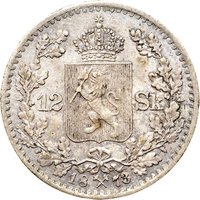
3 Skilling – Norway
Norway
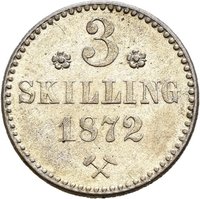
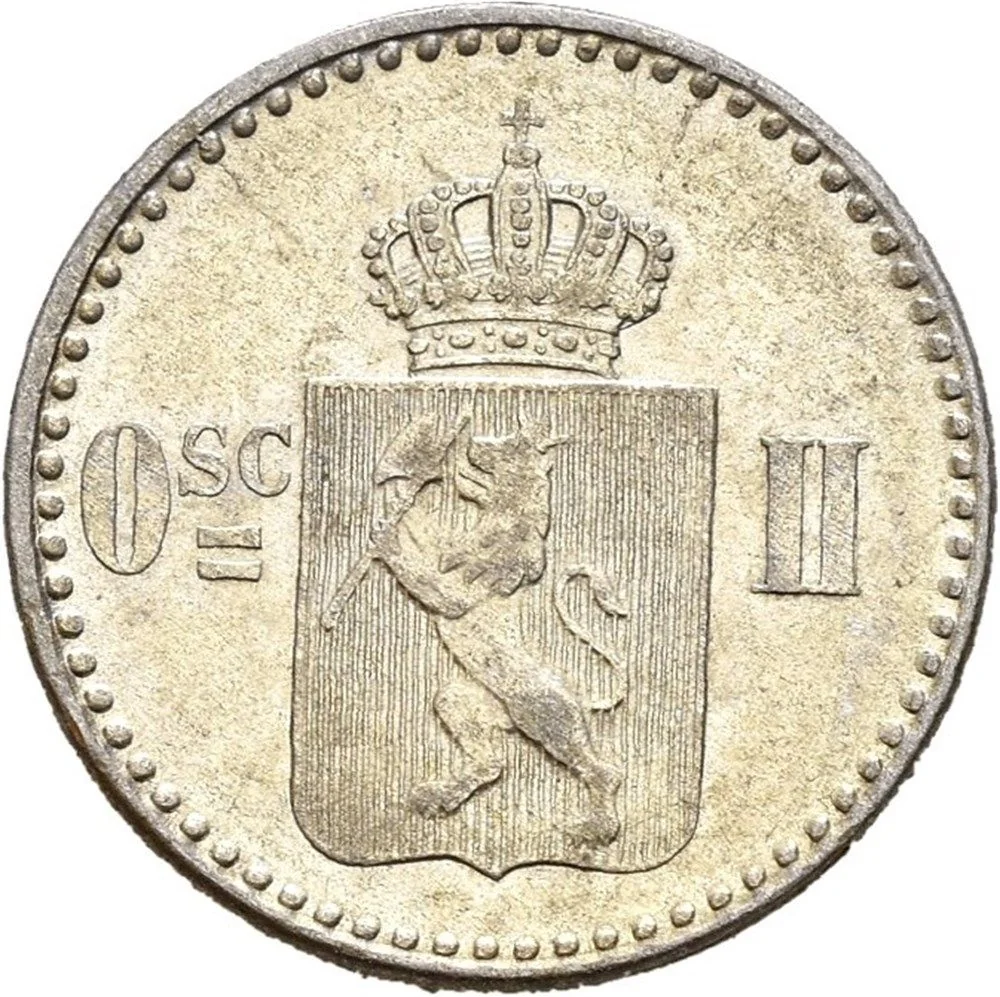
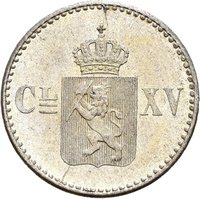
Obverse
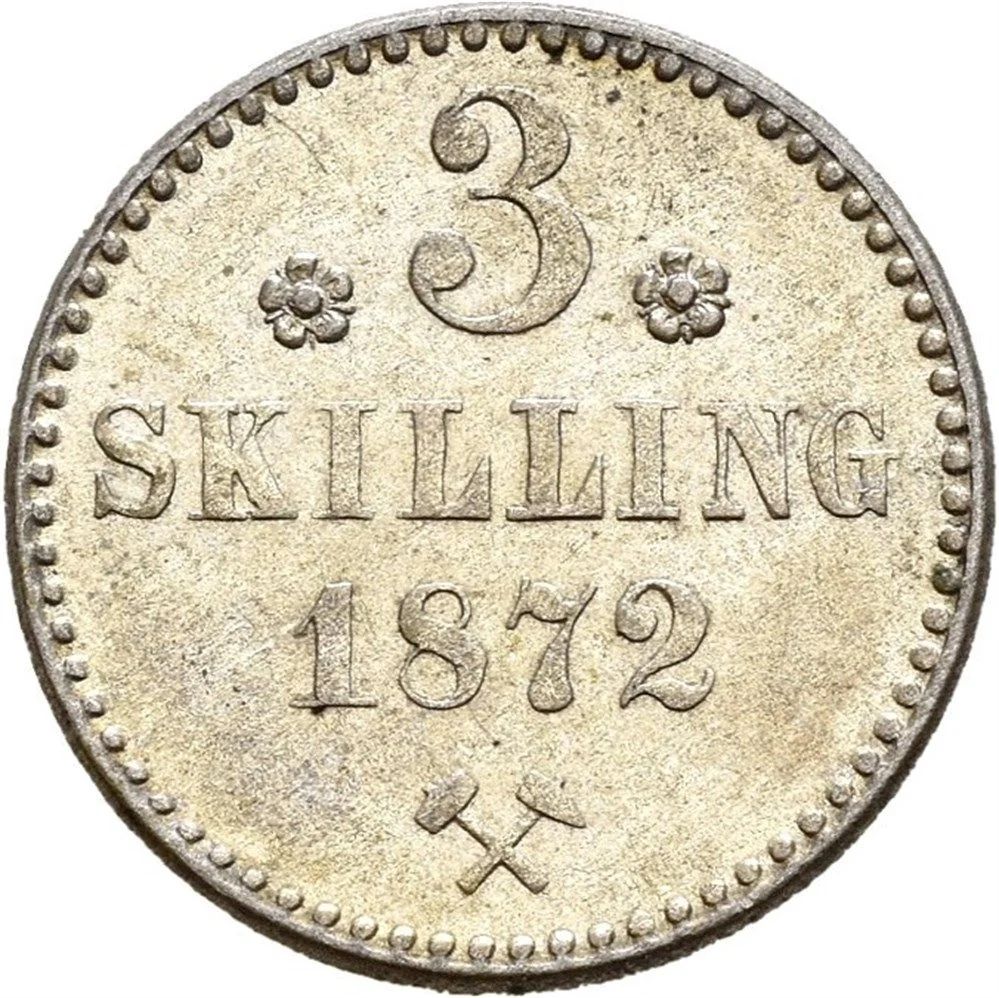
Reverse
Description:
Value and date stacked.
Mintmark below date.
Beaded rim border.
Mintmark below date.
Beaded rim border.
Inscription:
🏵3🏵
SKILLING
1872
⚒
SKILLING
1872
⚒
Script: Latin
Edge
Plain
Mints
| Name | Mark |
|---|---|
| Norwegian Mint | — |
Mintings
| Year | Mint Mark | Mintage | Quality | Collection |
|---|---|---|---|---|
| 1872 | — | 504,000 | ||
| 1873 | — | 600,000 |
Historical background
In the decades leading up to 1872, Norway’s monetary system was complex and fragmented. As part of the Scandinavian Monetary Union (established with Sweden and Denmark in 1873), Norway was in a preparatory transition phase in 1872, moving away from the old speciedaler system. The speciedaler was a silver-based currency, but its value had become unstable and impractical for growing international trade. Furthermore, a multitude of private banknotes circulated alongside government money, creating a lack of uniformity and confidence in the nation's currency.
The driving force for change was the desire for modernization and economic integration, both within Scandinavia and with the rest of Europe. The global trend was shifting towards the gold standard, which offered greater stability and facilitated commerce with major trading partners like Britain and Germany. Norway's existing silver standard isolated it from this emerging financial bloc. The year 1872 was thus a pivotal moment of legislative preparation, where the Storting (Norwegian parliament) debated and laid the groundwork for adopting the new common Scandinavian currency unit, the krone (crown), divided into 100 øre, to be placed on a strict gold standard.
Consequently, 1872 represents the final year of the old monetary order. The Scandinavian Monetary Union formally took effect on January 1, 1874, with the krone becoming legal tender. Therefore, the situation in 1872 was one of deliberate anticipation, marked by political decisions to abandon silver for gold and to replace the speciedaler with the krone, aiming to secure monetary stability, streamline commerce, and anchor Norway’s economy to the international financial system.
The driving force for change was the desire for modernization and economic integration, both within Scandinavia and with the rest of Europe. The global trend was shifting towards the gold standard, which offered greater stability and facilitated commerce with major trading partners like Britain and Germany. Norway's existing silver standard isolated it from this emerging financial bloc. The year 1872 was thus a pivotal moment of legislative preparation, where the Storting (Norwegian parliament) debated and laid the groundwork for adopting the new common Scandinavian currency unit, the krone (crown), divided into 100 øre, to be placed on a strict gold standard.
Consequently, 1872 represents the final year of the old monetary order. The Scandinavian Monetary Union formally took effect on January 1, 1874, with the krone becoming legal tender. Therefore, the situation in 1872 was one of deliberate anticipation, marked by political decisions to abandon silver for gold and to replace the speciedaler with the krone, aiming to secure monetary stability, streamline commerce, and anchor Norway’s economy to the international financial system.
⭐ Somewhat Rare