

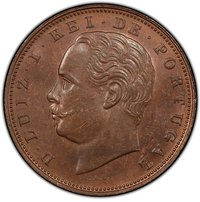
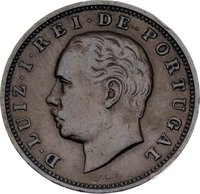
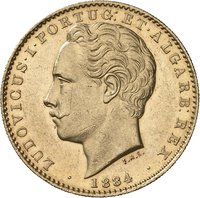
Obverse
Description:
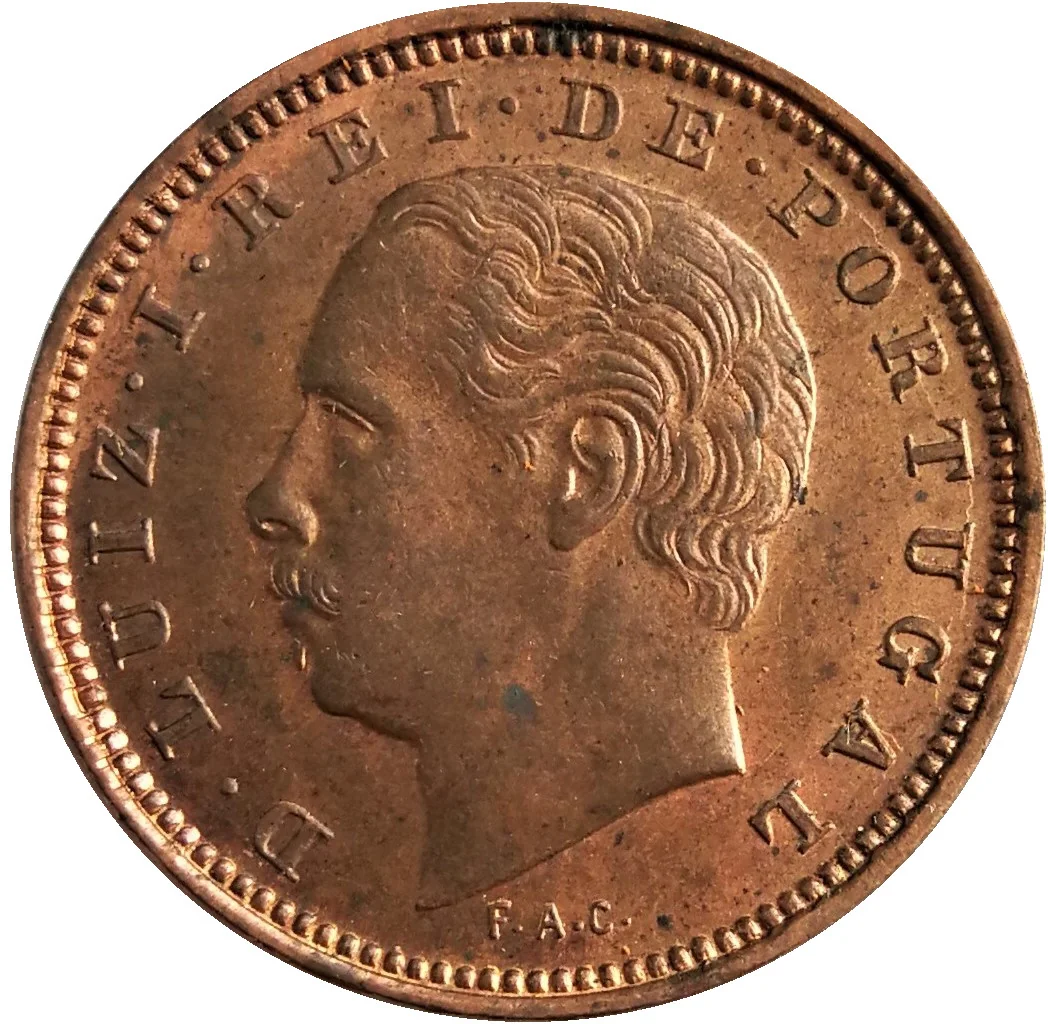
Portrait of Luís I of Portugal.
Inscription:
D·LUIZ·I·REI·DE·PORTUGAL
Translation:
Dom Luiz I, King of Portugal
Script: Latin
Languages: Latin, Portuguese
Engraver: Frederico Augusto de Campos
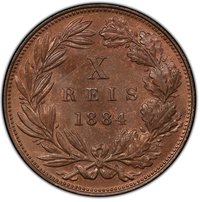
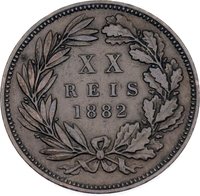
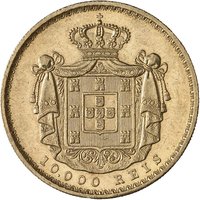
Reverse
Description:
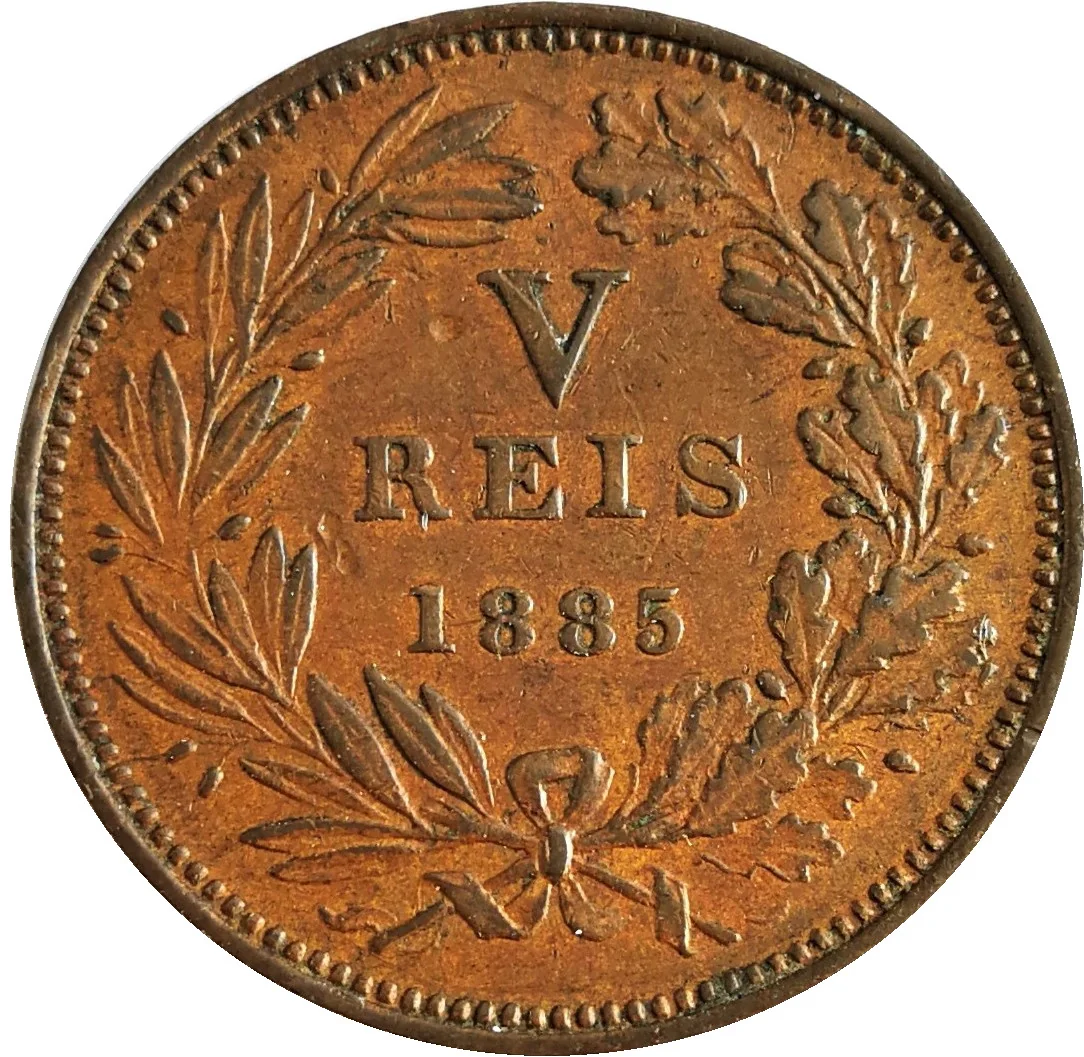
Value and date encircled
Inscription:
V
REIS
1885
REIS
1885
Script: Latin
Engraver: Frederico Augusto de Campos
Edge
Plain
Mints
| Name | Mark |
|---|---|
| Imprensa Nacional - Casa da Moeda | — |
Mintings
| Year | Mint Mark | Mintage | Quality | Collection |
|---|---|---|---|---|
| 1882 | — | 5,200,000 | ||
| 1883 | — | 4,700,000 | ||
| 1884 | — | 1,730,000 | ||
| 1885 | — | 3,200,000 | ||
| 1886 | — | 4,170,000 |
Historical background
In 1882, Portugal's currency situation was defined by the escudo, which had been introduced just over a decade earlier in 1854. This was part of a broader European shift towards the gold standard, a system Portugal officially adopted in 1854. The goal was to stabilize the currency, attract foreign investment, and integrate the Portuguese economy with its major trading partners, particularly Great Britain. The escudo replaced the centuries-old real at a rate of 1,000 réis to 1 escudo, simplifying a complex and unwieldy monetary system.
However, by 1882, the ideal of a pure gold standard was under significant strain. While gold coins were minted, the reality was a "limping gold standard" where silver coins also remained legal tender. More critically, the state's chronic fiscal deficits, driven by public works projects and colonial expenses, led to heavy borrowing. This resulted in the frequent issuance of paper money not fully backed by gold reserves, creating a de facto system where gold, silver, and paper circulated simultaneously, with public trust often leaning toward metal.
Consequently, 1882 fell within a period of monetary instability and debate. The value of paper currency fluctuated, and the pressure on Portugal's gold reserves was a constant concern for policymakers and financiers. The situation highlighted the tension between the country's aspirations for financial orthodoxy and solidity on the international stage, and the domestic political and economic pressures that made maintaining a strict gold standard exceedingly difficult. This precarious balance would continue to challenge Portugal for decades to come.
However, by 1882, the ideal of a pure gold standard was under significant strain. While gold coins were minted, the reality was a "limping gold standard" where silver coins also remained legal tender. More critically, the state's chronic fiscal deficits, driven by public works projects and colonial expenses, led to heavy borrowing. This resulted in the frequent issuance of paper money not fully backed by gold reserves, creating a de facto system where gold, silver, and paper circulated simultaneously, with public trust often leaning toward metal.
Consequently, 1882 fell within a period of monetary instability and debate. The value of paper currency fluctuated, and the pressure on Portugal's gold reserves was a constant concern for policymakers and financiers. The situation highlighted the tension between the country's aspirations for financial orthodoxy and solidity on the international stage, and the domestic political and economic pressures that made maintaining a strict gold standard exceedingly difficult. This precarious balance would continue to challenge Portugal for decades to come.
🌱 Common