

10000 réis – Portugal
Add to wishlist
Portugal
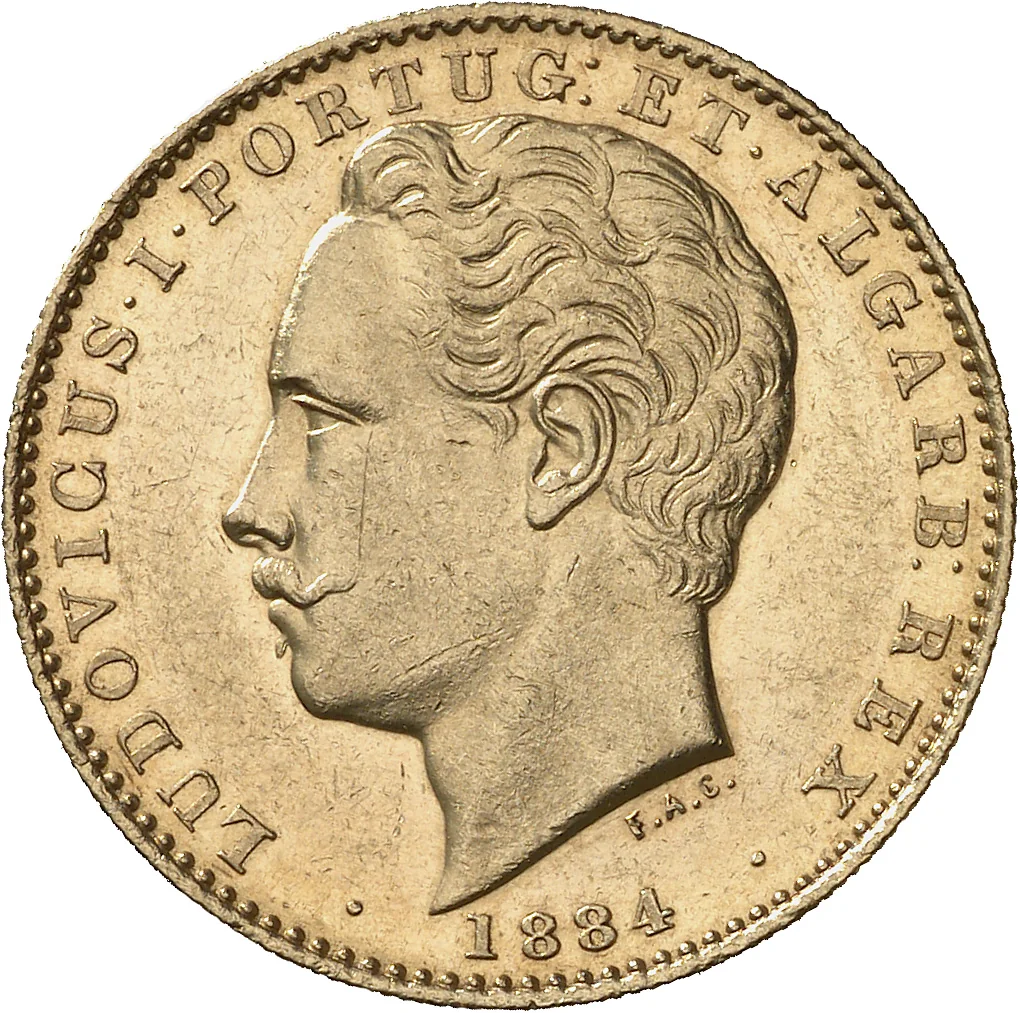
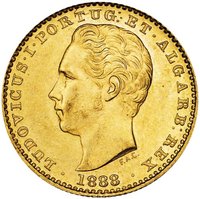
Obverse
Description:
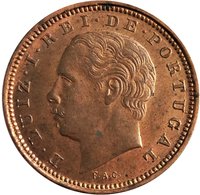
Portrait of Luís I of Portugal.
Inscription:
LUDOVICUS·I·PORTUG: ET·ALGARB: REX
F.A.C.
· 1884 ·
F.A.C.
· 1884 ·
Translation:
Louis I, King of Portugal and the Algarves.
F.A.C.
· 1884 ·
F.A.C.
· 1884 ·
Script: Latin
Languages: Latin, Portuguese
Engraver: Frederico Augusto de Campos
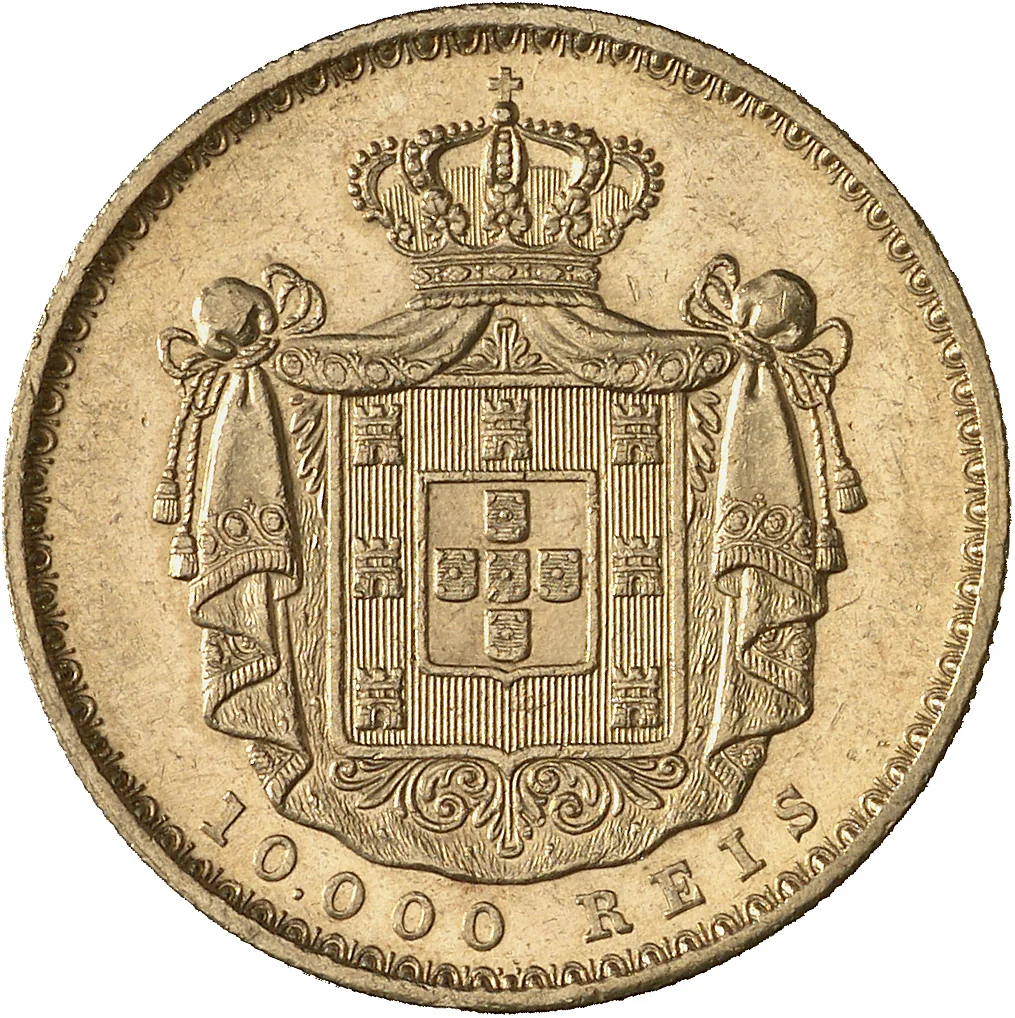
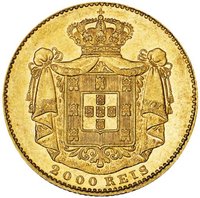
Reverse
Edge
Reeded
Mints
| Name | Mark |
|---|---|
| Imprensa Nacional - Casa da Moeda | — |
Mintings
| Year | Mint Mark | Mintage | Quality | Collection |
|---|---|---|---|---|
| 1878 | — | 23,000 | ||
| 1878 | — | — | Proof | |
| 1879 | — | 36,000 | ||
| 1879 | — | — | Proof | |
| 1880 | — | 30,000 | ||
| 1881 | — | 19,000 | ||
| 1881 | — | — | Proof | |
| 1882 | — | 15,000 | ||
| 1883 | — | 8,500 | ||
| 1884 | — | 13,000 | ||
| 1884 | — | — | Proof | |
| 1885 | — | 21,000 | ||
| 1885 | — | — | Proof | |
| 1886 | — | 1,800 | ||
| 1888 | — | 7,000 | ||
| 1888 | — | — | Proof | |
| 1889 | — | 4,400 |
Historical background
In 1878, Portugal's currency situation was defined by its commitment to the gold standard, a system it had officially adopted in 1854. The national currency was the real (plural réis), with the higher-value unit being the milréis (1,000 réis). However, the practical reality was one of a chronic shortage of gold coinage in circulation. While the law stipulated gold as the basis for the monetary system, the everyday economy relied heavily on silver and, even more so, on paper money issued by the Bank of Portugal (founded 1846). This created a de facto bimetallic system with a fragile equilibrium, vulnerable to international shifts in the relative value of gold and silver.
The period was marked by significant public debt and fiscal pressures, leading to a growing reliance on inflationary paper currency to finance state deficits. The value of banknotes was theoretically convertible into gold, but confidence in this convertibility was not absolute. Furthermore, the late 19th century saw a global phenomenon known as the "silver crisis," where the value of silver plummeted due to increased production, particularly from new mines in the United States. For Portugal, this meant its silver coinage, a vital part of its circulating medium, was losing intrinsic value against its gold-backed obligations, creating complex economic strains.
Consequently, 1878 fell within a prolonged era of monetary instability that would culminate in the 1891 debt crisis. The state's fiscal weaknesses, combined with the structural tensions of maintaining a gold standard without sufficient gold, set the stage for future turmoil. The currency situation was therefore one of underlying fragility, outwardly adhering to the orthodox gold standard but internally dependent on fiduciary paper and a devalued silver coinage, reflecting the broader economic challenges facing the Portuguese monarchy in its final decades.
The period was marked by significant public debt and fiscal pressures, leading to a growing reliance on inflationary paper currency to finance state deficits. The value of banknotes was theoretically convertible into gold, but confidence in this convertibility was not absolute. Furthermore, the late 19th century saw a global phenomenon known as the "silver crisis," where the value of silver plummeted due to increased production, particularly from new mines in the United States. For Portugal, this meant its silver coinage, a vital part of its circulating medium, was losing intrinsic value against its gold-backed obligations, creating complex economic strains.
Consequently, 1878 fell within a prolonged era of monetary instability that would culminate in the 1891 debt crisis. The state's fiscal weaknesses, combined with the structural tensions of maintaining a gold standard without sufficient gold, set the stage for future turmoil. The currency situation was therefore one of underlying fragility, outwardly adhering to the orthodox gold standard but internally dependent on fiduciary paper and a devalued silver coinage, reflecting the broader economic challenges facing the Portuguese monarchy in its final decades.
💎 Very Rare