

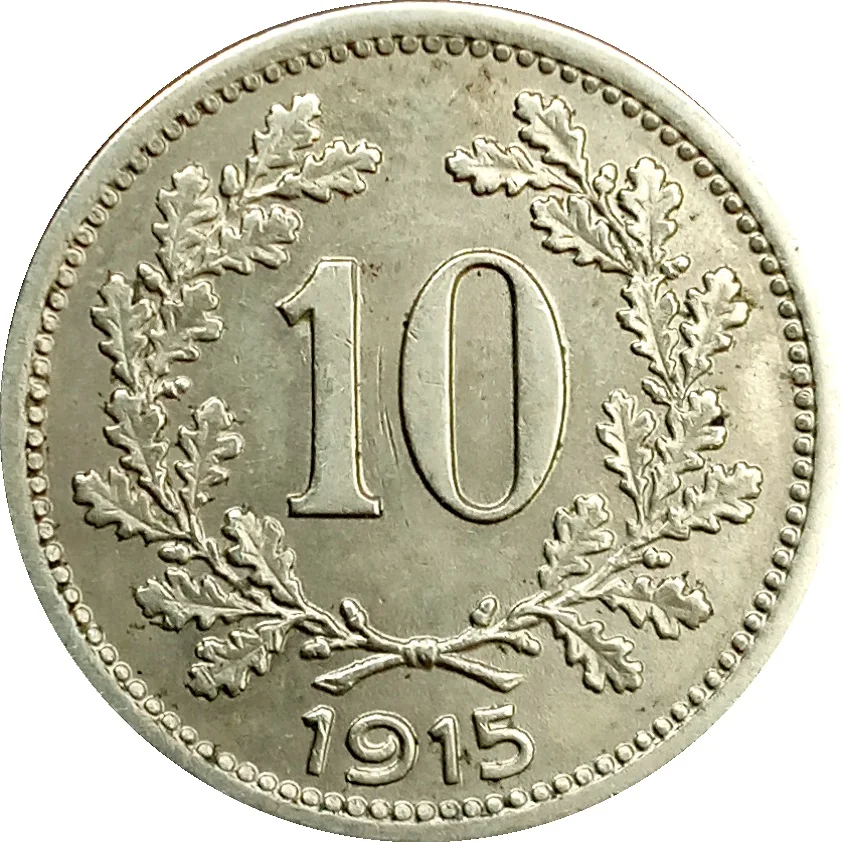
10 hellers – Austrian Empire
Add to wishlist
Austria
Context
Years: 1915–1916
Country: Austria
Issuer: Austrian Empire
Ruler: Francis Joseph I
Currency:
(1892—1918)
Demonetized: Yes
Total mintage: 45,853,000
Material
References
KM: #
Numista: #4119
Obverse
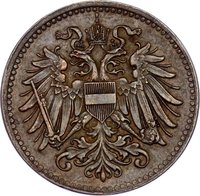
Description:
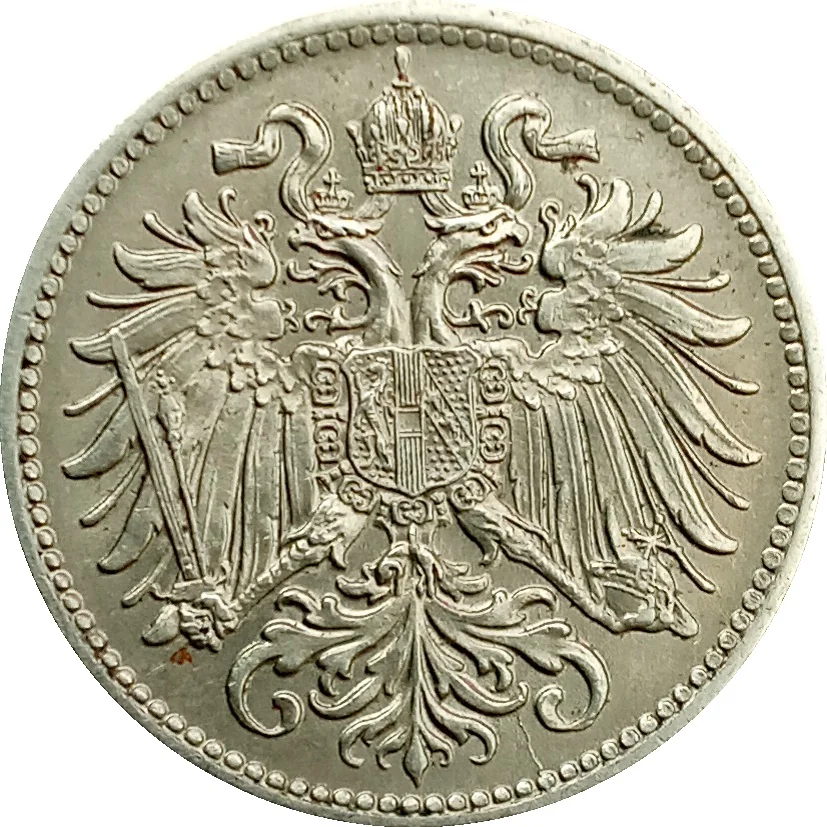
Habsburg heraldry.
Engravers: Anton Scharf, Rudolf Neuberger
Reverse
Edge
Milled
Mintings
| Year | Mint Mark | Mintage | Quality | Collection |
|---|---|---|---|---|
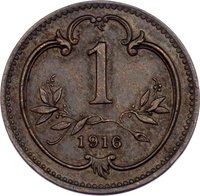
| 1915 | — | 18,366,000 | ||
| 1916 | — | 27,487,000 |
Historical background
By 1915, the currency situation in the Austro-Hungarian Empire was defined by the severe fiscal strains of the First World War. The government, having suspended the convertibility of the Krone to gold at the war's outset in 1914, financed the conflict primarily through borrowing from the newly established Austro-Hungarian Bank. This effectively removed hard constraints on money printing, leading to a rapid expansion of the paper money supply. The result was the beginning of a profound and accelerating inflation, as the volume of currency in circulation grew to meet skyrocketing military expenditures without corresponding economic output.
The monetary system itself became fragmented and complex. Alongside notes from the Austro-Hungarian Bank, a flood of emergency currency flooded the economy, including Kassenscheine (Treasury notes) and Darlehenskassenscheine (loan office notes). These latter notes, backed not by gold but by war bonds and commercial bills, were created specifically to provide liquidity for war production and government spending. Their legal tender status and use for paying taxes gave them a forced currency value, but they diluted the monetary base further. Consequently, the gold and silver coins that had circulated before 1914 largely vanished from daily use, hoarded by the public due to their intrinsic value.
This financial policy created a stark divide between the official economy and reality. While price controls and rationing were attempted on essentials, a rampant black market emerged where real prices soared. The external value of the Krone also plummeted on neutral foreign exchanges, reflecting a loss of international confidence. Thus, by 1915, the foundations for the catastrophic hyperinflation of the post-war years were already firmly laid, as the empire sacrificed monetary stability for immediate wartime survival, eroding public trust in its currency.
The monetary system itself became fragmented and complex. Alongside notes from the Austro-Hungarian Bank, a flood of emergency currency flooded the economy, including Kassenscheine (Treasury notes) and Darlehenskassenscheine (loan office notes). These latter notes, backed not by gold but by war bonds and commercial bills, were created specifically to provide liquidity for war production and government spending. Their legal tender status and use for paying taxes gave them a forced currency value, but they diluted the monetary base further. Consequently, the gold and silver coins that had circulated before 1914 largely vanished from daily use, hoarded by the public due to their intrinsic value.
This financial policy created a stark divide between the official economy and reality. While price controls and rationing were attempted on essentials, a rampant black market emerged where real prices soared. The external value of the Krone also plummeted on neutral foreign exchanges, reflecting a loss of international confidence. Thus, by 1915, the foundations for the catastrophic hyperinflation of the post-war years were already firmly laid, as the empire sacrificed monetary stability for immediate wartime survival, eroding public trust in its currency.
🌱 Very Common