

1 heller – Austrian Empire
Add to wishlist
Austria
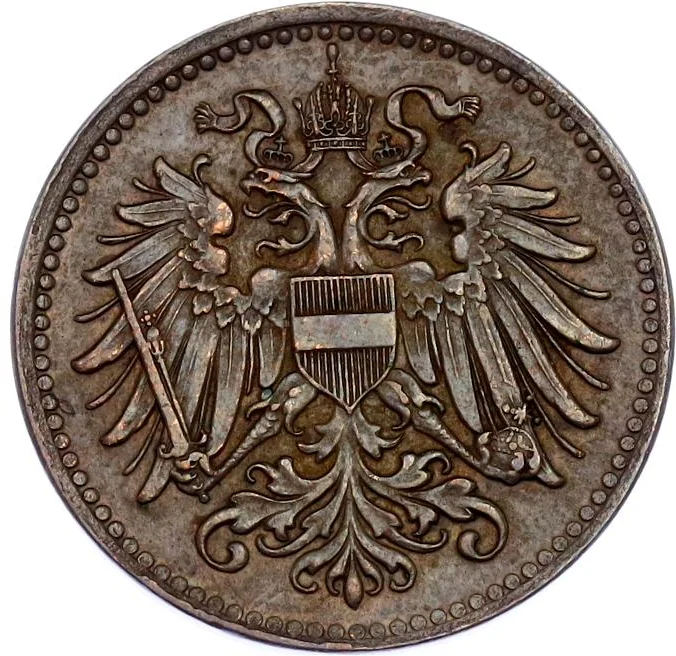
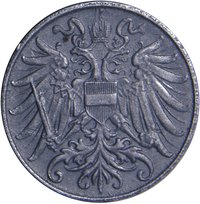
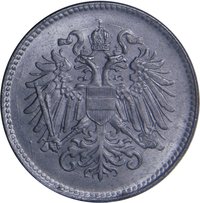
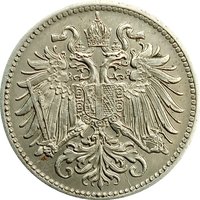
Obverse
Description:
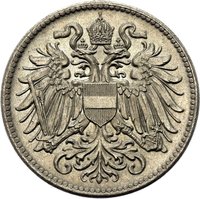
Austrian shield on eagle's chest.
Engravers: Anton Scharf, Andreas Neudeck
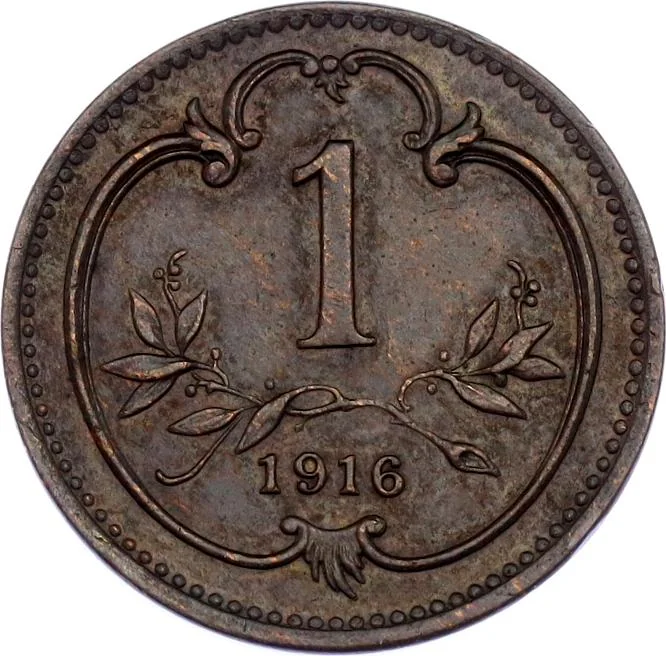
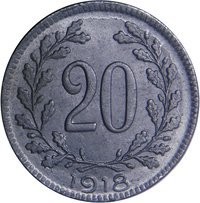
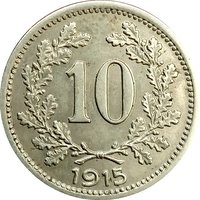
Reverse
Description:
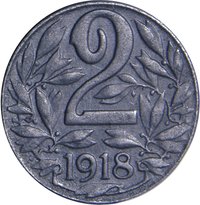
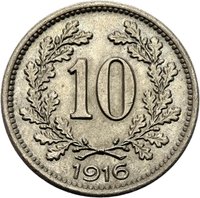
Twigs above value, date below, in Art Nouveau frame.
Inscription:
1
1916
1916
Script: Latin
Engravers: Anton Scharf, Andreas Neudeck
Edge
Plain
Mintings
| Year | Mint Mark | Mintage | Quality | Collection |
|---|---|---|---|---|
| 1916 | — | — |
Historical background
By 1916, the currency situation in the Austro-Hungarian Empire was one of severe and accelerating wartime inflation, driven primarily by the immense financial demands of the First World War. The government, facing colossal military expenditures, had long abandoned the gold standard and resorted to financing the war not through taxation but through borrowing and, most critically, by printing money. The Austro-Hungarian Bank, legally obligated to back the crown (Krone) with gold, had its note-issuing authority repeatedly suspended by imperial decree, allowing it to create currency with only partial or no metallic cover. This led to a massive expansion of the money supply, which doubled between 1914 and 1916, fundamentally eroding the currency's purchasing power.
The consequences were acutely felt across the Dual Monarchy. Prices for basic necessities like food, fuel, and clothing soared, far outpacing wage increases and causing widespread hardship for the civilian population. This inflationary spiral was exacerbated by severe wartime shortages, blockade-induced scarcity, and the diversion of resources to the front. The economy became increasingly distorted, with a thriving black market where goods could be obtained for exorbitant prices, further undermining the official value of the crown. Public confidence in the currency dwindled, and people began to hoard goods and stable assets, a behavior that only intensified the velocity of money and the inflationary cycle.
Internally, the situation strained the fragile economic unity between Austria and Hungary, as each region grappled with the crisis. Externally, the crown's value on neutral foreign exchanges plummeted, damaging the empire's ability to purchase essential imports. By 1916, the financial authorities were engaged in a precarious balancing act, using foreign loans and exchange controls in a desperate attempt to stabilize the currency. However, these were stopgap measures that addressed symptoms, not the core pathology of debt-monetization. The unchecked monetary expansion laid the groundwork for the hyperinflation and complete monetary collapse that would occur in the war's aftermath, contributing significantly to the empire's political and economic disintegration.
The consequences were acutely felt across the Dual Monarchy. Prices for basic necessities like food, fuel, and clothing soared, far outpacing wage increases and causing widespread hardship for the civilian population. This inflationary spiral was exacerbated by severe wartime shortages, blockade-induced scarcity, and the diversion of resources to the front. The economy became increasingly distorted, with a thriving black market where goods could be obtained for exorbitant prices, further undermining the official value of the crown. Public confidence in the currency dwindled, and people began to hoard goods and stable assets, a behavior that only intensified the velocity of money and the inflationary cycle.
Internally, the situation strained the fragile economic unity between Austria and Hungary, as each region grappled with the crisis. Externally, the crown's value on neutral foreign exchanges plummeted, damaging the empire's ability to purchase essential imports. By 1916, the financial authorities were engaged in a precarious balancing act, using foreign loans and exchange controls in a desperate attempt to stabilize the currency. However, these were stopgap measures that addressed symptoms, not the core pathology of debt-monetization. The unchecked monetary expansion laid the groundwork for the hyperinflation and complete monetary collapse that would occur in the war's aftermath, contributing significantly to the empire's political and economic disintegration.
🌟 Uncommon