

1⁄12 Shilling (Accession of Charles II) – Jersey
Circulating commemorative coins
Commemoration: 300th Anniversary of the Accession of Charles II
Context
Year: 1960
Country: British Crown dependencies
Issuer: Jersey 
Ruler: Elizabeth II
Currency:
(1813—1971)
Demonetization: 27 December 1971
Total mintage: 1,203,600
Material
References
KM: #Click to copy to clipboard23
Numista: #4091
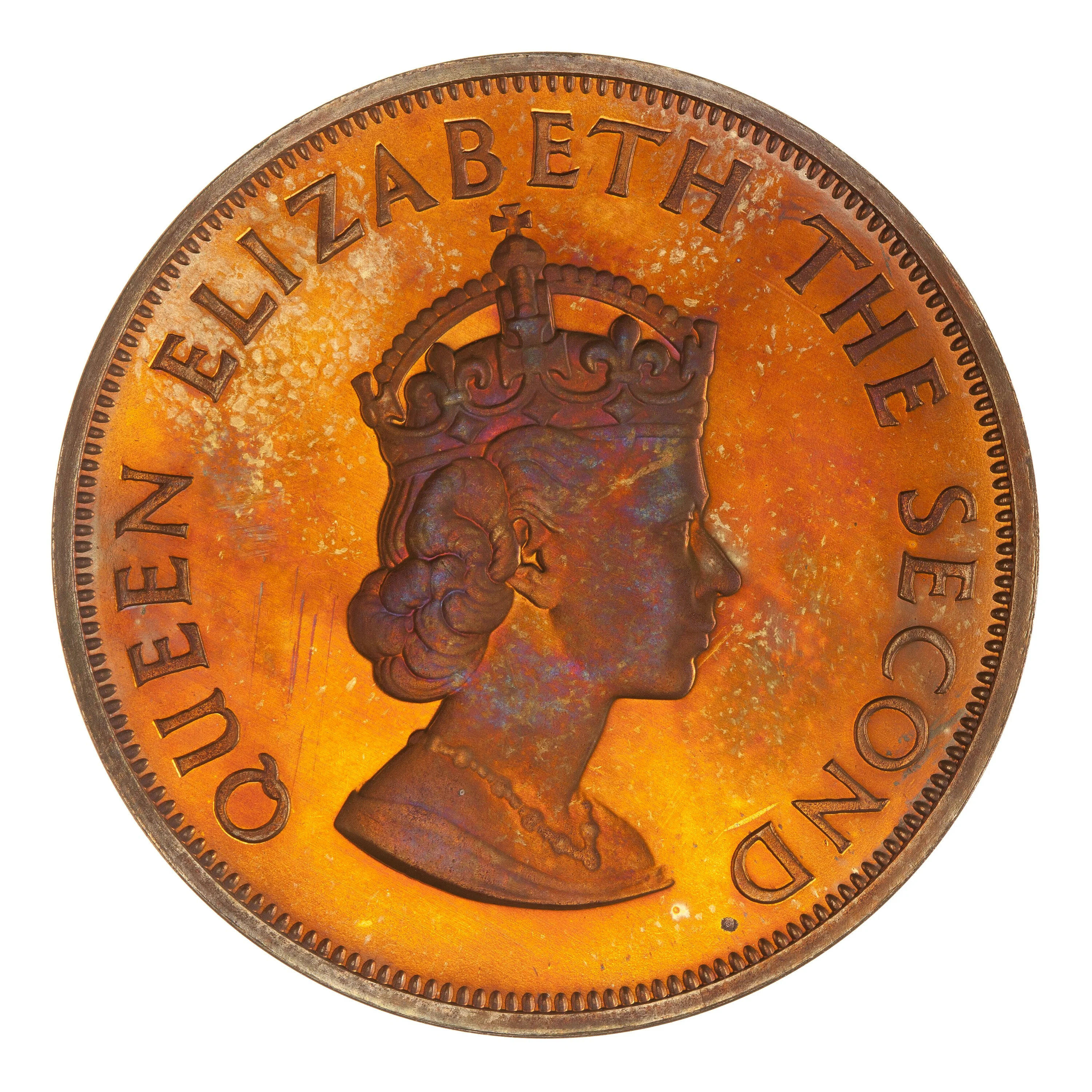
Obverse
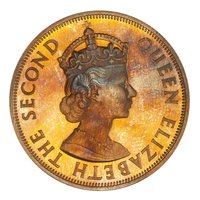
Description:
Right-facing crowned portrait.
Inscription:
QUEEN ELIZABETH THE SECOND
Script: Latin
Engraver: Cecil Thomas
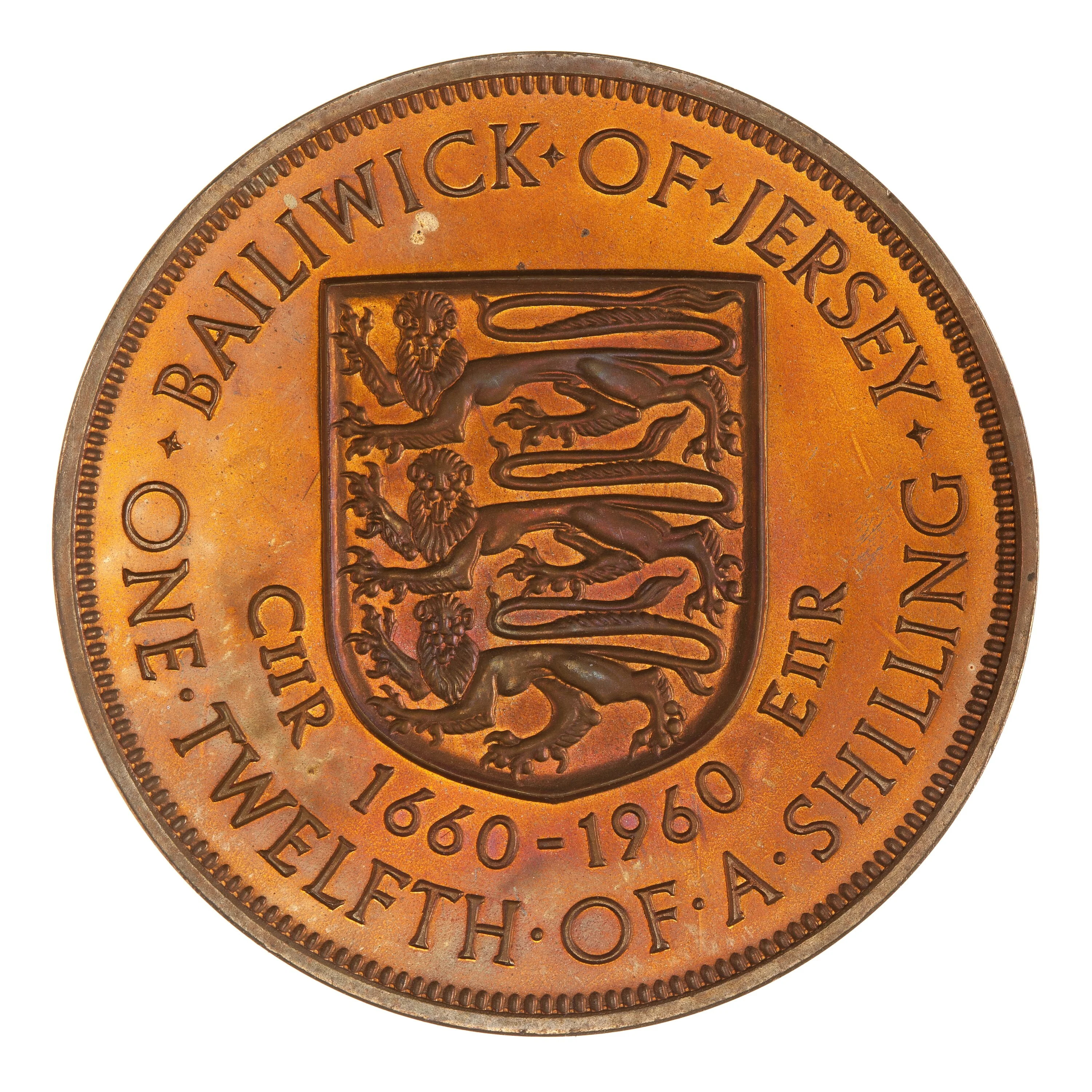
Reverse
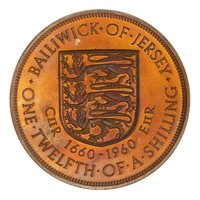
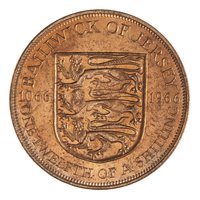
Description:
Lions on a shield.
Inscription:
·BAILIWICK·OF·JERSEY·
CIIR 1660-1960 EIIR
ONE·TWELFTH·OF·A·SHILLING
CIIR 1660-1960 EIIR
ONE·TWELFTH·OF·A·SHILLING
Script: Latin
Engraver: George Kruger Gray
Edge
Plain
Mints
| Name | Mark |
|---|---|
| Royal Mint (Tower Hill) | — |
Mintings
| Year | Mint Mark | Mintage | Quality | Collection |
|---|---|---|---|---|
| 1960 | — | 1,200,000 | ||
| 1960 | — | 3,600 | Proof |
Historical background
In 1960, Jersey's currency situation was a unique and complex reflection of its constitutional position as a British Crown Dependency. The island was not part of the United Kingdom and had its own legislative and fiscal autonomy. Consequently, while the British pound sterling (£) was legal tender and formed the basis of the economy, Jersey had already begun issuing its own distinct banknotes. These were first introduced in 1960 by the States of Jersey, initially in the form of a 10-shilling note, with the clear stipulation that they were local issue and circulated at parity with sterling. This move was primarily administrative, aimed at ensuring sufficient currency supply on the island and establishing a visible symbol of its separate identity.
The system operated under a strict "currency board" principle, where every Jersey pound note in circulation was fully backed by sterling reserves held in London. There was no independent monetary policy; the value of the Jersey issue was entirely dependent on and guaranteed by its one-to-one link with sterling. This meant that while the notes looked different, featuring local landmarks and historical figures, their economic value was identical to their UK counterparts. For everyday transactions, UK and Jersey notes mixed freely, though UK coins remained (and still remain) the sole coinage.
This arrangement in 1960 was largely stable and pragmatic, designed to meet local needs without disrupting the deep economic integration with Britain. However, it also laid the groundwork for future developments. The success of the initial note issue led to the introduction of £1 and later £5 notes in the following years, gradually expanding Jersey's own currency series. The situation thus encapsulated Jersey's dual character in 1960: a community deeply tied to the British economic sphere, yet cautiously asserting its own distinct administrative identity through the symbols on its banknotes.
The system operated under a strict "currency board" principle, where every Jersey pound note in circulation was fully backed by sterling reserves held in London. There was no independent monetary policy; the value of the Jersey issue was entirely dependent on and guaranteed by its one-to-one link with sterling. This meant that while the notes looked different, featuring local landmarks and historical figures, their economic value was identical to their UK counterparts. For everyday transactions, UK and Jersey notes mixed freely, though UK coins remained (and still remain) the sole coinage.
This arrangement in 1960 was largely stable and pragmatic, designed to meet local needs without disrupting the deep economic integration with Britain. However, it also laid the groundwork for future developments. The success of the initial note issue led to the introduction of £1 and later £5 notes in the following years, gradually expanding Jersey's own currency series. The situation thus encapsulated Jersey's dual character in 1960: a community deeply tied to the British economic sphere, yet cautiously asserting its own distinct administrative identity through the symbols on its banknotes.
🌱 Very Common