

1⁄12 shilling (Battle of Hastings) – Jersey
Add to wishlist
Circulating commemorative coins
Commemoration: 900th Anniversary of the Battle of Hastings
Context
Year: 1966
Country: British Crown dependencies
Issuer: Jersey
Ruler: Elizabeth II
Currency:
(1813—1971)
Demonetization: 27 December 1971
Total mintage: 1,230,000
Material
References
KM: #
Numista: #6935
Obverse
Description:
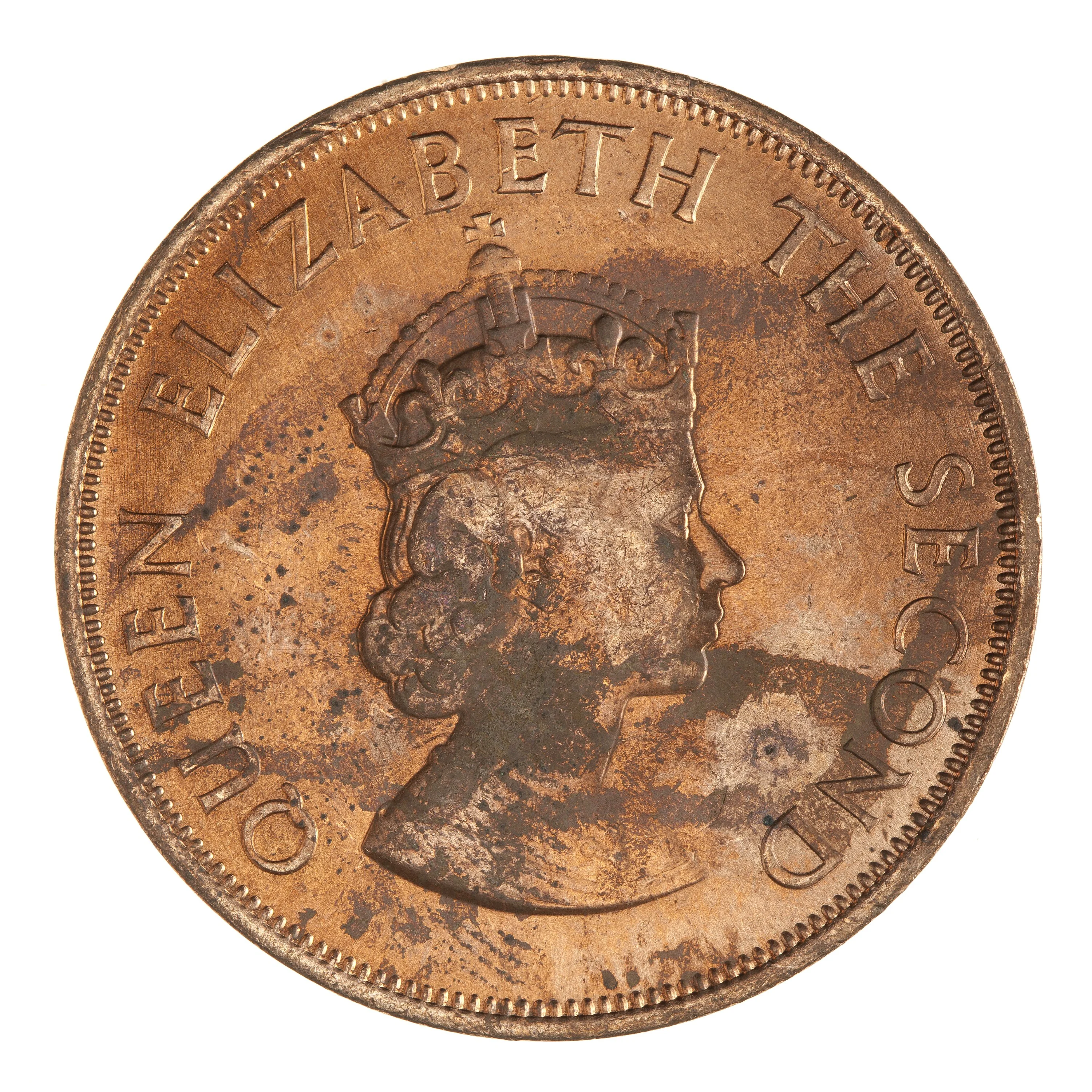
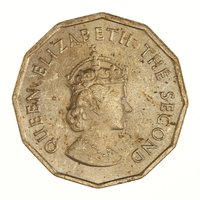
Queen Elizabeth II crowned bust facing right, wearing necklace.
Inscription:
QUEEN ELIZABETH THE SECOND
Script: Latin
Engraver: Cecil Thomas
Reverse
Description:
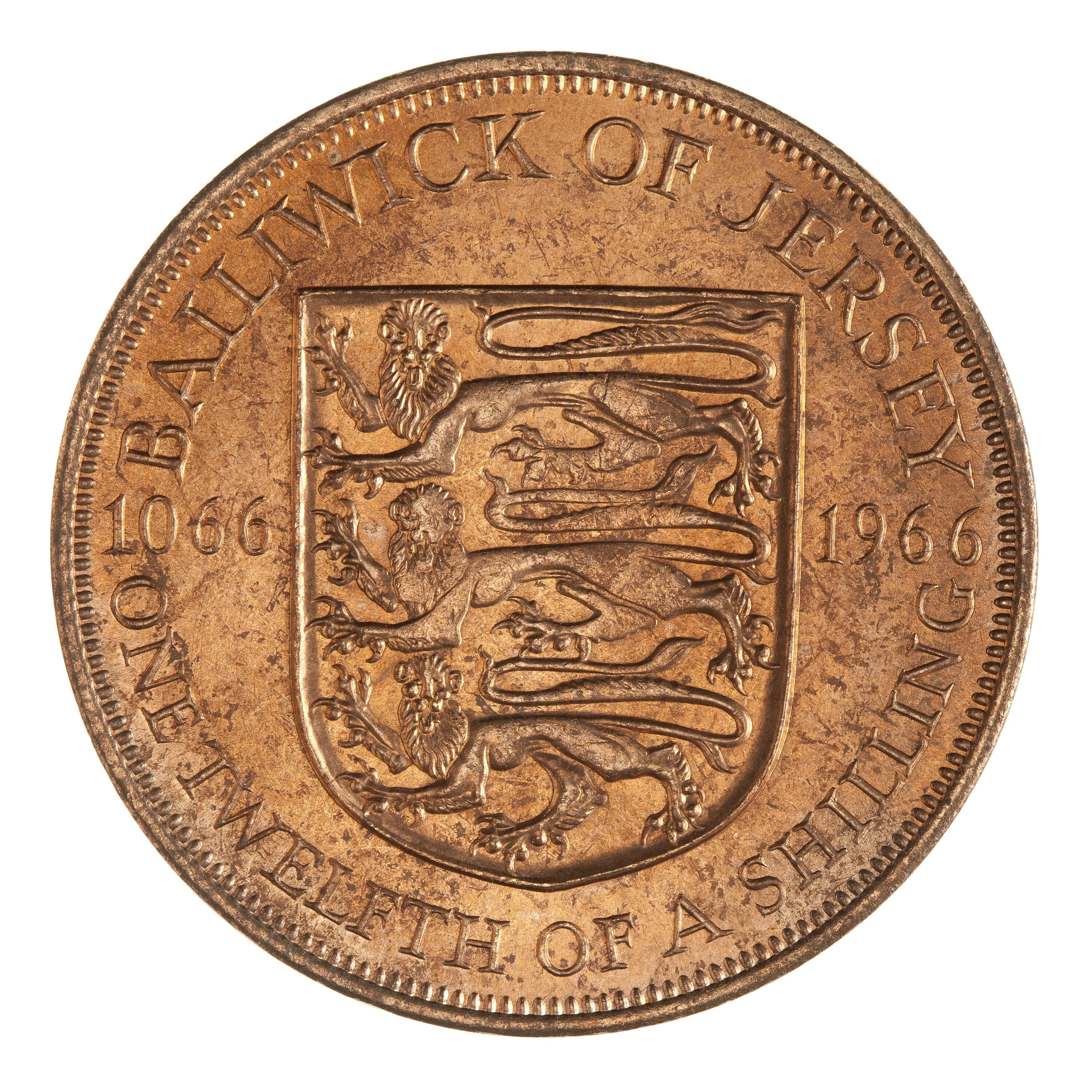
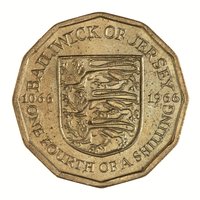
Jersey arms: three left-passant lions on shield, flanking dates, with legends above and below.
Inscription:
BAILIWICK OF JERSEY
1066 1966
ONE TWELFTH OF A SHILLING
1066 1966
ONE TWELFTH OF A SHILLING
Script: Latin
Engraver: George Kruger Gray
Edge
Plain
Mints
| Name | Mark |
|---|---|
| Royal Mint (Tower Hill) | — |
Mintings
| Year | Mint Mark | Mintage | Quality | Collection |
|---|---|---|---|---|
| 1966 | — | 30,000 | Proof | |
| 1966 | — | 1,200,000 |
Historical background
In 1966, the currency situation in Jersey was characterised by a practical duality, with both British sterling and Jersey's own banknotes circulating side-by-side. While the British pound sterling (£) was the official currency and underpinned the island's monetary system, Jersey had issued its own distinctive banknotes since the early 19th century. These locally issued notes were not a separate currency but promises to pay the equivalent sum in sterling, functioning as a practical local token within the broader UK monetary area. This system reflected Jersey's unique constitutional position as a Crown Dependency, possessing fiscal autonomy while closely tied to Britain.
The period leading up to 1966 saw increasing discussion about modernising and formalising this arrangement. The existing Jersey notes, some of which were still issued by commercial banks, were considered by some to be in need of standardisation and enhanced security features. Furthermore, there was a growing desire to assert a clearer sense of identity through currency, moving beyond simply using British notes. This set the stage for a significant monetary development the following year.
Consequently, 1966 served as a quiet prelude to a major change. The debates and administrative preparations during this year culminated in the States of Jersey issuing its first truly unified series of banknotes in 1963, with a further important series introduced in 1966, replacing the older commercial bank issues. These new notes, bearing the States of Jersey name, consolidated the island's note-issuing authority and presented a more modern, secure, and distinctly Jersey-facing imagery, solidifying the island's monetary identity while maintaining the essential link to sterling.
The period leading up to 1966 saw increasing discussion about modernising and formalising this arrangement. The existing Jersey notes, some of which were still issued by commercial banks, were considered by some to be in need of standardisation and enhanced security features. Furthermore, there was a growing desire to assert a clearer sense of identity through currency, moving beyond simply using British notes. This set the stage for a significant monetary development the following year.
Consequently, 1966 served as a quiet prelude to a major change. The debates and administrative preparations during this year culminated in the States of Jersey issuing its first truly unified series of banknotes in 1963, with a further important series introduced in 1966, replacing the older commercial bank issues. These new notes, bearing the States of Jersey name, consolidated the island's note-issuing authority and presented a more modern, secure, and distinctly Jersey-facing imagery, solidifying the island's monetary identity while maintaining the essential link to sterling.
🌱 Very Common