

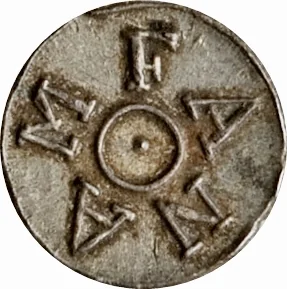
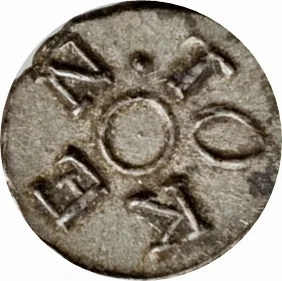
1 Fanam – Ceylon
Sri Lanka
Context
Years: 1814–1815
Country: Sri Lanka 
Issuer: Ceylon
Ruler: George III
Currency:
(1796—1828)
Subdivision: 1 Fanam = 1⁄12 Rixdollar
Demonetized: Yes
Material
References
KM: #Click to copy to clipboard83
Numista: #40909
Value
Bullion value: $1.40
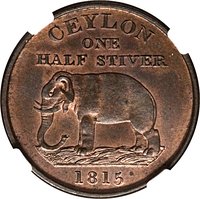
Obverse
Reverse
Edge
Plain
Mintings
| Year | Mint Mark | Mintage | Quality | Collection |
|---|---|---|---|---|
| — | — | — |
Historical background
In 1814, Ceylon (present-day Sri Lanka) was a British Crown Colony, having been formally ceded from Dutch rule in 1796 and fully brought under British administration in 1802. The currency situation was complex and chaotic, characterized by a multi-currency system inherited from previous colonial powers and regional trade. The official unit of account was the British sterling pound, shilling, and pence, but in everyday practice, a variety of physical coins circulated. These included remaining Dutch rix-dollars and stivers, Portuguese-era coins, various Indian rupees and fanams, and a limited number of British coins. This proliferation created significant confusion for commerce and administration, with fluctuating exchange rates and widespread counterfeiting.
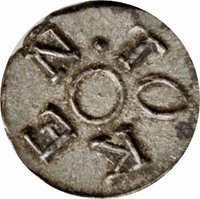
The British administration attempted to impose order by fixing exchange rates between these disparate currencies. A key decree established the Ceylon rix-dollar as a standard unit, valued at 1 shilling 6 pence sterling. However, the physical rix-dollar coin was in short supply, leading to a reliance on account-book entries rather than actual coinage. To address the chronic shortage of small change, which severely hampered local trade, the government began issuing its own copper token coinage in 1801. These "Ceylon Fanams" and "Ceylon Stivers" were tokens redeemable in account at the colonial treasury, not full legal tender, but they became essential for daily transactions.
Ultimately, the system was unstable and unsatisfactory for a growing colonial economy. The confusion of multiple currencies and fixed rates created arbitrage opportunities and discouraged external trade. This period of monetary disorder directly set the stage for the major currency reform that would follow in 1825, when the British government finally demonetized the old mixed currencies and introduced a unified sterling-based coinage, making British coin the sole legal tender and formally ending the era of the rix-dollar as a unit of account.
The British administration attempted to impose order by fixing exchange rates between these disparate currencies. A key decree established the Ceylon rix-dollar as a standard unit, valued at 1 shilling 6 pence sterling. However, the physical rix-dollar coin was in short supply, leading to a reliance on account-book entries rather than actual coinage. To address the chronic shortage of small change, which severely hampered local trade, the government began issuing its own copper token coinage in 1801. These "Ceylon Fanams" and "Ceylon Stivers" were tokens redeemable in account at the colonial treasury, not full legal tender, but they became essential for daily transactions.
Ultimately, the system was unstable and unsatisfactory for a growing colonial economy. The confusion of multiple currencies and fixed rates created arbitrage opportunities and discouraged external trade. This period of monetary disorder directly set the stage for the major currency reform that would follow in 1825, when the British government finally demonetized the old mixed currencies and introduced a unified sterling-based coinage, making British coin the sole legal tender and formally ending the era of the rix-dollar as a unit of account.
✨ Legendary