

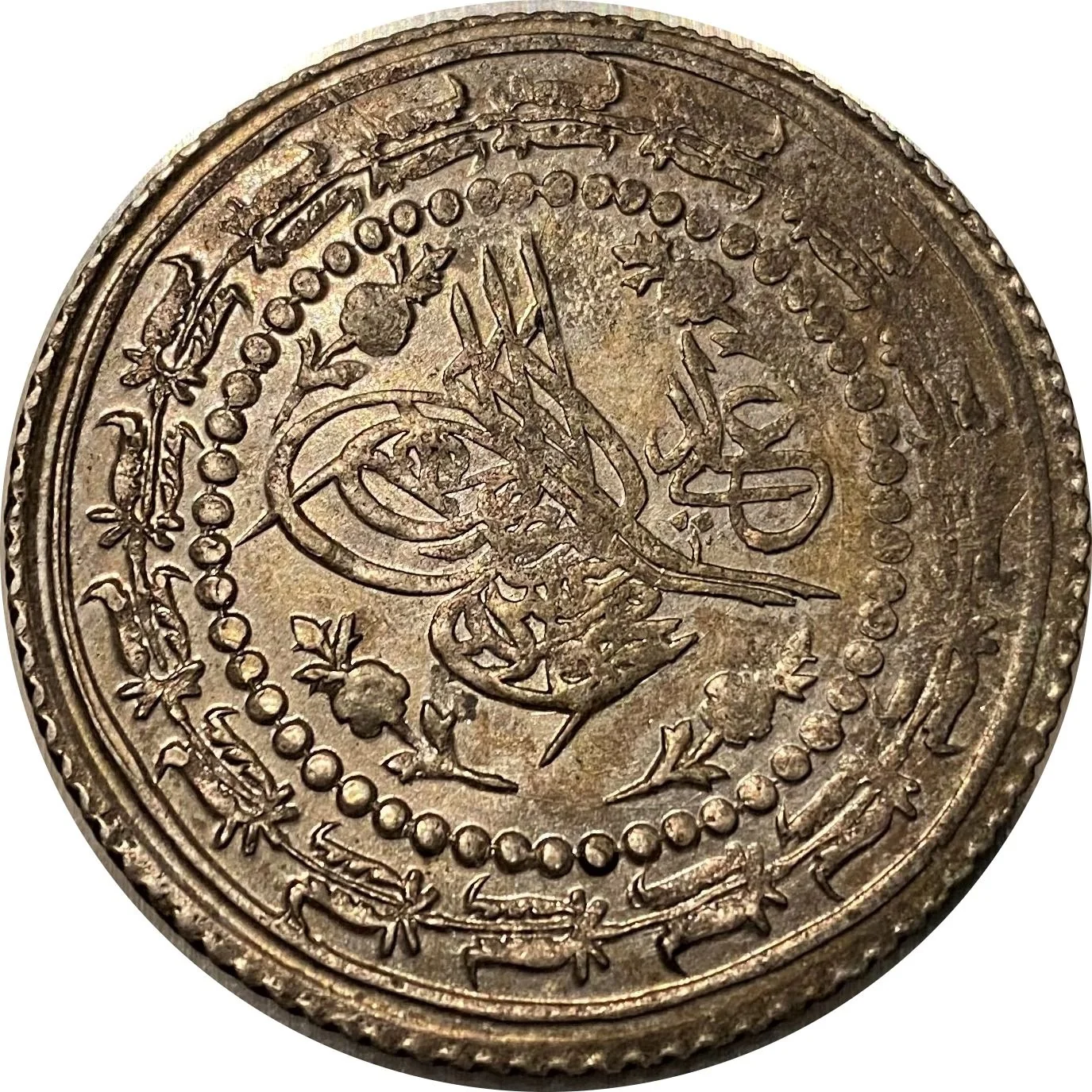
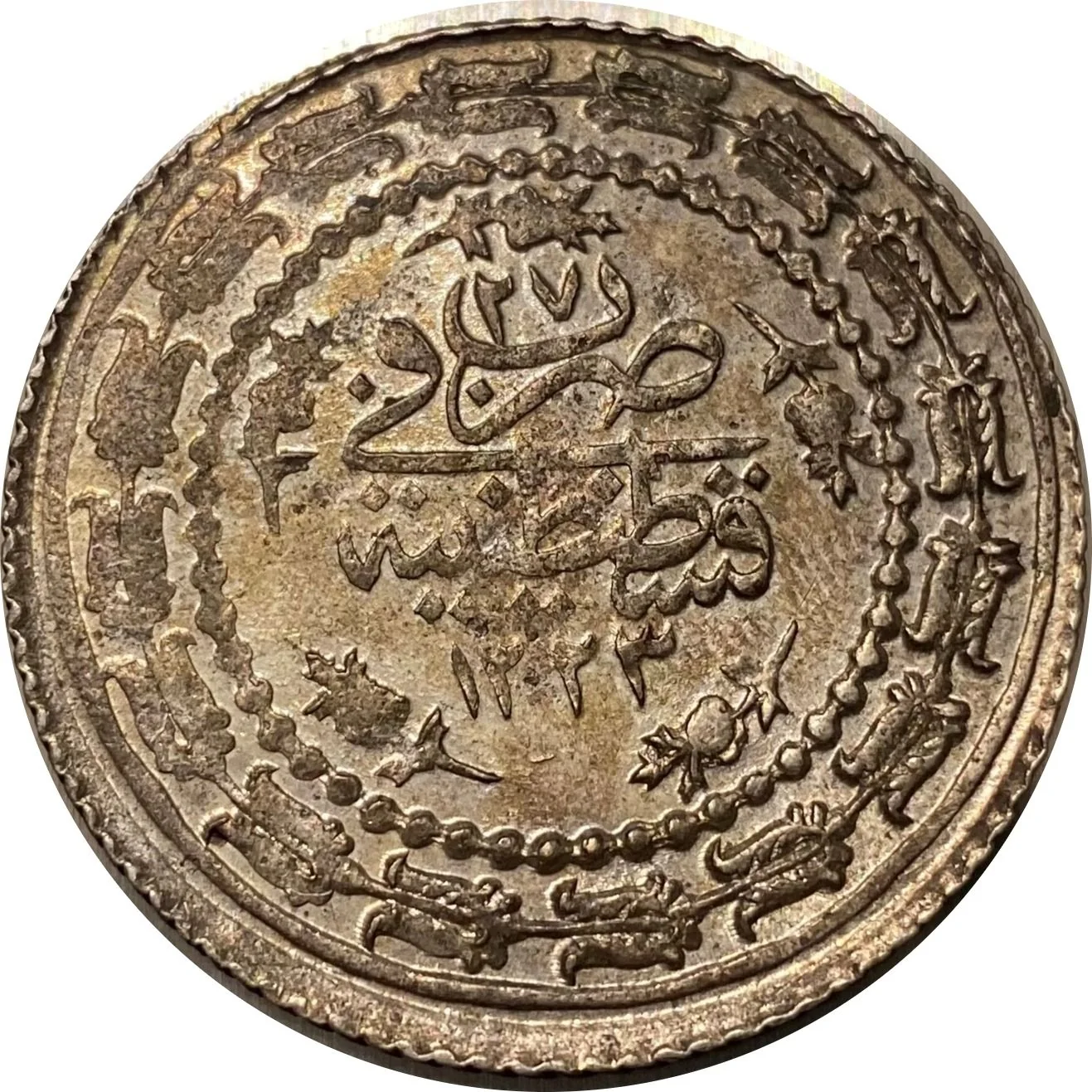
3 kuruş – Ottoman Empire
Add to wishlist
Turkey
Context
Years: 1834–1839
Country: Turkey
Issuer: Ottoman Empire
Ruler: Mahmud II
Currency:
(1688—1844)
Demonetization: 1844
Material
References
KM: #
Numista: #40893
Mints
| Name | Mark |
|---|---|
| Constantinople | — |
Mintings
| Year | Mint Mark | Mintage | Quality | Collection |
|---|---|---|---|---|
| 1834 | — | — | ||
| 1835 | — | — | ||
| 1836 | — | — | ||
| 1837 | — | — | ||
| 1838 | — | — | ||
| 1838 | — | — | ||
| 1839 | — | — |
Historical background
In 1834, the Ottoman Empire was grappling with a severe and multifaceted currency crisis, the culmination of decades of financial strain. The core of the problem was the widespread circulation of a vast array of debased and counterfeit coins, alongside older, purer coins that were hoarded. The primary silver currency, the kuruş (piastre), had been progressively reduced in silver content to finance state expenditures, particularly military costs during the Greek War of Independence and conflicts with Russia. This led to a chaotic system where the official "mint" kuruş and the heavily debased "current" kuruş circulated simultaneously at different values, causing confusion, commercial disruption, and a loss of public trust in the currency.
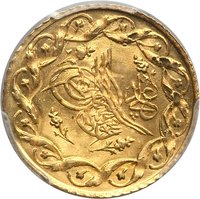
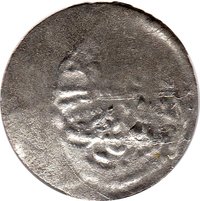
Sultan Mahmud II (r. 1808–1839), in the midst of his centralizing reforms, recognized that monetary stability was essential for modern statehood and economic recovery. The year 1834 marked a critical attempt at a comprehensive solution: the introduction of a new, standardized silver coinage. This reform aimed to replace the chaotic existing system with a unified Ottoman Lira (based on the French franc standard) and its subdivision, the kuruş, minted at a fixed and reliable silver purity. The new coins, produced with modern minting technology to prevent forgery, bore the tughra of Mahmud II and were intended to restore both state authority and market confidence.
However, the reform of 1834 faced significant immediate challenges. The government lacked the substantial silver reserves needed to replace the entire circulating medium at once, meaning old and new coins circulated in parallel for years. Furthermore, the chronic budget deficits, driven by costly military modernization and an inefficient tax system, continued to exert inflationary pressure. Thus, while the 1834 currency reform was a landmark step toward a modern monetary system and laid the administrative groundwork for future Tanzimat-era financial changes, it could not instantly resolve the empire's deep-seated fiscal weaknesses, which would continue to plague the Ottoman economy throughout the century.
Sultan Mahmud II (r. 1808–1839), in the midst of his centralizing reforms, recognized that monetary stability was essential for modern statehood and economic recovery. The year 1834 marked a critical attempt at a comprehensive solution: the introduction of a new, standardized silver coinage. This reform aimed to replace the chaotic existing system with a unified Ottoman Lira (based on the French franc standard) and its subdivision, the kuruş, minted at a fixed and reliable silver purity. The new coins, produced with modern minting technology to prevent forgery, bore the tughra of Mahmud II and were intended to restore both state authority and market confidence.
However, the reform of 1834 faced significant immediate challenges. The government lacked the substantial silver reserves needed to replace the entire circulating medium at once, meaning old and new coins circulated in parallel for years. Furthermore, the chronic budget deficits, driven by costly military modernization and an inefficient tax system, continued to exert inflationary pressure. Thus, while the 1834 currency reform was a landmark step toward a modern monetary system and laid the administrative groundwork for future Tanzimat-era financial changes, it could not instantly resolve the empire's deep-seated fiscal weaknesses, which would continue to plague the Ottoman economy throughout the century.
🌟 Limited