

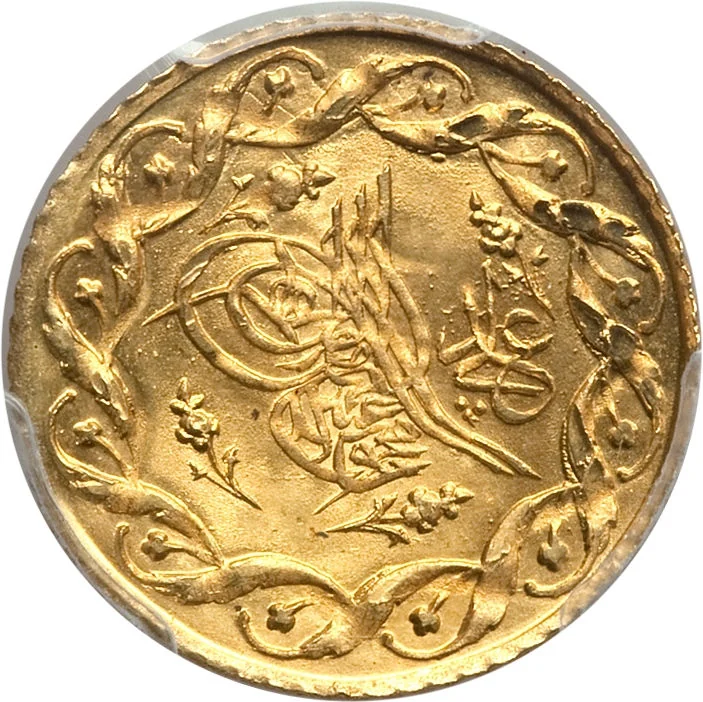
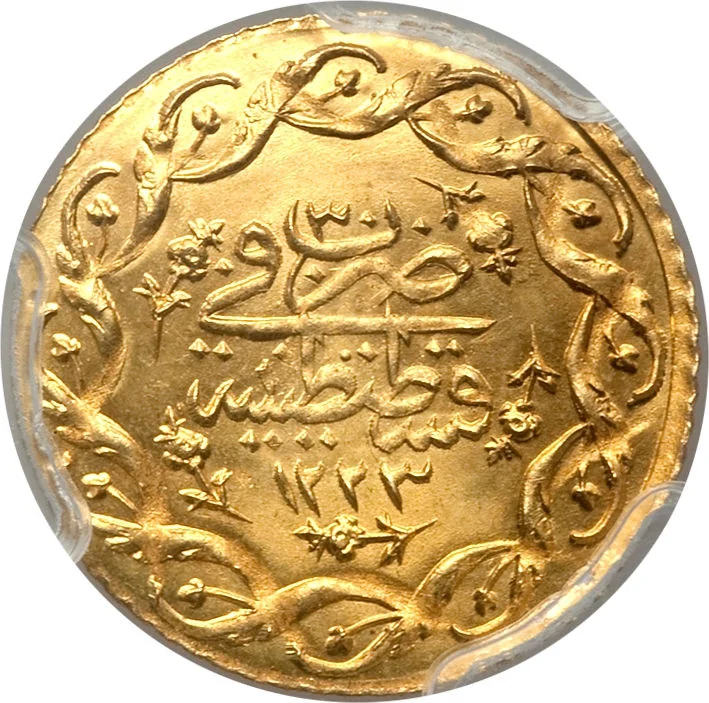
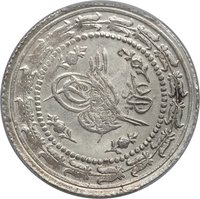
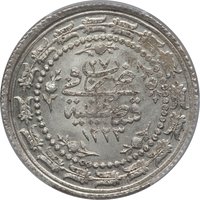
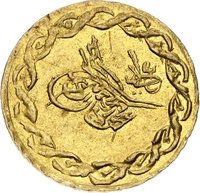
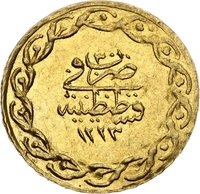
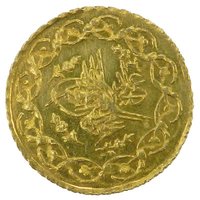
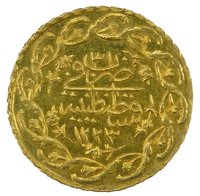
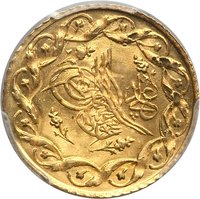
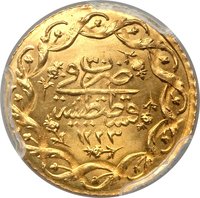
1 cedid mahmudiye – Ottoman Empire
Add to wishlist
Turkey
Mints
| Name | Mark |
|---|---|
| Constantinople | — |
Mintings
| Year | Mint Mark | Mintage | Quality | Collection |
|---|---|---|---|---|
| 1833 | — | — | ||
| 1834 | — | — | ||
| 1835 | — | — | ||
| 1836 | — | — | ||
| 1837 | — | — | ||
| 1838 | — | — | ||
| 1838 | — | — |
Historical background
In 1833, the Ottoman Empire's currency system was in a state of profound crisis and transition, characterized by severe debasement and financial instability. The primary unit, the kuruş (piastre), had been repeatedly devalued by the state to finance wars and cover budget deficits, particularly following the costly Greek War of Independence (1821-1829) and the looming conflict with Muhammad Ali of Egypt. The silver content of Ottoman coins had been drastically reduced, leading to a loss of public confidence and a chaotic circulation of various foreign coins, older Ottoman coins of higher purity, and the new, debased issues. This created a complex and inefficient multi-currency environment where the value of money was highly unstable.
The root of the crisis lay in the empire's chronic fiscal shortfalls and the lack of a central, modern banking system. The Treasury resorted to short-term measures like currency manipulation and forced loans (esham) rather than structural tax reform. Furthermore, the 1838 Anglo-Ottoman Commercial Convention, signed that very year, exacerbated the situation by locking in low import tariffs, which crippled domestic industry and further reduced state revenue, deepening dependence on foreign borrowing. The monetary chaos disrupted trade, complicated tax collection, and eroded the economic foundations of the central state.
Consequently, 1833 represents a pivotal moment just before more systematic, but ultimately insufficient, reforms were attempted. Sultan Mahmud II, engaged in centralizing the state, recognized the need for monetary order. The period set the stage for the later, more ambitious reforms of the Tanzimat era, which would include the establishment of the first Ottoman bank in 1840 and the eventual introduction of the gold-based Ottoman lira in 1844. Thus, the currency situation in 1833 was a low point that highlighted the empire's urgent need for financial modernization to survive in an increasingly globalized economy.
The root of the crisis lay in the empire's chronic fiscal shortfalls and the lack of a central, modern banking system. The Treasury resorted to short-term measures like currency manipulation and forced loans (esham) rather than structural tax reform. Furthermore, the 1838 Anglo-Ottoman Commercial Convention, signed that very year, exacerbated the situation by locking in low import tariffs, which crippled domestic industry and further reduced state revenue, deepening dependence on foreign borrowing. The monetary chaos disrupted trade, complicated tax collection, and eroded the economic foundations of the central state.
Consequently, 1833 represents a pivotal moment just before more systematic, but ultimately insufficient, reforms were attempted. Sultan Mahmud II, engaged in centralizing the state, recognized the need for monetary order. The period set the stage for the later, more ambitious reforms of the Tanzimat era, which would include the establishment of the first Ottoman bank in 1840 and the eventual introduction of the gold-based Ottoman lira in 1844. Thus, the currency situation in 1833 was a low point that highlighted the empire's urgent need for financial modernization to survive in an increasingly globalized economy.
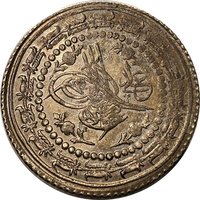
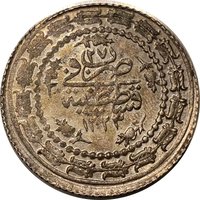
⭐ Somewhat Rare