

⅓ farthing – Malta
Add to wishlist
Malta
Context
Material
Diameter: 16 mm
Weight: 1.57 g
Thickness: 0.9 mm
Shape: Round
Composition: Copper
Standard: Gold twentieth ounce
Magnetic: No
Technique: Milled
Alignment: Medal alignment
flip
References
KM: #
Numista: #40634
Obverse
Description:
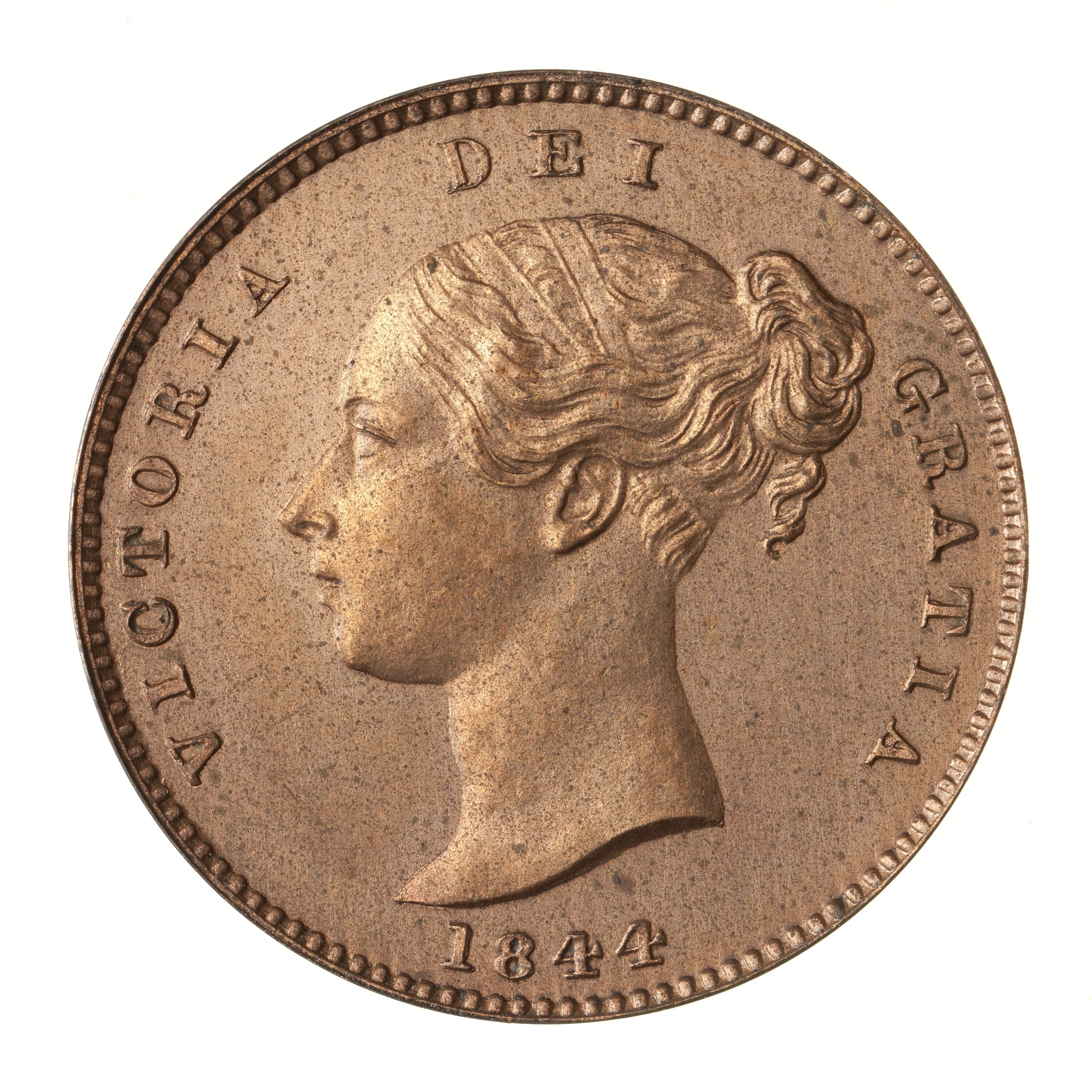
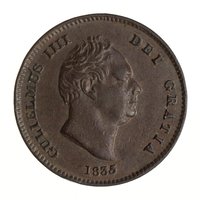
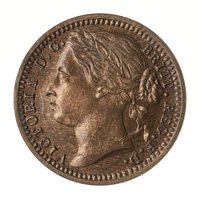
Queen Victoria's "Young Head" portrait facing left, with legend encircling and date beneath.
Inscription:
VICTORIA DEI GRATIA
1844
1844
Translation:
Victoria by the Grace of God
1844
1844
Script: Latin
Language: Latin
Engraver: William Wyon
Reverse
Edge
Plain
Mints
| Name | Mark |
|---|---|
| Royal Mint (Tower Hill) | — |
Mintings
| Year | Mint Mark | Mintage | Quality | Collection |
|---|---|---|---|---|
| 1844 | — | 1,301,040 |
Historical background
In 1844, Malta’s currency situation was complex and transitional, characterised by the simultaneous circulation of multiple coinages. Following its acquisition by the British in 1800, the island remained officially on a bimetallic system based on the Maltese scudo, but British, Sicilian, Spanish, and other European coins all circulated freely in daily commerce. This created significant confusion and inconvenience, as merchants and the public constantly had to calculate exchange rates between these various coins, with the Spanish dollar (or piece of eight) being particularly prominent in trade.
The British administration had long recognised the problem, and a key step towards reform came with the Proclamation of 1825, which attempted to introduce sterling as the sole legal tender. This effort largely failed because the fixed exchange rate undervalued sterling relative to the widely trusted scudo, leading the public to hoard the older coins. By 1844, the situation remained unresolved; sterling was legal but not dominant, and the chaotic multi-currency system persisted, hindering economic efficiency and government accounting.
The year 1844 itself was a critical turning point. Recognising the failure of the 1825 policy, the authorities prepared a fundamental reform. That year, they passed an ordinance that demonetised the old Maltese scudo and established a new, decimalised currency pegged directly to British sterling. This set the stage for the introduction of the Maltese lira (£M) in 1886, which was subdivided into 100 cents and equivalent to the British pound. Thus, 1844 marked the decisive end of the old monetary regime and laid the essential groundwork for a modern, sterling-linked currency system that would bring stability to the island's economy.
The British administration had long recognised the problem, and a key step towards reform came with the Proclamation of 1825, which attempted to introduce sterling as the sole legal tender. This effort largely failed because the fixed exchange rate undervalued sterling relative to the widely trusted scudo, leading the public to hoard the older coins. By 1844, the situation remained unresolved; sterling was legal but not dominant, and the chaotic multi-currency system persisted, hindering economic efficiency and government accounting.
The year 1844 itself was a critical turning point. Recognising the failure of the 1825 policy, the authorities prepared a fundamental reform. That year, they passed an ordinance that demonetised the old Maltese scudo and established a new, decimalised currency pegged directly to British sterling. This set the stage for the introduction of the Maltese lira (£M) in 1886, which was subdivided into 100 cents and equivalent to the British pound. Thus, 1844 marked the decisive end of the old monetary regime and laid the essential groundwork for a modern, sterling-linked currency system that would bring stability to the island's economy.
🌟 Limited