

⅓ farthing – Malta
Add to wishlist
Malta
Context
Material
Diameter: 16 mm
Weight: 1.57 g
Thickness: 1 mm
Shape: Round
Composition: Copper
Standard: Gold twentieth ounce
Magnetic: No
Technique: Milled
Alignment: Medal alignment
flip
References
KM: #
Numista: #24355
Obverse
Description:
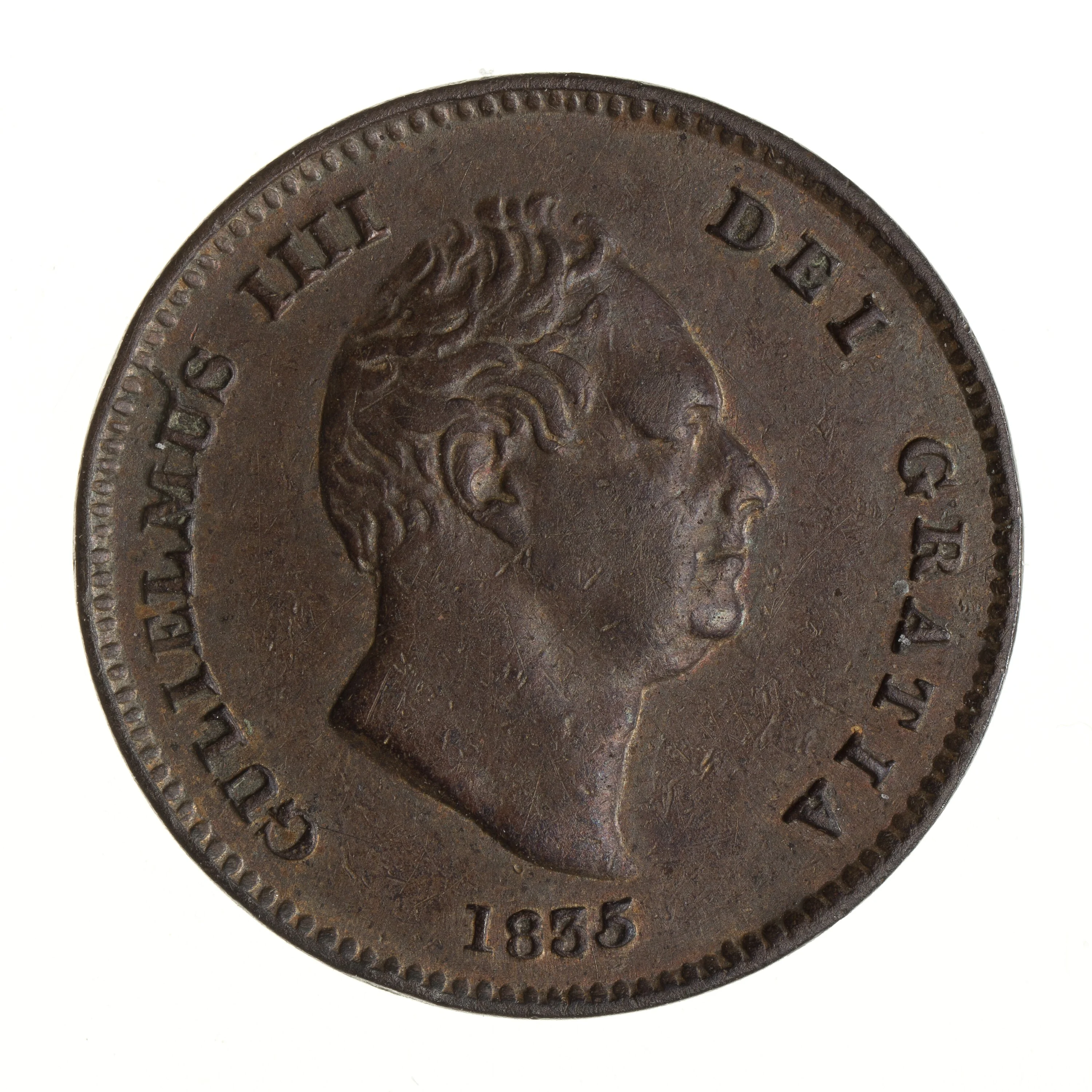
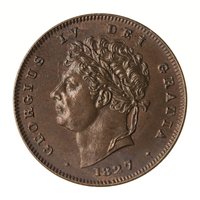
King William IV, bare head right, legend surrounding, date beneath.
Inscription:
GULIELMUS IIII DEI GRATIA
1835
1835
Translation:
William IV by the Grace of God
Script: Latin
Language: Latin
Engraver: William Wyon
Reverse
Edge
Plain
Mints
| Name | Mark |
|---|---|
| Royal Mint (Tower Hill) | — |
Mintings
| Year | Mint Mark | Mintage | Quality | Collection |
|---|---|---|---|---|
| 1835 | — | — | Proof | |
| 1835 | — | — |
Historical background
In 1835, Malta's currency situation was a complex and transitional one, reflecting its strategic position as a British colony with deep-rooted Mediterranean trade links. Officially, the islands operated under a British monetary standard following the 1825 Order-in-Council that made British coinage the sole legal tender throughout the Empire. However, the reality on the ground was a chaotic multi-currency system. British silver and copper coins circulated alongside a plethora of older, worn Spanish dollars (pieces of eight), Sicilian onzie, and other foreign silver coins, all valued by their intrinsic silver weight rather than a fixed face value.
This monetary bazaar created significant problems for commerce and daily life. The chronic shortage of official British small change, essential for retail transactions and wages, forced reliance on heavily debased and clipped foreign coins. Merchants and bankers had to constantly refer to published agios (premium lists) to determine the fluctuating exchange value of each coin type, leading to confusion, fraud, and disputes. The government’s attempts to introduce British copper coinage were only partially successful, as the public, accustomed to valuing metal, often hoarded the newer, fuller-weight coins.
Consequently, the period was marked by official frustration and public inconvenience. The colonial government in Valletta struggled to impose monetary order, but economic inertia and the islands' entrenched role as a trading hub perpetuated the circulation of heterogeneous specie. This unsatisfactory environment would eventually lead to more decisive action, culminating in the pivotal 1855 Proclamation that demonetized all foreign silver and finally established a unified, decimal currency based on the British pound, laying the groundwork for the modern Maltese currency system.
This monetary bazaar created significant problems for commerce and daily life. The chronic shortage of official British small change, essential for retail transactions and wages, forced reliance on heavily debased and clipped foreign coins. Merchants and bankers had to constantly refer to published agios (premium lists) to determine the fluctuating exchange value of each coin type, leading to confusion, fraud, and disputes. The government’s attempts to introduce British copper coinage were only partially successful, as the public, accustomed to valuing metal, often hoarded the newer, fuller-weight coins.
Consequently, the period was marked by official frustration and public inconvenience. The colonial government in Valletta struggled to impose monetary order, but economic inertia and the islands' entrenched role as a trading hub perpetuated the circulation of heterogeneous specie. This unsatisfactory environment would eventually lead to more decisive action, culminating in the pivotal 1855 Proclamation that demonetized all foreign silver and finally established a unified, decimal currency based on the British pound, laying the groundwork for the modern Maltese currency system.
🌟 Uncommon