

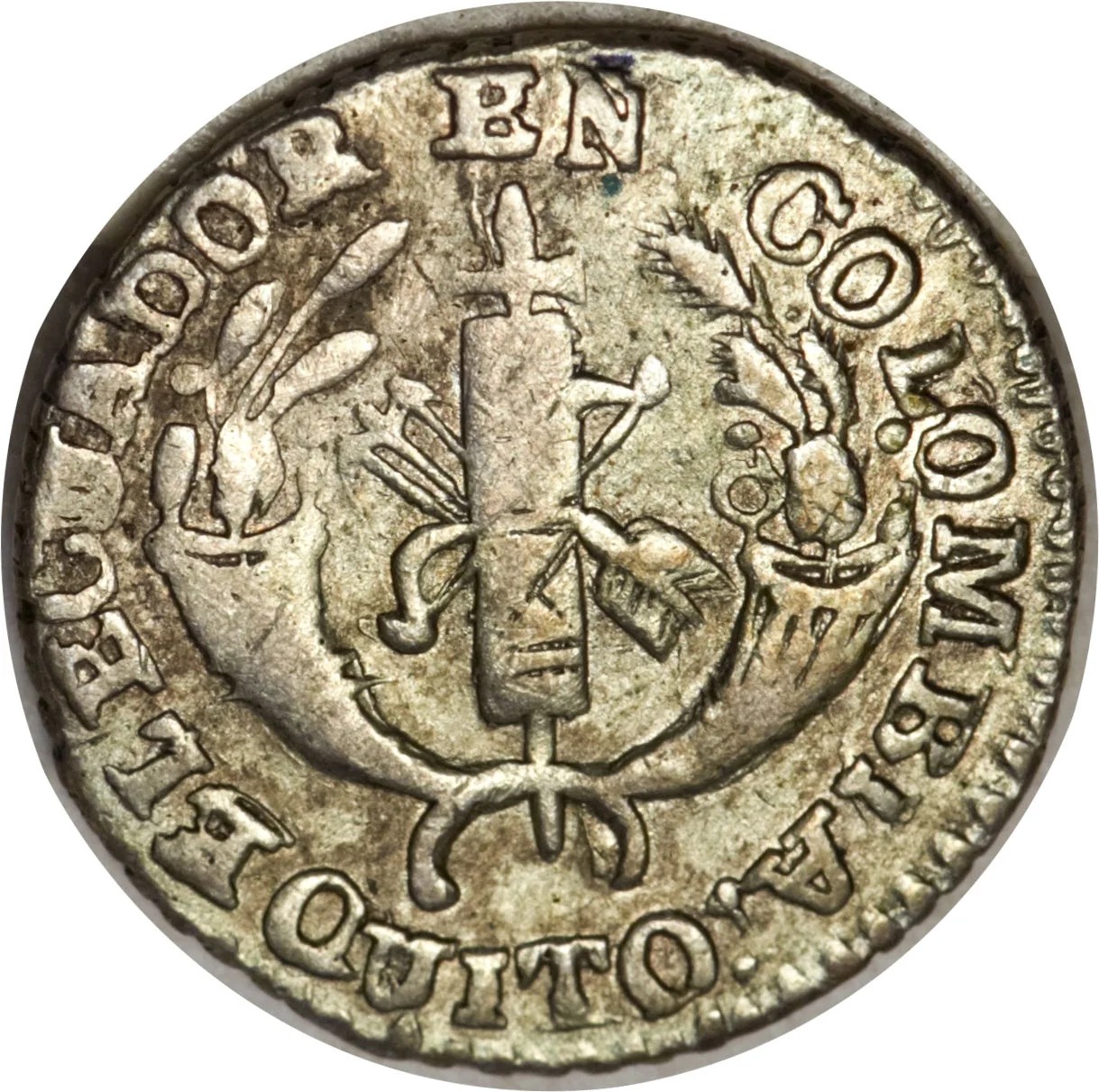
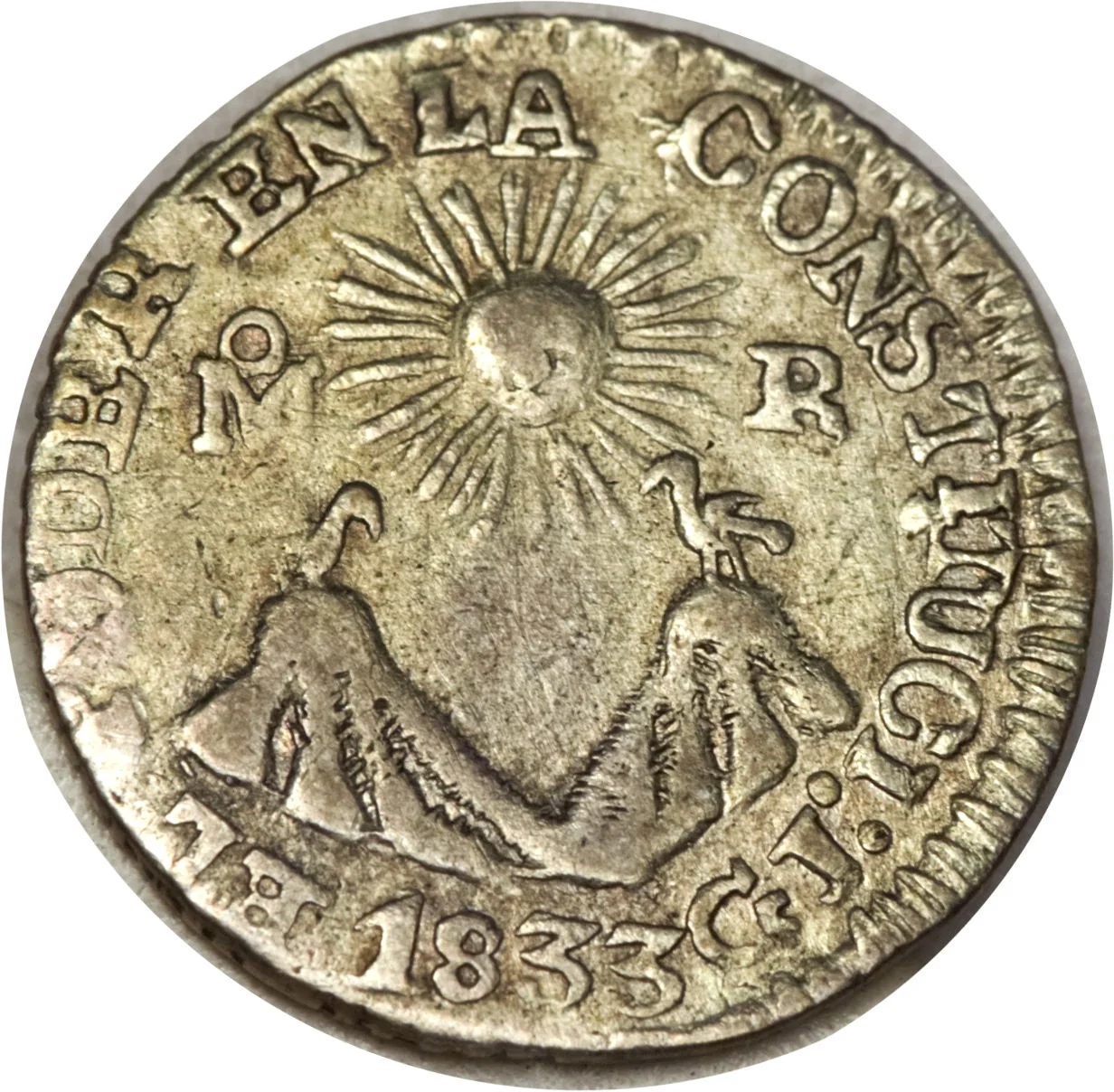
Mintings
| Year | Mint Mark | Mintage | Quality | Collection |
|---|---|---|---|---|
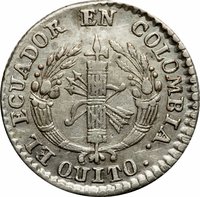
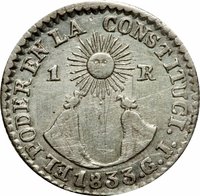
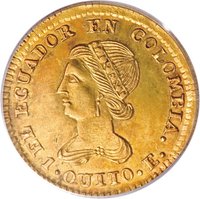
| 1833 | GJ | 3,200 | ||
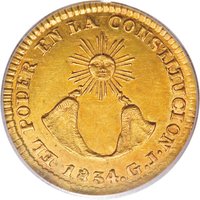
| 1834 | GJ | — |
Historical background
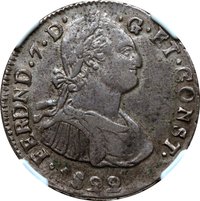
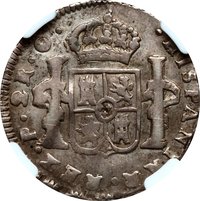
In 1833, Ecuador was a newly independent nation grappling with the profound challenge of establishing a stable monetary system. Having emerged from Gran Colombia in 1830, the country inherited a chaotic currency landscape characterized by a wide circulation of foreign coins, primarily Spanish colonial reales and pesos, alongside coins from other Latin American republics and even counterfeits. The lack of a unified national coinage severely hampered commerce and state finances, as the value and silver content of these disparate coins were inconsistent, leading to confusion and inefficiency in everyday transactions.
The government of President Juan José Flores recognized this instability as a major obstacle to economic sovereignty and progress. In response, 1833 was a year of foundational action. The Congress authorized the establishment of the first national mint (Casa de la Moneda) in Quito, a decisive step toward creating a sovereign currency. Furthermore, plans were set in motion to decimalize the currency system, moving away from the old Spanish colonial system of reales (8 reales = 1 peso) toward a system based on the peso divided into 100 centavos, aligning Ecuador with modern international standards.
However, the situation in 1833 remained one of transition and anticipation rather than immediate resolution. The actual minting of the first national coins, the iconic "Quito" silver pesos bearing the image of a condor, would not begin until 1836. Therefore, the year is best understood as a critical preparatory phase where the legal and institutional groundwork was laid. The economy still functioned with a patchwork of old and foreign coins, but the state had committed to a clear path toward monetary consolidation, seeking to replace monetary anarchy with a uniform currency as a symbol and tool of national unity.
The government of President Juan José Flores recognized this instability as a major obstacle to economic sovereignty and progress. In response, 1833 was a year of foundational action. The Congress authorized the establishment of the first national mint (Casa de la Moneda) in Quito, a decisive step toward creating a sovereign currency. Furthermore, plans were set in motion to decimalize the currency system, moving away from the old Spanish colonial system of reales (8 reales = 1 peso) toward a system based on the peso divided into 100 centavos, aligning Ecuador with modern international standards.
However, the situation in 1833 remained one of transition and anticipation rather than immediate resolution. The actual minting of the first national coins, the iconic "Quito" silver pesos bearing the image of a condor, would not begin until 1836. Therefore, the year is best understood as a critical preparatory phase where the legal and institutional groundwork was laid. The economy still functioned with a patchwork of old and foreign coins, but the state had committed to a clear path toward monetary consolidation, seeking to replace monetary anarchy with a uniform currency as a symbol and tool of national unity.
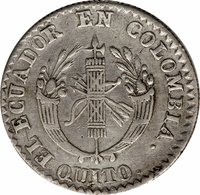
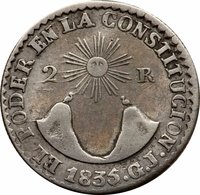
Series: 1833 Ecuador circulation coins
✨ Legendary