

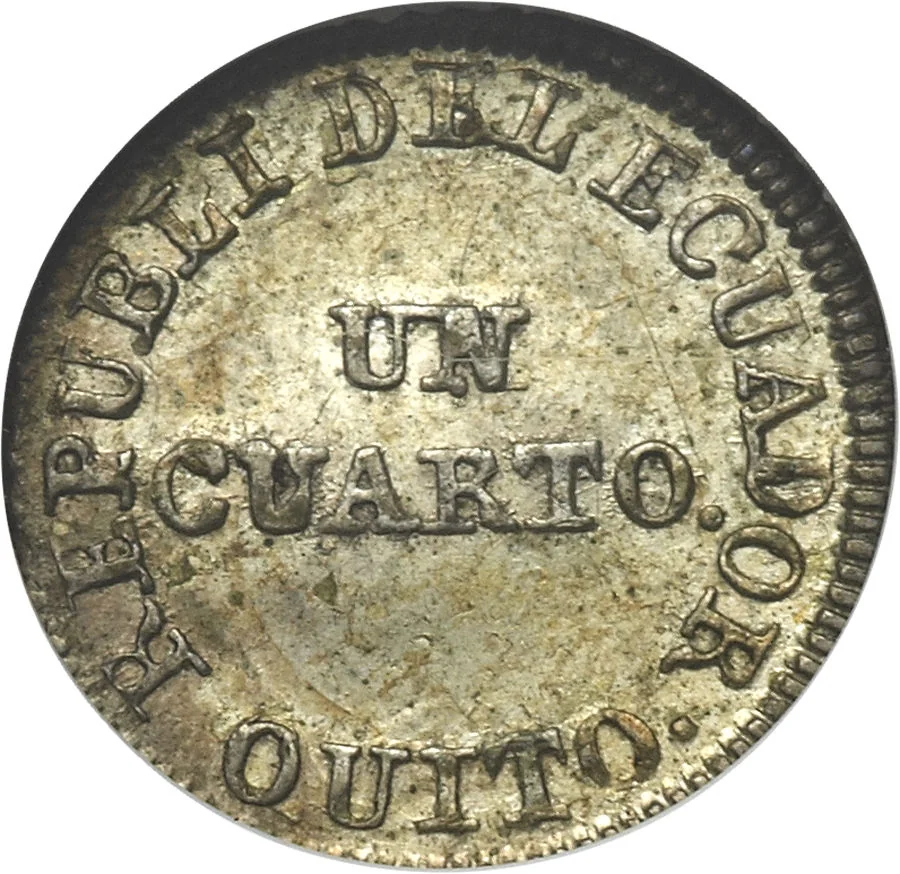
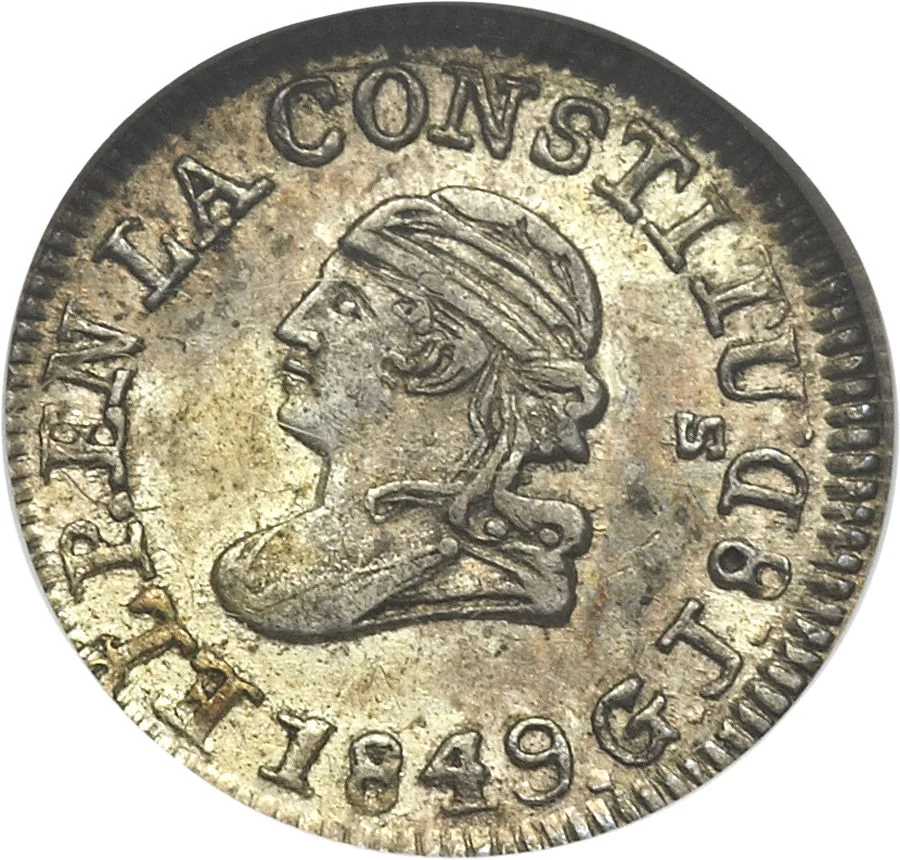
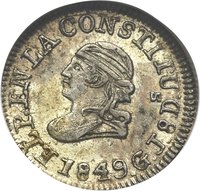
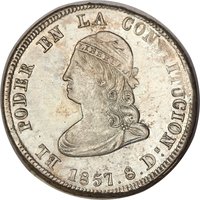
Obverse
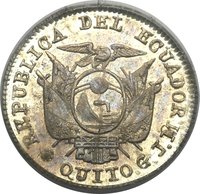
Reverse
Edge
Mintings
| Year | Mint Mark | Mintage | Quality | Collection |
|---|---|---|---|---|
| 1849 | GJ | — | ||
| 1850 | GJ | — | ||
| 1851 | GJ | — | ||
| 1852 | GJ | — | ||
| 1855 | GJ | — | ||
| 1856 | GJ | — | ||
| 1862 | GJ | — |
Historical background
In 1849, Ecuador was grappling with a severe and chaotic currency crisis rooted in the financial mismanagement and political instability that followed its independence from Gran Colombia in 1830. The young republic lacked a unified national coinage, leading to a confusing circulation of diverse foreign and obsolete coins. These included Spanish colonial reales, Colombian pesos, and even Peruvian and Bolivian coins, all with fluctuating and disputed values that varied from region to region. This monetary anarchy stifled domestic commerce, complicated tax collection, and created widespread opportunities for fraud, hindering economic development and state-building efforts.
The crisis was acutely exacerbated by a dramatic shortage of small-denomination coinage (moneda menuda), which was essential for daily market transactions. This scarcity was primarily caused by the massive export of full-bodied silver coins to international markets, where their metallic value was higher than their face value in Ecuador. Consequently, everyday economic life seized up; workers struggled to be paid, and basic trade became difficult. In response, municipal governments and private merchants began issuing their own low-value tokens and paper notes (vales) to facilitate local exchange, but this further fragmented the monetary system and undermined public trust.
Facing this untenable situation, President Vicente Ramón Roca (1845-1849) and his successor, Manuel de Ascásubi, recognized that currency reform was a national imperative. The government's efforts culminated in the pivotal Monetary Law of 1856, which was being planned in the late 1840s. This law would finally establish the Ecuadorian peso as the sole national currency, decimalize the system, and create a national mint in Quito. Thus, the situation in 1849 represents the peak of a debilitating monetary disorder that forced the definitive, though delayed, action to create a sovereign and uniform currency system for the republic.
The crisis was acutely exacerbated by a dramatic shortage of small-denomination coinage (moneda menuda), which was essential for daily market transactions. This scarcity was primarily caused by the massive export of full-bodied silver coins to international markets, where their metallic value was higher than their face value in Ecuador. Consequently, everyday economic life seized up; workers struggled to be paid, and basic trade became difficult. In response, municipal governments and private merchants began issuing their own low-value tokens and paper notes (vales) to facilitate local exchange, but this further fragmented the monetary system and undermined public trust.
Facing this untenable situation, President Vicente Ramón Roca (1845-1849) and his successor, Manuel de Ascásubi, recognized that currency reform was a national imperative. The government's efforts culminated in the pivotal Monetary Law of 1856, which was being planned in the late 1840s. This law would finally establish the Ecuadorian peso as the sole national currency, decimalize the system, and create a national mint in Quito. Thus, the situation in 1849 represents the peak of a debilitating monetary disorder that forced the definitive, though delayed, action to create a sovereign and uniform currency system for the republic.
💎 Very Rare