

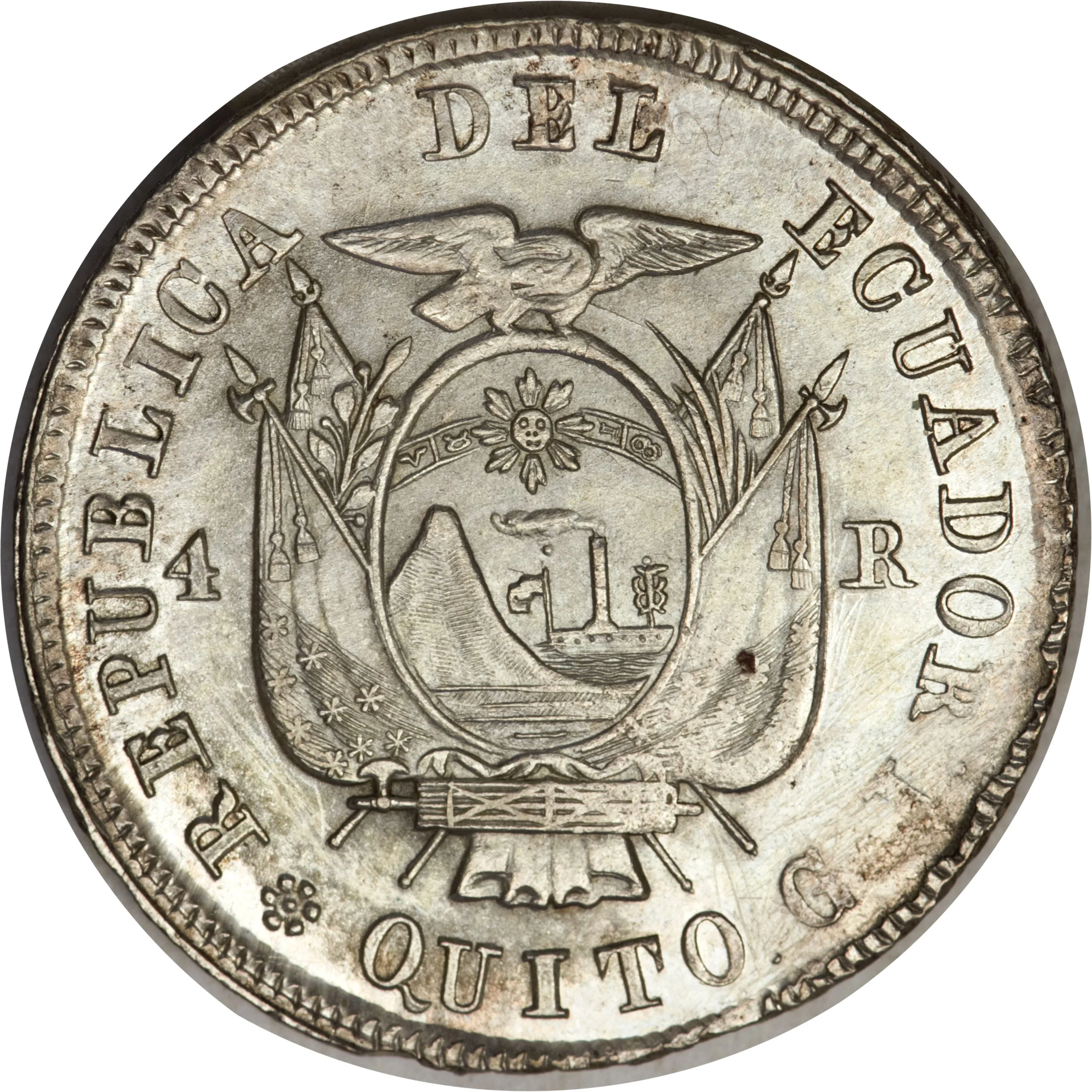
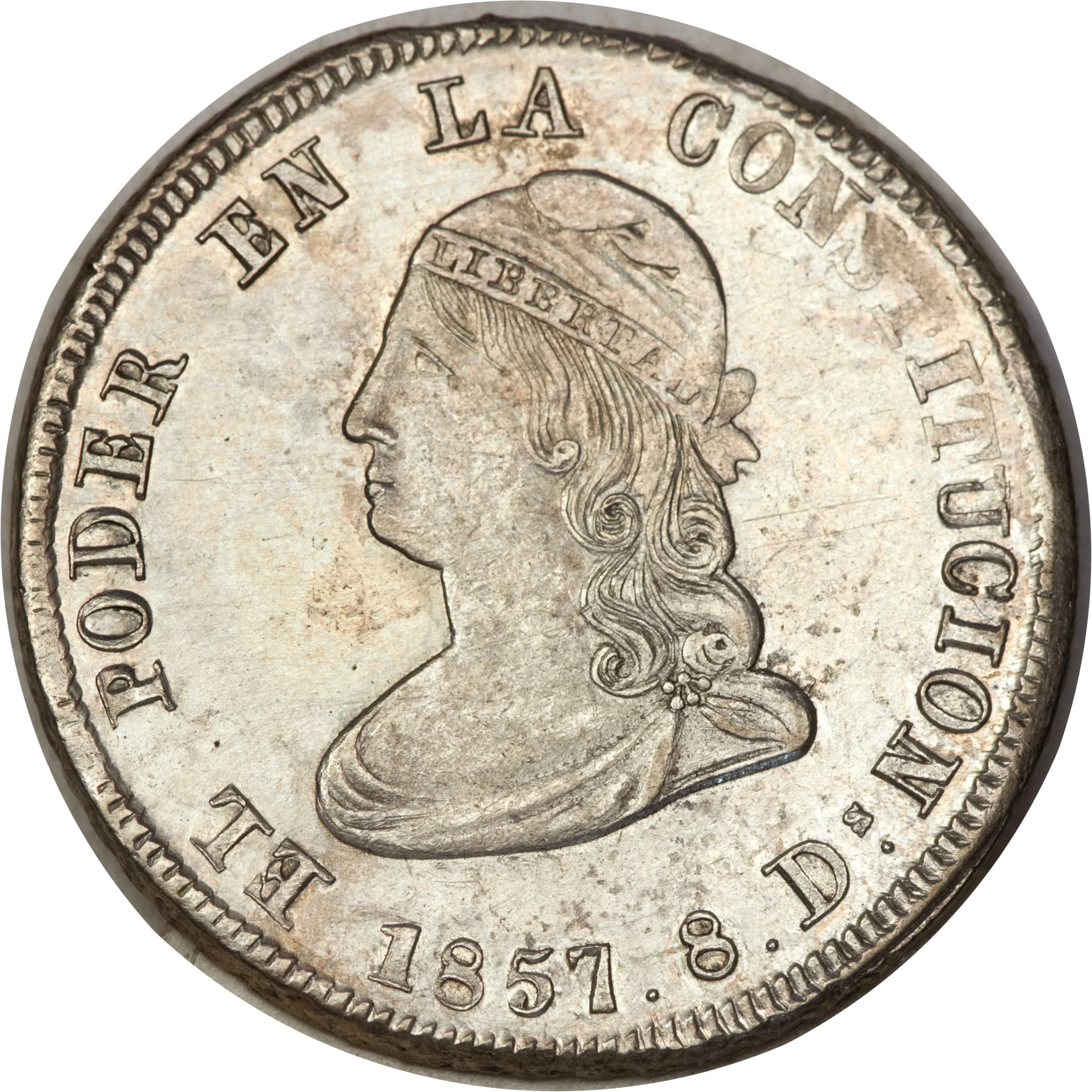
Mintings
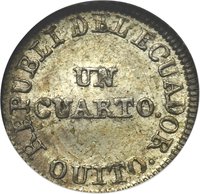
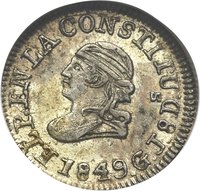
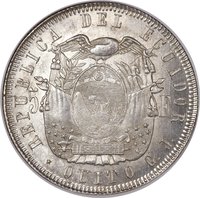
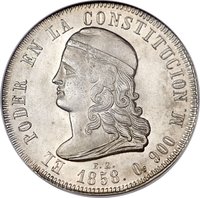
| Year | Mint Mark | Mintage | Quality | Collection |
|---|---|---|---|---|
| 1855 | GJ | — | ||
| 1857 | GJ | — |
Historical background
In 1855, Ecuador’s currency situation was characterized by profound instability and fragmentation, a direct legacy of its post-independence struggles. Following the dissolution of Gran Colombia in 1830, the new republic inherited a chaotic monetary system with a severe shortage of circulating coinage. To fill this void, a confusing mix of foreign coins—primarily Peruvian, Bolivian, and Colombian—circulated alongside a limited number of coins minted in Quito. The most significant and problematic currency, however, was the peso feble (weak peso), a debased silver coin that was officially overvalued against the pure silver peso fuerte (strong peso). This created a dual-system where everyday transactions used the inferior coinage, while international trade demanded the stronger, purer currency, leading to constant exchange difficulties and economic distortion.
The core of the crisis lay in the government's chronic fiscal deficits, which it attempted to solve through inflationary measures. Facing empty coffers, President José María Urbina’s administration (1851-1856) resorted to authorizing the minting of vast quantities of low-weight, low-purity silver coins, further devaluing the peso feble. This deliberate debasement amounted to a hidden tax on the population, eroding purchasing power and public trust. The situation was exacerbated by the simultaneous circulation of counterfeit coins, which were difficult to distinguish from the officially debased currency, making everyday commerce a gamble and discouraging both domestic and foreign investment.
Consequently, by 1855, Ecuador was experiencing the damaging effects of a severely depreciated and unreliable medium of exchange. Prices were unstable, credit was scarce, and the economy struggled to grow. This monetary chaos reflected the broader political instability of the era and hindered national consolidation. The crisis would ultimately compel the government to seek radical solutions, setting the stage for the dramatic monetary reforms that would follow, including later attempts to adopt the gold standard and, over a century later, the outright dollarization of the economy in the year 2000.
The core of the crisis lay in the government's chronic fiscal deficits, which it attempted to solve through inflationary measures. Facing empty coffers, President José María Urbina’s administration (1851-1856) resorted to authorizing the minting of vast quantities of low-weight, low-purity silver coins, further devaluing the peso feble. This deliberate debasement amounted to a hidden tax on the population, eroding purchasing power and public trust. The situation was exacerbated by the simultaneous circulation of counterfeit coins, which were difficult to distinguish from the officially debased currency, making everyday commerce a gamble and discouraging both domestic and foreign investment.
Consequently, by 1855, Ecuador was experiencing the damaging effects of a severely depreciated and unreliable medium of exchange. Prices were unstable, credit was scarce, and the economy struggled to grow. This monetary chaos reflected the broader political instability of the era and hindered national consolidation. The crisis would ultimately compel the government to seek radical solutions, setting the stage for the dramatic monetary reforms that would follow, including later attempts to adopt the gold standard and, over a century later, the outright dollarization of the economy in the year 2000.
💎 Very Rare