

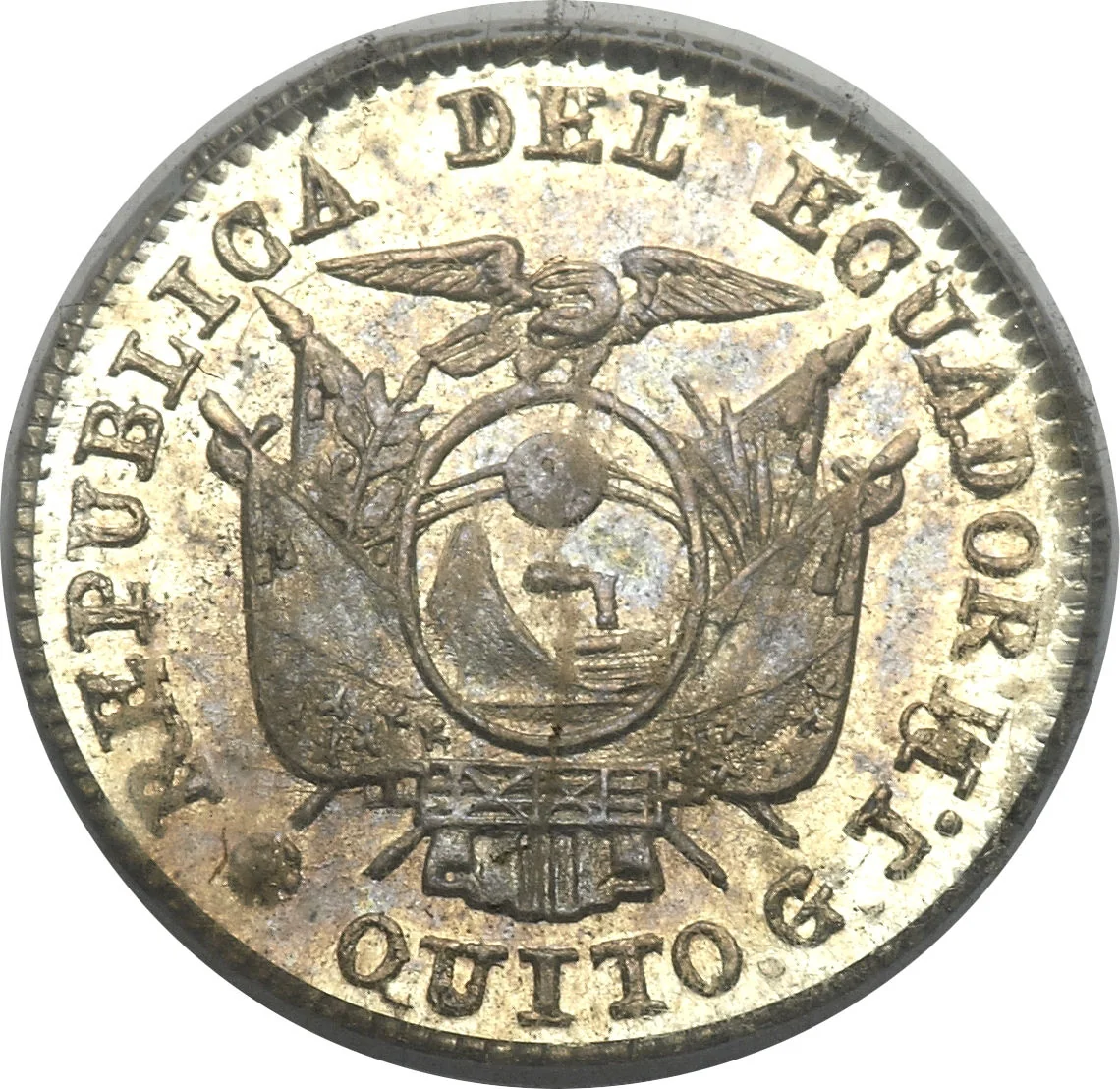
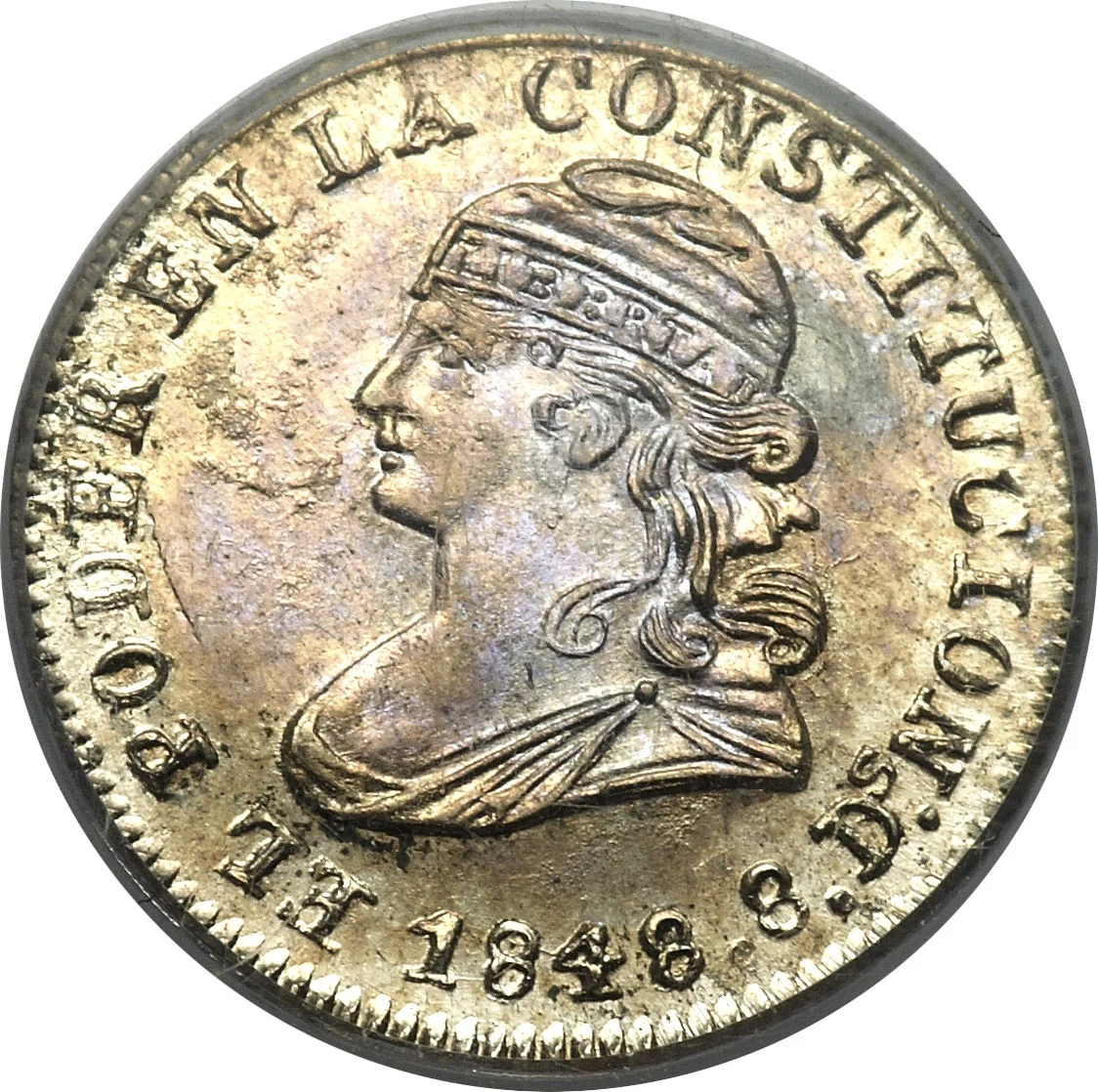
Mintings
| Year | Mint Mark | Mintage | Quality | Collection |
|---|---|---|---|---|
| 1848 | GJ | — | ||
| 1849 | GJ | — |
Historical background
In 1848, Ecuador was a young and struggling republic, grappling with the profound economic and political instability that followed its independence from Gran Colombia in 1830. The nation's currency system was chaotic and fragmented, a direct reflection of its fractured state. The official currency was the peso, but its value was undermined by a severe shortage of minted coinage, leading to widespread circulation of debased and counterfeit coins. Furthermore, foreign coins, particularly Peruvian and Colombian pesos and even older Spanish colonial reales, circulated freely, creating a confusing monetary environment where exchange rates fluctuated wildly between regions and merchants.
This monetary disorder was exacerbated by the government's chronic fiscal deficits. To finance its operations and especially the costs of internal strife and border conflicts, successive administrations resorted to printing paper money without sufficient metallic backing. This led to rapid depreciation and a deep public distrust in fiduciary currency. By the late 1840s, Ecuador lacked a unified, reliable medium of exchange, which stifled domestic commerce, complicated tax collection, and hindered foreign trade and investment, crippling efforts at national economic development.
The situation culminated in a profound crisis of confidence. The instability of the peso and the proliferation of worthless paper money effectively pushed the economy toward a primitive system of barter in many inland areas, while coastal trade increasingly relied on more stable foreign coinage. This chaotic backdrop set the stage for the eventual monetary reforms of the 1850s and 1860s, which would seek to impose order by decimalizing the currency and attempting to tie it to the French franc, though true stability remained elusive for decades. The currency woes of 1848 were thus a symptomatic manifestation of the broader challenges of building a functional state in post-colonial South America.
This monetary disorder was exacerbated by the government's chronic fiscal deficits. To finance its operations and especially the costs of internal strife and border conflicts, successive administrations resorted to printing paper money without sufficient metallic backing. This led to rapid depreciation and a deep public distrust in fiduciary currency. By the late 1840s, Ecuador lacked a unified, reliable medium of exchange, which stifled domestic commerce, complicated tax collection, and hindered foreign trade and investment, crippling efforts at national economic development.
The situation culminated in a profound crisis of confidence. The instability of the peso and the proliferation of worthless paper money effectively pushed the economy toward a primitive system of barter in many inland areas, while coastal trade increasingly relied on more stable foreign coinage. This chaotic backdrop set the stage for the eventual monetary reforms of the 1850s and 1860s, which would seek to impose order by decimalizing the currency and attempting to tie it to the French franc, though true stability remained elusive for decades. The currency woes of 1848 were thus a symptomatic manifestation of the broader challenges of building a functional state in post-colonial South America.
💎 Extremely Rare