

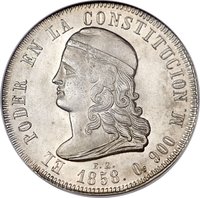
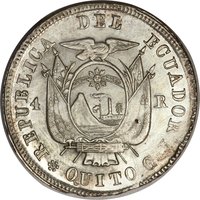
Mintings
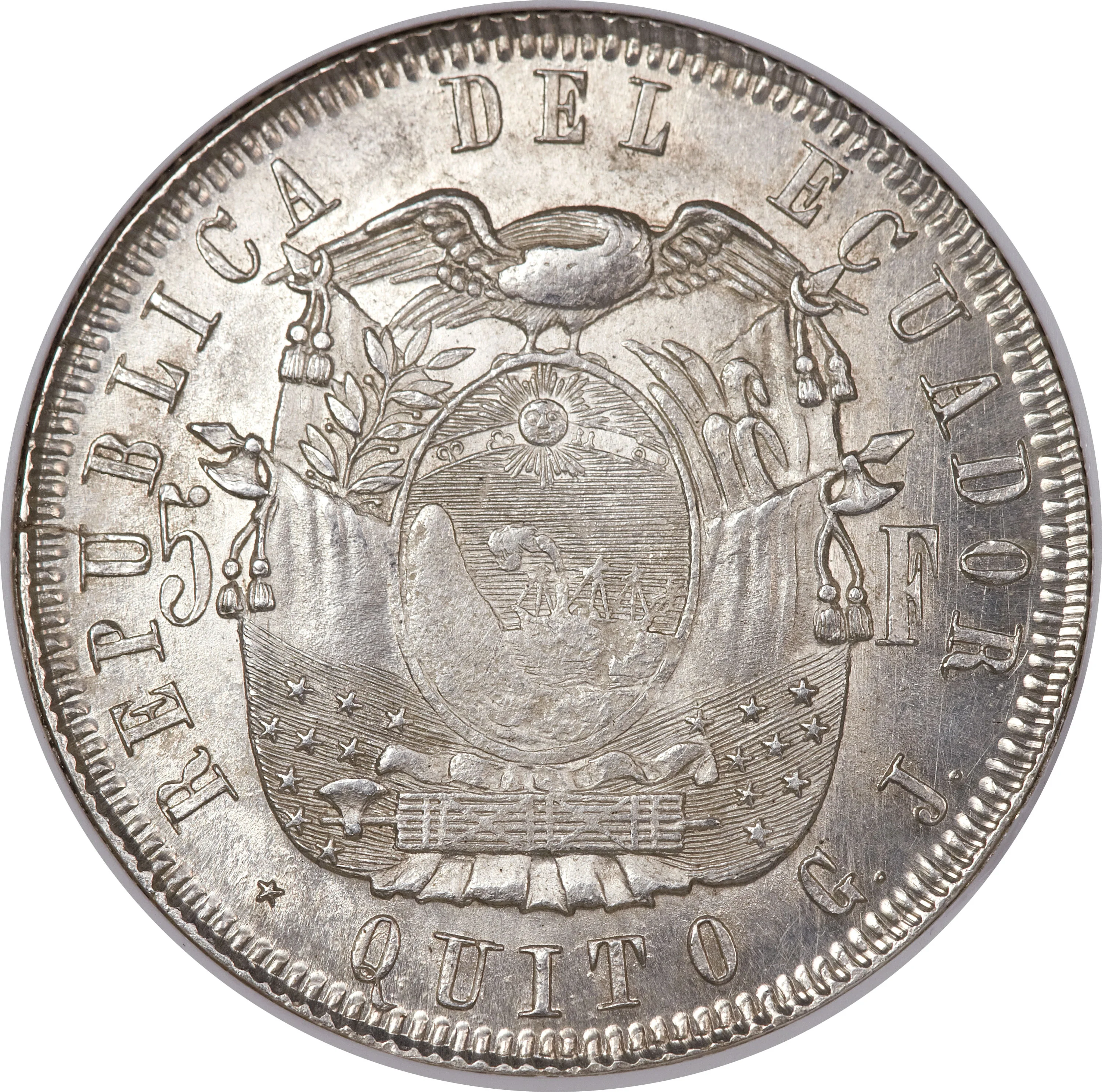
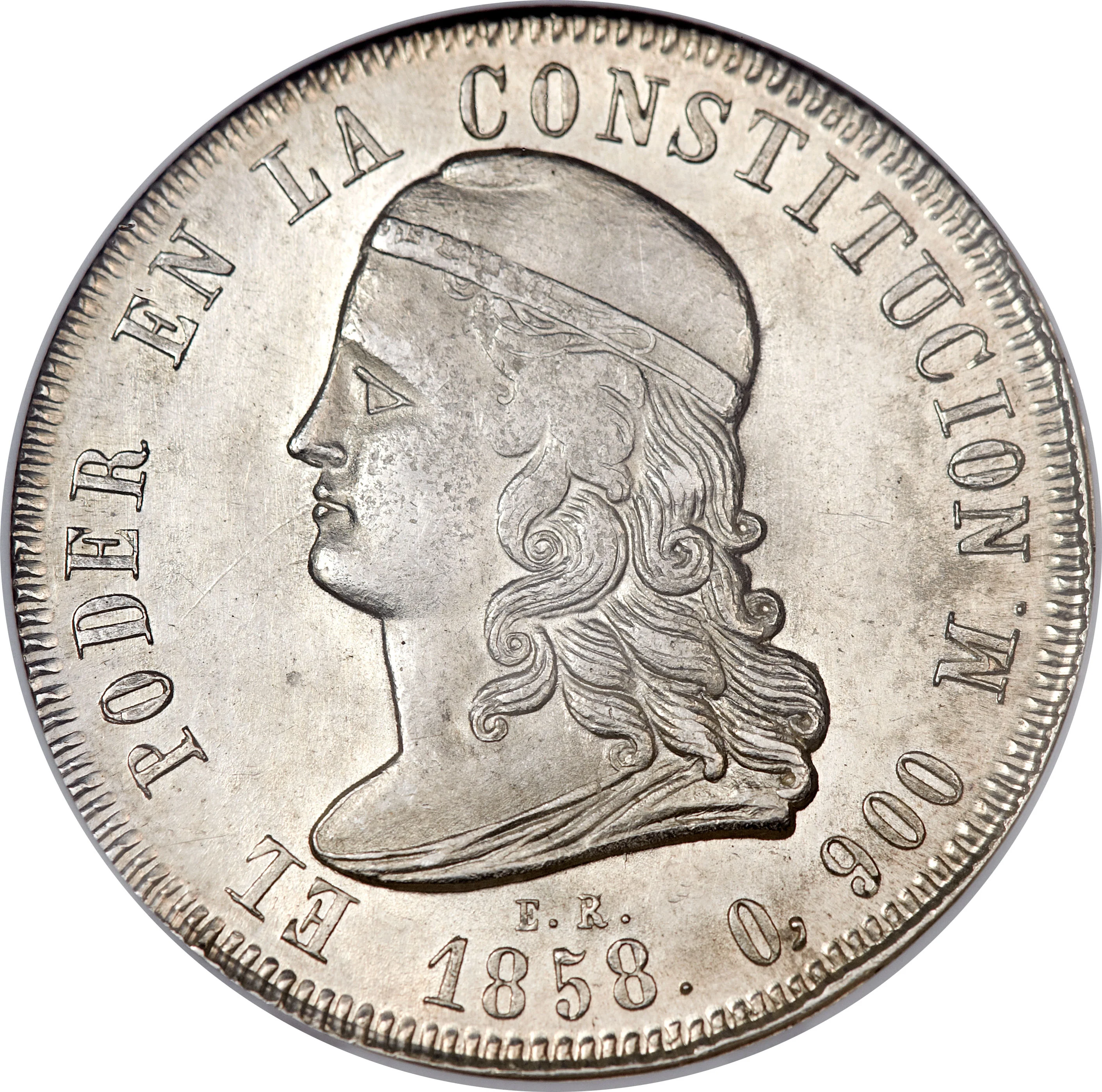
| Year | Mint Mark | Mintage | Quality | Collection |
|---|---|---|---|---|
| 1858 | GJ | — |
Historical background
In 1858, Ecuador was mired in a profound monetary and financial crisis that crippled its economy and contributed to severe political instability. The nation lacked a unified, sovereign currency, leading to a chaotic circulation of foreign and debased coins. Primarily, worn and clipped Spanish colonial silver coins, known as reales, circulated alongside coins from neighboring nations like Colombia, Peru, and Bolivia, as well as counterfeit cobs. The value and acceptance of this mixed media of exchange were highly inconsistent, creating confusion in commerce and eroding public trust in the monetary system.
This currency anarchy was both a cause and a symptom of a deeper fiscal catastrophe. The state treasury was effectively bankrupt, burdened by immense foreign debt from the independence era and a chronic inability to collect taxes due to regional fragmentation and a weak central government. To meet immediate obligations, successive administrations resorted to issuing devalued copper coinage, which further drove stable silver currency out of circulation (Gresham's Law) and sparked rampant inflation. This desperate fiscal policy destroyed purchasing power, particularly for the poor, and made both domestic and international trade exceedingly difficult.
The monetary disarray reached its peak during the tumultuous "Crisis of 1858-1859," which saw the nation fragment with four regional governments vying for control. The lack of a credible national currency symbolized the collapse of central authority. It was only after the consolidation of power by Gabriel García Moreno in the early 1860s that serious monetary reform became possible, culminating in the introduction of the sucre as the national currency in 1884, finally providing the stability that had been so desperately lacking a quarter-century earlier.
This currency anarchy was both a cause and a symptom of a deeper fiscal catastrophe. The state treasury was effectively bankrupt, burdened by immense foreign debt from the independence era and a chronic inability to collect taxes due to regional fragmentation and a weak central government. To meet immediate obligations, successive administrations resorted to issuing devalued copper coinage, which further drove stable silver currency out of circulation (Gresham's Law) and sparked rampant inflation. This desperate fiscal policy destroyed purchasing power, particularly for the poor, and made both domestic and international trade exceedingly difficult.
The monetary disarray reached its peak during the tumultuous "Crisis of 1858-1859," which saw the nation fragment with four regional governments vying for control. The lack of a credible national currency symbolized the collapse of central authority. It was only after the consolidation of power by Gabriel García Moreno in the early 1860s that serious monetary reform became possible, culminating in the introduction of the sucre as the national currency in 1884, finally providing the stability that had been so desperately lacking a quarter-century earlier.
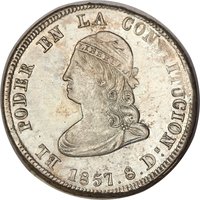
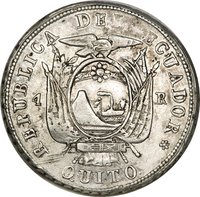
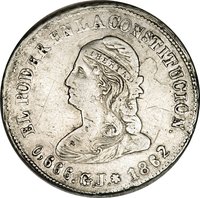
💎 Extremely Rare